自己紹介: how to introduce yourself in Japanese without sounding like a textbook自己紹介: 教科書っぽくならない、自分のしょうかいの仕方
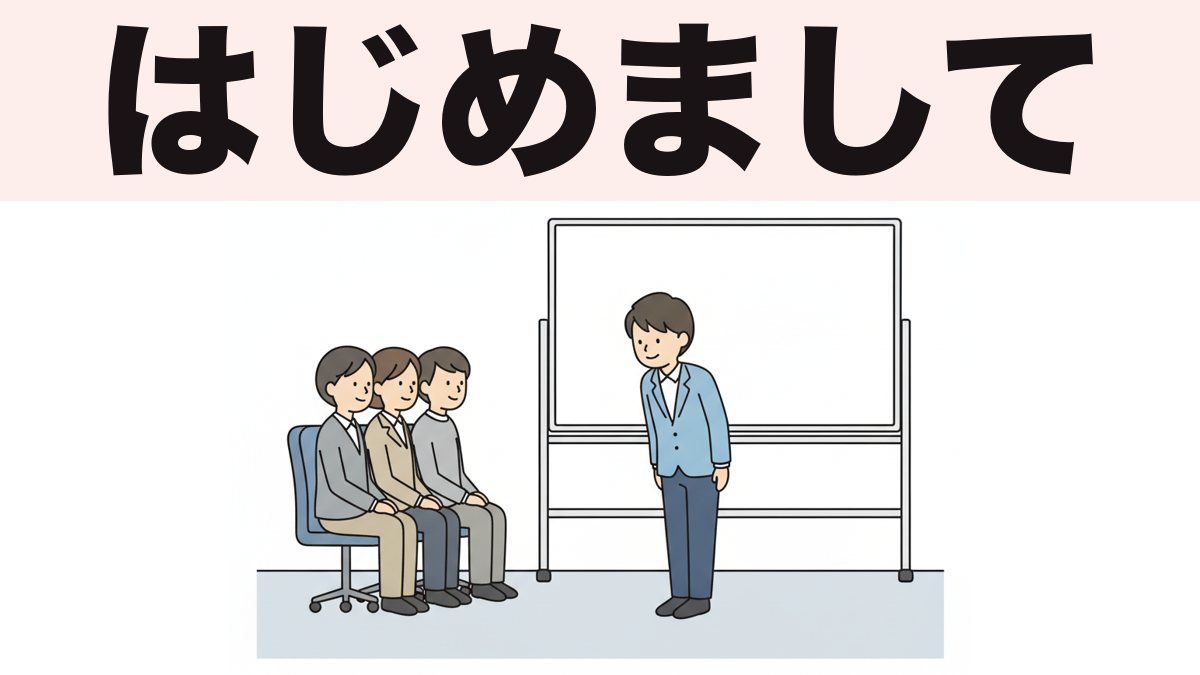
A Japanese 自己紹介 (jikoshoukai) is a fixed five-part shape, not a free speech: greeting → name → where you are from → one small detail → closing. Learn the shape once and you can fill it differently for every situation for the rest of your life.
日本語の自己紹介は、形が決まっています。あいさつ → 名前 → 出身 → 1つだけ話題 → しめの言葉。この形を1回おぼえれば、どんな場面でも中身を入れかえるだけです。
Most learners memorise a paragraph, deliver it perfectly, and then freeze when someone asks a follow-up question. The paragraph is not the skill. The shape is — because the shape tells you which slot to expand when you have thirty seconds instead of ten, and which slot to swap out when you are in a job interview instead of a classroom.
The basics
What are the five parts?
| Part | Japanese | When to skip it |
|---|---|---|
| 1. Greeting | はじめまして | Never — it opens every first meeting |
| 2. Name | 〜と申します / 〜です | Never |
| 3. Origin | 〜から来ました | Skip if everyone already knows |
| 4. One detail | job, hobby, why you're here | Skip only if very rushed |
| 5. Closing | よろしくお願いします | Never — this one is compulsory |
The shortest legal version is three lines:
はじめまして。田中です。よろしくお願いします。 — Nice to meet you. I'm Tanaka. I look forward to working with you. (the minimum; perfectly acceptable)
What does よろしくお願いします actually mean?
Nothing translatable, and everything socially. Literally it is something like "please treat me favourably" — a request that the other person be good to you going forward. English has no equivalent, which is why translations swing between "nice to meet you", "I look forward to working with you", and "please take care of me".
Treat it as a piece of punctuation rather than a sentence: it is the sound a Japanese self-introduction makes when it ends. Leaving it off feels like a letter with no sign-off.
どうぞよろしくお願いします。 — I look forward to working with you. (polite, standard; どうぞ adds warmth) よろしくお願いいたします。 — (more formal — business, interviews)
How do you say your name?
Three levels, in rising formality:
- 〜です — casual to standard. Fine in a classroom, a bar, a hobby group.
- 〜と言います — slightly more polite, very common.
- 〜と申します — humble form, business and formal settings.
田中と言います。 — My name is Tanaka. (polite, everyday) 田中と申します。 — My name is Tanaka. (formal, business — the humble verb)
Give your family name first if you are in a formal setting, and be ready for people to use it with さん. If your name is hard to catch, adding a short hook helps enormously:
ちょっと言いにくい名前なので、短く呼んでください。 — My name is a bit hard to say, so please use the short version. (polite, offers an easier option)
Where are you from?
Two patterns do all the work:
大阪から来ました。 — I came from Osaka. (the most common pattern; swap in your own place) 出身は北海道です。 — I'm originally from Hokkaido. (出身 = place of origin; sounds slightly more formal)
出身 (しゅっしん) is worth learning as a noun, because the question comes back at you as ご出身はどちらですか — and if you only learned から来ました, that question can be hard to parse.
Beyond the basics
What is the one detail that makes an introduction land?
Not your job. A specific thing someone can ask about.
Compare these:
趣味は音楽です。 — My hobby is music. (true, but there is nothing to reply to) 週末はベースを弾いています。 — On weekends I play bass. (polite, specific — invites a question)
The second version does the social work for the other person: it hands them a follow-up question. In a room of ten people introducing themselves, the specific ones are the only ones anyone remembers.
If you are learning Japanese, saying why is almost always a good detail, because it is the thing Japanese people are most curious about:
アニメが好きで、日本語を勉強しています。 — I like anime, so I'm studying Japanese. (polite, explains yourself in one line)
How does it change for a job interview?
The structure stays; the content gets a rank order. Interview self-introductions in Japanese are expected to run about 60 seconds and cover, in this order: name → current work or study → one relevant strength with evidence → why this company → closing.
本日はお時間をいただき、ありがとうございます。 — Thank you for your time today. (formal, opens an interview)
Two things learners get wrong here: the version of "I" (私, or わたくし in the most formal settings — not 僕, see Japanese pronouns), and the closing, which becomes よろしくお願いいたします rather than the plain form.
What about bowing and business cards?
The bow happens during はじめまして and again on よろしくお願いします — the second one is deeper. You do not need to get the angle right; you need to not skip it, and to not bow while shaking hands, which produces a memorable collision.
If cards are exchanged, they are given and received with two hands, read for a moment rather than pocketed immediately, and placed on the table for the length of the meeting.
How do you introduce someone else?
Flip the polite forms outward. You use humble language for yourself and your group, and respectful language for the other person:
こちらは営業部の山田さんです。 — This is Yamada-san from the sales department. (polite, introducing a third person)
Notice that さん stays on other people and never appears on your own name — the same rule that makes 俺様 a joke.
What comes after the introduction?
The three questions you will be asked, in near-certain order: how long you have been in Japan, whether you can eat natto, and why you started studying Japanese. Prepare one sentence for each and you have converted a memorised paragraph into an actual conversation.
日本に来て、半年です。 — I've been in Japan for six months. (polite, the standard answer shape)
How do you say what you study, or what your major is?
If you are a student, the question you will be asked is 専攻は何ですか ("what's your major?"), and the answer takes 専攻は〜です.
専攻は何ですか。 — What's your major? (polite — the standard question) 専攻は経済学です。 — My major is economics. (polite) 大学で日本語を勉強しています。 — I'm studying Japanese at university. (polite — the version that works without naming a field)
専攻 (せんこう) means "major, specialism," and 専攻しています works as a verb: 経済学を専攻しています. Both are natural; the noun version is shorter and more common in a first introduction.
If you are not a student, the equivalent question is about work rather than study, and that is 仕事は何ですか — with the particle trap covered in talking about your job.
Two small things worth knowing. 学部 (がくぶ) is the faculty rather than the subject, so 何学部ですか asks which faculty you are in. And 〜年生 answers what year you are in: 大学三年生です ("I'm a third-year university student"), which Japanese speakers often ask instead of your age.
Common mistakes
- Saying 私の名前は〜です. Grammatically correct, unmistakably translated-from-English. 〜です or 〜と言います is what people actually say.
- Adding さん to your own name. Honorifics point outward only.
- Skipping よろしくお願いします. This is the single most noticeable omission in a Japanese introduction.
- Making it too long in a casual setting. A 45-second introduction to a hobby group is a speech, not an introduction. Three lines is normal.
- Using 僕 in an interview. It is not rude, but it reads as under-formal for the room.
- Memorising a paragraph with no follow-up answers ready. The introduction is the easy part; the question afterwards is where the conversation actually starts.
The formality ladder
| Setting | Name | Closing |
|---|---|---|
| Interview, client meeting | 〜と申します | よろしくお願いいたします |
| Class, new workplace | 〜と言います / 〜です | よろしくお願いします |
| Hobby group, casual event | 〜です | よろしく |
| Friends of friends | 〜です | よろしくね |
Practice
Build each answer out loud before opening it. Questions 5 and 6 are a pair: the same person, two different rooms.
1. Give the shortest complete self-introduction for a classroom.
Show answer
はじめまして。〜です。よろしくお願いします。 — greeting, name, closing. Three lines is a complete, normal introduction.
2. Fix this: 私の名前は田中です。
Show answer
田中です — grammatically fine, but 私の名前は is a direct translation of English that Japanese speakers rarely use. 〜と言います also works.
3. Someone asks ご出身はどちらですか. What are they asking?
Show answer
Where are you from? — 出身 means place of origin. Answer with 出身は〜です or 〜から来ました.
4. Which detail is better in an introduction: 趣味は料理です or 週末にカレーを作ります?
Show answer
週末にカレーを作ります — it is specific, so it hands the listener a follow-up question. Generic details end the conversation politely.
5. You are introducing yourself to a new hobby group. Which closing?
Show answer
よろしくお願いします — standard polite. よろしく alone is fine once the group is clearly casual.
6. The same person, now in a job interview. Which closing?
Show answer
よろしくお願いいたします — the humble form. Same words, one register up, because the room changed.
7. What is wrong with はじめまして。田中さんです。?
Show answer
さん on your own name — honorifics only point at other people. It should be 田中です or 田中と申します.
8. Translate: "I like anime, so I'm studying Japanese."
Show answer
アニメが好きで、日本語を勉強しています — the て-form of 好きだ links the reason to the result. This is the single most useful detail line for a learner.
9. Someone introduces a colleague to you: こちらは営業部の山田さんです。What do you say?
Show answer
はじめまして。〜です。よろしくお願いします。 — the same shape, just shorter. A third-party introduction does not change your lines.
10. Answer this in one sentence: 日本にどのくらいいますか。
Show answer
日本に来て、半年です (or 3年です, etc.) — literally "having come to Japan, it is six months". This is the standard shape, and it is one of the three questions you will always be asked.
FAQ
Do I say my family name or given name first? Japanese order is family name first, and in formal settings that is what people expect. In casual settings, giving the name you actually want to be called is more useful than getting the order right.
Is it rude if my Japanese introduction is very short? No. Short is normal. Length signals formality, not effort — a long introduction in a casual room is the awkward version, not the impressive one.
Can I say よろしくお願いします to a friend? Yes, in its short form よろしく, and it is used far beyond introductions: when asking a favour, starting a project, or handing someone a task. It is one of the most reusable phrases in the language.
Should I mention my age or job? Job, often yes — it gives people something to ask about. Age, only if it is relevant or you are asked; it is a more normal question in Japan than in many countries, but you never have to volunteer it.
What if I completely blank? はじめまして、〜です、よろしくお願いします still works, and nobody will notice anything is missing. Having that three-line fallback memorised beyond the point of thinking is more valuable than a polished paragraph you might lose.
How long should an interview self-introduction be? About a minute — long enough for name, current situation, one strength with a concrete example, and why this company. Rehearse it against a clock; going over two minutes is a common and avoidable mistake.
Vocabulary from this article
Tap the block to select all of it, then copy. In Anki: File → Import, note type Basic, separator Tab — the first column becomes the front, the second the back.
自己紹介	じこしょうかい — self-introduction
はじめまして	はじめまして — nice to meet you
申します	もうします — to be called (humble)
出身	しゅっしん — place of origin
趣味	しゅみ — hobby
週末	しゅうまつ — weekend
勉強	べんきょう — study
営業部	えいぎょうぶ — sales department
名前	なまえ — name
呼ぶ	よぶ — to call
半年	はんとし — half a year
本日	ほんじつ — today (formal)
時間	じかん — time
仕事	しごと — work, job
料理	りょうり — cooking, a dish
弾く	ひく — to play (a string instrument)
作る	つくる — to make
来ました	きました — came
I'm Yuuki, a Japanese teacher based in Tokyo. I've taught on italki as a Top 1% teacher and watched over 1,500 anime. In first lessons I ask for a 自己紹介 and then immediately ask a follow-up question — because the paragraph is always fine, and the follow-up is always the part worth practising.
Sources: the author's own lessons and standard reference grammars.
多くの人は、文章をぜんぶおぼえます。そして、そのあとに質問されると止まってしまいます。大事なのは文章ではなく、形です。形が分かれば、時間が長い時はどこをのばすか、面接ではどこを変えるかが分かります。
基本
5つの部分
| 部分 | 日本語 | 省略できる? |
|---|---|---|
| 1. あいさつ | はじめまして | できません |
| 2. 名前 | 〜と申します/〜です | できません |
| 3. 出身 | 〜から来ました | みんな知っているなら省略OK |
| 4. 話題を1つ | 仕事・趣味・理由 | 時間がない時だけ省略 |
| 5. しめ | よろしくお願いします | できません |
いちばん短い形は3行です。
はじめまして。田中です。よろしくお願いします。 — Nice to meet you. I'm Tanaka. I look forward to working with you. (the minimum; perfectly acceptable)
「よろしくお願いします」の意味
英語にはありません。「これから、よろしく」という気持ちです。自己紹介の最後の音だと思ってください。これがないと、手紙に名前を書かなかったような感じになります。
どうぞよろしくお願いします。 — I look forward to working with you. (polite, standard) よろしくお願いいたします。 — (more formal — business, interviews)
名前の言い方
- 〜です — ふつう。教室や趣味の会。
- 〜と言います — 少していねい。
- 〜と申します — けんじょう語。仕事や式。
田中と言います。 — My name is Tanaka. (polite, everyday) 田中と申します。 — My name is Tanaka. (formal, business — the humble verb)
名前が言いにくい時は、こう言えます。
ちょっと言いにくい名前なので、短く呼んでください。 — My name is a bit hard to say, so please use the short version. (polite, offers an easier option)
出身の言い方
大阪から来ました。 — I came from Osaka. (the most common pattern) 出身は北海道です。 — I'm originally from Hokkaido. (出身 = place of origin; slightly more formal)
「出身(しゅっしん)」は名詞です。「ご出身はどちらですか」と聞かれるので、おぼえておくと安心です。
もう少し先へ
いい「話題」は、くわしい話題
趣味は音楽です。 — My hobby is music. (true, but there is nothing to reply to) 週末はベースを弾いています。 — On weekends I play bass. (polite, specific — invites a question)
下の文は、相手が次の質問をしやすいです。10人が自己紹介する時、おぼえてもらえるのは、くわしく言った人です。
アニメが好きで、日本語を勉強しています。 — I like anime, so I'm studying Japanese. (polite, explains yourself in one line)
面接の時
形は同じですが、じゅんばんが決まります。名前 → 今の仕事や勉強 → 強み(れいをつけて)→ この会社を選んだ理由 → しめ。長さは1分くらいです。
本日はお時間をいただき、ありがとうございます。 — Thank you for your time today. (formal, opens an interview)
ここでのまちがいは2つです。「僕」を使ってしまうこと(日本語の「わたし」を見てください)と、しめが「よろしくお願いします」のままになることです。面接では「よろしくお願いいたします」です。
おじぎと名刺
おじぎは「はじめまして」の時と、「よろしくお願いします」の時の2回です。2回目のほうが深いです。角度より、やることが大事です。握手とおじぎを同時にしないでください。
名刺は両手でわたし、両手で受け取ります。すぐにしまわないで、少し見てから、テーブルに置きます。
人をしょうかいする時
こちらは営業部の山田さんです。 — This is Yamada-san from the sales department. (polite, introducing a third person)
「さん」は、ほかの人だけにつけます。自分にはつけません。
自己紹介のあと
だいたい3つ質問されます。日本にどのくらいいるか、納豆が食べられるか、なぜ日本語を勉強しているか。答えを1文ずつ用意しておくと、会話になります。
日本に来て、半年です。 — I've been in Japan for six months. (polite, the standard answer shape)
専攻の言い方
学生なら「専攻は何ですか」と聞かれます。答えは「専攻は〜です」です。
専攻は何ですか。 — What's your major? (polite — the standard question) 専攻は経済学です。 — My major is economics. (polite) 大学で日本語を勉強しています。 — I'm studying Japanese at university. (polite)
「専攻(せんこう)」は「専門に勉強していること」です。動詞にもなります。「経済学を専攻しています」。初めて会った時は、上の短い形のほうがよく使います。
学生でなければ、聞かれるのは仕事のことです。「仕事は何ですか」です。
小さいことが2つあります。「学部(がくぶ)」は勉強の中身ではなく、大学の中の分かれ方です。「何学部ですか」と聞かれます。そして「〜年生」で学年を答えます。「大学三年生です」。年より、こちらを聞かれることも多いです。
よくあるまちがい
- 「私の名前は〜です」と言う。 正しいですが、英語の直訳の形です。「〜です」「〜と言います」を使います。
- 自分の名前に「さん」をつける。
- 「よろしくお願いします」を言わない。 いちばん目立ちます。
- カジュアルな場で長く話す。 3行でふつうです。
- 面接で「僕」を使う。 失礼ではありませんが、その場には合いません。
- 質問の答えを用意しない。 会話は自己紹介のあとから始まります。
ていねいさの表
| 場面 | 名前 | しめ |
|---|---|---|
| 面接・お客さん | 〜と申します | よろしくお願いいたします |
| 教室・新しい職場 | 〜と言います/〜です | よろしくお願いします |
| 趣味の会 | 〜です | よろしく |
| 友だちの友だち | 〜です | よろしくね |
練習
まず声に出してから、答えを見てください。5番と6番はペアです。
1. 教室でのいちばん短い自己紹介は?
答えを見る
はじめまして。〜です。よろしくお願いします。 — あいさつ・名前・しめ。3行で完成です。
2. 直してください: 私の名前は田中です。
答えを見る
田中です — 正しいですが、日本人はあまり言いません。「田中と言います」もOKです。
3. 「ご出身はどちらですか」は何を聞いていますか。
答えを見る
どこから来たか — 「出身」」生まれた所・育った所。「出身は〜です」か「〜から来ました」で答えます。
4. 「趣味は料理です」と「週末にカレーを作ります」、どちらがいいですか。
答えを見る
週末にカレーを作ります — くわしいので、相手が質問しやすいです。
5. 趣味の会での、しめの言葉は?
答えを見る
よろしくお願いします — ふつうのていねいな形です。とてもカジュアルな会なら「よろしく」でもいいです。
6. 同じ人が、面接で言う、しめの言葉は?
答えを見る
よろしくお願いいたします — けんじょう語です。言葉は同じで、場面が変わりました。
7. 「はじめまして。田中さんです。」の何がまちがいですか。
答えを見る
自分に「さん」をつけている — 「田中です」「田中と申します」が正しいです。
8. 「アニメが好きなので、日本語を勉強しています」を、て形で言ってください。
答えを見る
アニメが好きで、日本語を勉強しています — 「好きだ」のて形が、理由と結果をつなぎます。
9. 「こちらは営業部の山田さんです」と言われました。何と答えますか。
答えを見る
はじめまして。〜です。よろしくお願いします。 — 形は同じです。短くて大丈夫です。
10. 「日本にどのくらいいますか」に1文で答えてください。
答えを見る
日本に来て、半年です — 「〜に来て、〜です」が決まった形です。よく聞かれる3つの質問の1つです。
よくある質問
名字と名前、どちらを先に言いますか。 日本では名字が先です。でもカジュアルな場では、呼んでほしい名前を言うほうが役に立ちます。
短い自己紹介は失礼ですか。 いいえ。短いのがふつうです。長さは「ていねいさ」を表すだけです。
友だちに「よろしくお願いします」と言いますか。 「よろしく」と言います。お願いする時、いっしょに何かを始める時にも使えます。
年れいや仕事は言いますか。 仕事はよく言います(質問しやすいので)。年れいは、聞かれたら答えるくらいで大丈夫です。
全部わすれたら? 「はじめまして、〜です、よろしくお願いします」で十分です。この3行だけは、考えなくても言えるようにしておきます。
面接の自己紹介は何分ですか。 1分くらいです。2分をこえると長すぎます。時計を見ながら練習してください。
この記事に出た単語
下のブロックをタップして全部えらび、コピーしてください。Anki では ファイル → 読み込み、ノートの種類は 基本、区切りは タブ です。
自己紹介	じこしょうかい — self-introduction
はじめまして	はじめまして — nice to meet you
申します	もうします — to be called (humble)
出身	しゅっしん — place of origin
趣味	しゅみ — hobby
週末	しゅうまつ — weekend
勉強	べんきょう — study
営業部	えいぎょうぶ — sales department
名前	なまえ — name
呼ぶ	よぶ — to call
半年	はんとし — half a year
本日	ほんじつ — today (formal)
時間	じかん — time
仕事	しごと — work, job
料理	りょうり — cooking, a dish
弾く	ひく — to play (a string instrument)
作る	つくる — to make
来ました	きました — came
私はユウキです。東京で日本語を教えています。 italki の Top 1% の先生で、アニメは1,500本以上見ました。はじめてのレッスンでは自己紹介をしてもらい、すぐに質問をします。文章はいつも上手です。練習する価値があるのは、そのあとの質問だからです。
More drills like the ones above, plus a timed JLPT-style mock test: Practice · N5上のような練習問題と、時間つきのJLPT形式のもぎ試験: 練習ページ · N5
Want to try this in a real conversation?
本当の会話で、ためしてみませんか?
30-minute trial lesson, $13. Times shown in your own timezone.
30分の体験レッスン、$13。時間はあなたのタイムゾーンで表示されます。
Book a trial lesson · $13