Japanese relative clauses: how to say "the book that I bought名詞を説明する文: 「昨日買った本」の作り方
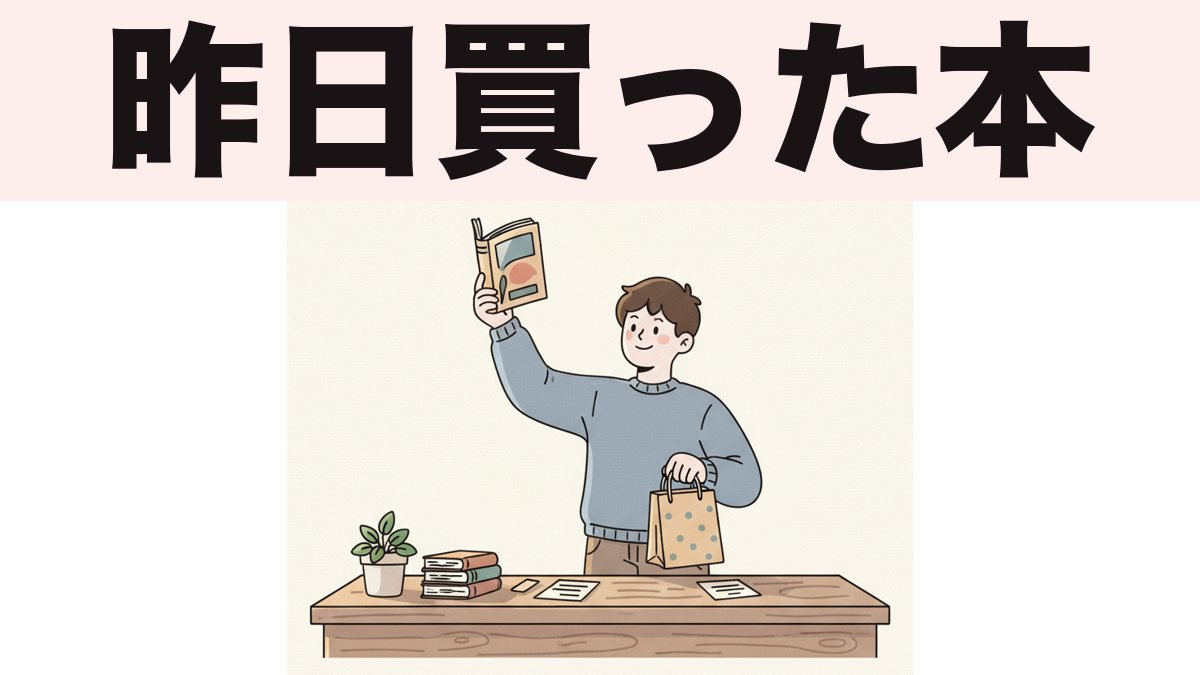
Japanese has no "that," "which" or "who" for relative clauses. You take the sentence that describes the noun and put it directly in front of it, in plain form: 昨日買った本 is "the book (that) I bought yesterday." The clause works exactly like an adjective.
日本語には、英語の that・which・who にあたることばがありません。名詞を説明する文を、そのまま名詞の前に置きます。形はふつう形です。「昨日買った本」は the book (that) I bought yesterday。文が形容詞と同じように働きます。
That is good news: there is one rule instead of five relative pronouns. The hard part is that the order is the reverse of English, so the noun you are talking about comes last.
The basics
How do you build a relative clause?
Write the describing sentence in plain form, then put the noun at the end. Nothing goes between them.
母が作った料理 — the food (that) my mum made (母が作った + 料理) 駅の前にある店 — the shop (that's) in front of the station (駅の前にある + 店) 日本語を話す人 — people who speak Japanese (日本語を話す + 人)
Compare it with an adjective: 赤い本 is "a red book," and 昨日買った本 is "the book I bought yesterday." In both cases the description sits in front of 本. The clause is just a longer adjective. How adjectives themselves work is in い-adjectives and な-adjectives.
What form does the verb take?
Plain form — dictionary form, た-form, ない-form or ている-form. Not ます.
| Meaning | Relative clause | English |
|---|---|---|
| Present / habit | 毎朝飲むコーヒー | the coffee I drink every morning |
| Past | 昨日見た映画 | the film I saw yesterday |
| Negative | 使わない部屋 | the room we don't use |
| Ongoing | 今読んでいる漫画 | the manga I'm reading now |
| Past negative | 行かなかった人 | the people who didn't go |
見ました映画 is wrong. Polite endings live at the end of the whole sentence: これは昨日見た映画です.
What happens to が and は inside the clause?
The subject of the clause takes が, never は. And that が can change to の.
友だちが住んでいる町 — the town where my friend lives (が: always correct) 友だちの住んでいる町 — the town where my friend lives (の: common in writing and careful speech)
は does not appear inside a relative clause, because は marks the topic of the whole sentence. 私は作った料理 is wrong; 私が作った料理 is right.
Side by side with English
| English | Japanese | Order |
|---|---|---|
| the book that I bought | 私が買った本 | clause → noun |
| the person who called | 電話した人 | clause → noun |
| the place where we met | 会った場所 | clause → noun |
| the day when I arrived | 着いた日 | clause → noun |
| the reason why I quit | 辞めた理由 | clause → noun |
"Where," "when" and "why" disappear as well. 会った場所 is "the place (where) we met"; the noun 場所 does the job.
Beyond the basics
How do you make longer ones?
Keep adding in front. Japanese sentences can stack several descriptions before a noun, and each one ends right before the next.
2年前に大学で勉強した文法 — the grammar I studied at university two years ago 先週、友だちに勧められた店 — the restaurant a friend recommended to me last week
A useful way to build long ones is the one teachers use on the whiteboard: write two short sentences, then fold one into the other.
- 文法を思い出したい。 — I want to remember the grammar.
- 2年前にその文法を知っていた。 — I knew that grammar two years ago.
Fold 2 into 1 and the result is 2年前に知っていた文法を思い出したい — "I want to remember the grammar I knew two years ago." Sentence 2 loses its object and its full stop and becomes the description of 文法. Why the order works this way is in Japanese word order.
Can you use relative clauses with adjectives and nouns?
Yes. い-adjectives go in as they are, な-adjectives keep な, and nouns take の (or である in formal writing).
天気がいい日 — a day when the weather is nice (い-adjective) 交通が便利な場所 — a place with good transport (な-adjective) 父が医者の友だち — a friend whose father is a doctor (noun + の)
The last one is how Japanese handles "whose": there is no word for it, only the clause.
How does it sound in anime?
Relative clauses are everywhere in anime titles, which are often just one long noun phrase. 君の名は。 is short, but titles like 転生したらスライムだった件 ("the matter of how I got reincarnated as a slime") end in 件 — the whole title is a clause describing that one noun. Once you see it, a lot of light-novel titles turn out to be single relative clauses.
In dialogue, they are fast and short: 昨日言ったこと ("what I said yesterday"), さっき会った人 ("that person we just met").
Common mistakes
- Putting the noun first. 本昨日買った is backwards. The noun comes last: 昨日買った本.
- Using ます inside the clause. 買いました本 is wrong. Plain form: 買った本.
- Using は inside the clause. 私は書いた手紙 is wrong. Use が or の: 私が書いた手紙.
- Adding a word for "that" or "who." Japanese has none. Do not insert こと or の between the clause and the noun.
- Forgetting な on な-adjectives. 静か部屋 is wrong; 静かな部屋.
- Losing the particle of the main sentence. The clause + noun is one unit, and the particle comes after the noun: 昨日買った本を読んだ.
Practice
Answers are hidden — build yours first, then open. Questions 1 and 2 are a pair: same words, reversed roles.
1. Say "the cake my sister made."
Show answer
姉が作ったケーキ — clause in plain past, then the noun. が marks who made it.
2. Say "the sister who made the cake."
Show answer
ケーキを作った姉 — now 姉 is the noun being described, so it moves to the end.
3. Say "the manga I'm reading now."
Show answer
今読んでいる漫画 — ongoing action, so ている in plain form.
4. Say "the station where we met."
Show answer
会った駅 — no word for "where." The noun 駅 carries it.
5. Fix: これは私は昨日買いました本です。
Show answer
これは私が昨日買った本です — が inside the clause, plain past 買った, and です only at the end.
6. Say "people who don't eat meat."
Show answer
肉を食べない人 — plain negative ない-form before the noun.
7. Say "a quiet room" and then "a room where it's quiet at night."
Show answer
静かな部屋 / 夜が静かな部屋 — な stays. The second one is a clause with its own subject, 夜が.
8. Combine: 映画を見たい。友だちが勧めた。 → "I want to see the film a friend recommended."
Show answer
友だちが勧めた映画を見たい — the second sentence folds in front of 映画 and becomes its description.
9. Say "a friend whose mother is a teacher."
Show answer
お母さんが先生の友だち — "whose" becomes a clause with a noun + の.
FAQ
Is there really no word for "that" or "which"? None. The position in front of the noun does the whole job.
Can I say 私の書いた手紙 instead of 私が書いた手紙? Yes. が→の is common inside relative clauses, especially in writing. Both are correct.
How long can a relative clause be? As long as you like, but listeners have to hold everything until the noun arrives. In conversation, two or three pieces is comfortable.
What is the difference between 〜した人 and 〜している人? Past versus ongoing: 手紙を書いた人 wrote it (done); 手紙を書いている人 is writing it now.
Do I need こと after a clause? Only when there is no noun and you want "the thing that" or "the fact that": 昨日言ったこと. That is a different job — see こと vs の.
Can relative clauses use polite forms in very formal speech? Very rarely, in extremely formal settings. For everyday and business Japanese, plain form inside the clause is the rule.
Vocabulary from this article
Tap the block to select all of it, then copy. In Anki: File → Import, note type Basic, separator Tab — the first column becomes the front, the second the back.
料理	りょうり — cooking, dish
店	みせ — shop
映画	えいが — film
部屋	へや — room
漫画	まんが — manga
町	まち — town
場所	ばしょ — place
理由	りゆう — reason
辞める	やめる — to quit
文法	ぶんぽう — grammar
勧める	すすめる — to recommend
天気	てんき — weather
交通	こうつう — transport, traffic
便利	べんり — convenient
医者	いしゃ — doctor
静か	しずか — quiet
手紙	てがみ — letter
肉	にく — meat
姉	あね — (my) older sister
件	けん — matter, case
I'm Yuuki, a Japanese teacher based in Tokyo. I've taught on italki as a Top 1% teacher and watched over 1,500 anime. Relative clauses come up whenever a student builds a sentence with "that" in English and looks for the Japanese word for it — the fold-two-sentences method on the whiteboard usually fixes it in one go.
Sources: the author's own lessons and standard reference grammars.
ルールは1つだけです。むずかしいのは、英語と順番が反対になることです。話したい名詞がいちばん最後に来ます。
基本
作り方
説明する文をふつう形で書いて、最後に名詞を置きます。間には何も入れません。
母が作った料理 — the food (that) my mum made (母が作った + 料理) 駅の前にある店 — the shop (that's) in front of the station (駅の前にある + 店) 日本語を話す人 — people who speak Japanese (日本語を話す + 人)
形容詞とくらべてください。「赤い本」も「昨日買った本」も、説明が「本」の前にあります。文は長い形容詞です。形容詞についてはい形容詞とな形容詞の記事にあります。
動詞の形
ふつう形です(辞書形、た形、ない形、ている形)。「ます」は使いません。
| 意味 | 文 | 英語 |
|---|---|---|
| 今・いつも | 毎朝飲むコーヒー | the coffee I drink every morning |
| 過去 | 昨日見た映画 | the film I saw yesterday |
| 否定 | 使わない部屋 | the room we don't use |
| 続いている | 今読んでいる漫画 | the manga I'm reading now |
| 過去の否定 | 行かなかった人 | the people who didn't go |
「見ました映画」はまちがいです。ていねいにするのは文の最後です。「これは昨日見た映画です」。
文の中の「が」と「は」
説明する文の中の主語は「が」です。「は」は使いません。「が」は「の」にもなります。
友だちが住んでいる町 — the town where my friend lives (が: always correct) 友だちの住んでいる町 — the town where my friend lives (の: common in writing and careful speech)
「私は作った料理」はまちがい。「私が作った料理」が正しいです。
英語とならべる
| 英語 | 日本語 | 順番 |
|---|---|---|
| the book that I bought | 私が買った本 | 文 → 名詞 |
| the person who called | 電話した人 | 文 → 名詞 |
| the place where we met | 会った場所 | 文 → 名詞 |
| the day when I arrived | 着いた日 | 文 → 名詞 |
| the reason why I quit | 辞めた理由 | 文 → 名詞 |
where・when・why もなくなります。名詞の「場所」「日」「理由」がその仕事をします。
もう少し先へ
長い文の作り方
前にどんどん足していけます。
2年前に大学で勉強した文法 — the grammar I studied at university two years ago 先週、友だちに勧められた店 — the restaurant a friend recommended to me last week
ホワイトボードでよく使う方法があります。短い文を2つ書いて、1つをもう1つの中に入れます。
- 文法を思い出したい。
- 2年前にその文法を知っていた。
2を1に入れると、2年前に知っていた文法を思い出したい。2の文が「文法」の説明になります。順番の理由は日本語の語順の記事にあります。
形容詞や名詞でも作れる?
作れます。い形容詞はそのまま、な形容詞は「な」、名詞は「の」を付けます。
天気がいい日 — a day when the weather is nice (い-adjective) 交通が便利な場所 — a place with good transport (な-adjective) 父が医者の友だち — a friend whose father is a doctor (noun + の)
最後の文が、英語の whose の言い方です。
アニメでは
アニメのタイトルには、長い名詞のまとまりがよくあります。「転生したらスライムだった件」は、全体が「件」を説明する文です。ラノベのタイトルの多くは、こういう1つの長い説明です。会話では短く、速く出ます。「昨日言ったこと」「さっき会った人」。
よくあるまちがい
- 名詞を先に言う。 「本昨日買った」ではなく「昨日買った本」。
- 文の中で「ます」を使う。 「買いました本」ではなく「買った本」。
- 文の中で「は」を使う。 「私が書いた手紙」です。
- that や who のことばを入れる。 日本語にはありません。
- な形容詞の「な」を忘れる。 「静かな部屋」です。
- あとの助詞を忘れる。 「昨日買った本を読んだ」。助詞は名詞のあとです。
練習
答えはかくしてあります。先に自分で考えてから開けてください。1と2はペアです。同じことばで、役がぎゃくです。
1. 「姉が作ったケーキ」を作る。
答えを見る
姉が作ったケーキ — ふつうの過去形の文のあとに名詞。
2. 「ケーキを作った姉」を作る。
答えを見る
ケーキを作った姉 — 今度は「姉」が説明される名詞なので、最後に来ます。
3. 「今読んでいる漫画」。
答えを見る
今読んでいる漫画 — 続いているので「ている」。
4. 「会った駅」(the station where we met)。
答えを見る
会った駅 — where のことばはいりません。
5. 直してください: これは私は昨日買いました本です。
答えを見る
これは私が昨日買った本です — 文の中は「が」とふつう形、「です」は最後だけ。
6. 「肉を食べない人」。
答えを見る
肉を食べない人 — ない形を名詞の前に。
7. 「静かな部屋」と「夜が静かな部屋」。
答えを見る
静かな部屋 / 夜が静かな部屋 — 「な」はそのまま。2つ目は主語「夜が」がある文です。
8. 1つの文に: 映画を見たい。友だちが勧めた。
答えを見る
友だちが勧めた映画を見たい — 2つ目の文が「映画」の説明になります。
9. 「お母さんが先生の友だち」(a friend whose mother is a teacher)。
答えを見る
お母さんが先生の友だち — whose は「名詞+の」の文になります。
よくある質問
本当に that や which のことばはない? ありません。名詞の前にあることが、その仕事をします。
「私の書いた手紙」と言える? 言えます。文の中の「が」は「の」になることがよくあります。
どのくらい長くしていい? いくらでも。でも聞く人は名詞が来るまで全部おぼえておく必要があります。会話では2つか3つが楽です。
「〜した人」と「〜している人」のちがいは? 「手紙を書いた人」は書き終わった人。「手紙を書いている人」は今書いている人です。
文のあとに「こと」はいる? 名詞がなくて「〜したこと」と言いたい時だけです。こととのの記事を見てください。
とてもていねいな時は、文の中も「ます」? とても少ないです。ふだんも仕事でも、文の中はふつう形です。
この記事に出た単語
ブロックをタップして全部を選び、コピーしてください。Anki では File → Import、ノートタイプは Basic、区切りは Tab です。左が表、右が裏になります。
料理	りょうり — cooking, dish
店	みせ — shop
映画	えいが — film
部屋	へや — room
漫画	まんが — manga
町	まち — town
場所	ばしょ — place
理由	りゆう — reason
辞める	やめる — to quit
文法	ぶんぽう — grammar
勧める	すすめる — to recommend
天気	てんき — weather
交通	こうつう — transport, traffic
便利	べんり — convenient
医者	いしゃ — doctor
静か	しずか — quiet
手紙	てがみ — letter
肉	にく — meat
姉	あね — (my) older sister
件	けん — matter, case
私はユウキです。東京で日本語を教えています。 italki の Top 1% の先生で、アニメは1,500本以上見ました。この文法は、生徒が英語の that を日本語でさがす時によく出ます。ホワイトボードで2つの文を1つにする方法で、たいてい一度で分かります。
出典: 著者自身のレッスンと、一般的な文法書。
More drills like the ones above, plus a timed JLPT-style mock test: Practice · N4上のような練習問題と、時間つきのJLPT形式のもぎ試験: 練習ページ · N4
Want to try this in a real conversation?
本当の会話で、ためしてみませんか?
30-minute trial lesson, $13. Times shown in your own timezone.
30分の体験レッスン、$13。時間はあなたのタイムゾーンで表示されます。
Book a trial lesson · $13