Japanese colours: why 赤い is an adjective and 緑 is not, and why the traffic light is blue色のことば: 「赤い」は形容詞、「緑」はちがう。そして信号は「青」
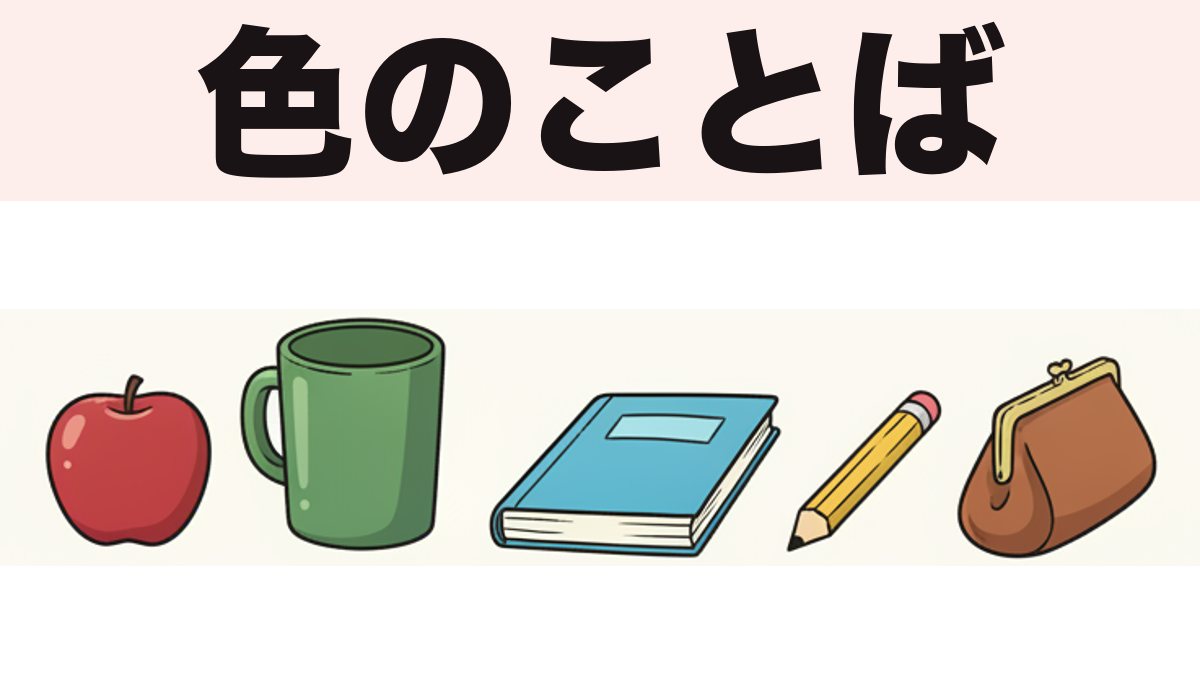
Japanese has exactly four colours that work as い-adjectives — 赤い, 青い, 白い, 黒い — plus 黄色い and 茶色い, which are built from nouns. Every other colour is a noun and needs の in front of another noun. Getting this split wrong is the most common colour mistake there is.
日本語で「い形容詞」になる色は4つだけです。赤い・青い・白い・黒い。それに、名詞から作った「黄色い」「茶色い」。ほかの色は全部名詞なので、名詞の前では「の」がいります。ここをまちがえる人がいちばん多いです。
There is also a second, more interesting thing going on: 青 covers a range English splits into blue and green, which is why a Japanese traffic light is described as 青 while looking green to you.
The basics
The adjective colours
| Colour | Adjective form | Noun form |
|---|---|---|
| Red | 赤い (あかい) | 赤 (あか) |
| Blue | 青い (あおい) | 青 (あお) |
| White | 白い (しろい) | 白 (しろ) |
| Black | 黒い (くろい) | 黒 (くろ) |
| Yellow | 黄色い (きいろい) | 黄色 (きいろ) |
| Brown | 茶色い (ちゃいろい) | 茶色 (ちゃいろ) |
赤いりんご。 — A red apple. (adjective directly before the noun) 白いシャツを着ています。 — I'm wearing a white shirt. (polite)
These conjugate like any い-adjective: 赤くない (not red), 赤かった (was red), 赤くて (red and...).
The noun colours
Everything else is a noun, so you attach it with の:
| Colour | Japanese |
|---|---|
| Green | 緑 (みどり) |
| Purple | 紫 (むらさき) |
| Pink | ピンク |
| Orange | オレンジ |
| Grey | 灰色 (はいいろ) / グレー |
| Gold | 金色 (きんいろ) |
| Silver | 銀色 (ぎんいろ) |
| Navy | 紺 (こん) |
緑のシャツ。 — A green shirt. (noun + の + noun) ピンクの傘を買いました。 — I bought a pink umbrella. (polite)
緑いシャツ is not a word. If you can only remember one rule: if it isn't red, blue, white, black, yellow or brown, it needs の.
How do you say "it is red"?
Two forms, and both are used:
このりんごは赤いです。 — This apple is red. (adjective + です) このシャツは緑です。 — This shirt is green. (noun + です, no の needed here)
の appears only when the colour is modifying another noun. As a predicate at the end of a sentence, the noun colours take です directly.
Beyond the basics
Why is the traffic light 青?
Because old Japanese had a smaller colour vocabulary: 青 historically covered a broad band including what English now calls green. 緑 existed, but as a shade rather than as a top-level category.
That older sense survives in a set of fixed expressions where 青 attaches to things that are visibly green:
- 青信号 (あおしんごう) — a green traffic light.
- 青葉 (あおば) — fresh green leaves.
- 青りんご — a green apple.
- 青野菜 (あおやさい) — green vegetables.
None of these is an error or a quirk of eyesight. They are older uses of 青 preserved in vocabulary, the way "blackboard" survives in English for something that is usually green.
青 also means young and inexperienced
青二才 (あおにさい) is a dismissive word for a green, inexperienced person, and 青春 (せいしゅん) — literally "blue spring" — means youth, the school years, the whole genre of nostalgic coming-of-age stories.
青春時代を思い出す。 — It reminds me of my youth. (青春 = the years everyone gets nostalgic about)
If you watch anime, 青春 is one of the highest-value words on this page: it names a whole category of series.
白黒 and the colour idioms
Colours carry the same kind of figurative weight they do in English, but not always in the same direction:
| Expression | Literally | Meaning |
|---|---|---|
| 白黒つける | make it black and white | Settle a matter definitively |
| 真っ赤な嘘 | a bright red lie | A blatant lie |
| 顔が青い | one's face is blue | Looking pale, unwell |
| 腹黒い | black-bellied | Scheming, malicious |
| 赤の他人 | a red stranger | A complete stranger |
真っ + colour is a useful intensifier pattern: 真っ白 (pure white), 真っ黒 (pitch black), 真っ赤 (bright red), 真っ青 (deep blue / pale with shock).
顔が真っ青だよ。大丈夫? — You've gone completely pale. Are you okay? (casual)
Talking about colour in a shop
他の色はありますか。 — Do you have other colours? (polite; the sentence to have ready) もう少し明るい色がいいです。 — I'd like a slightly brighter colour. (polite)
明るい (bright / light) and 暗い (dark) do the shade work. 濃い (dark, deep) and 薄い (pale, light) also apply to colour, the same way they apply to flavour.
色 itself
色 (いろ) means colour, and it appears inside several colour names (黄色, 茶色, 灰色, 金色). It also shows up in 色々 (いろいろ, "various") — literally "colours colours", which is a nice illustration of how reduplication works in Japanese.
Common mistakes
- Saying 緑い or ピンクい. Only red, blue, white, black, yellow and brown have adjective forms.
- Forgetting の before a noun. 緑のシャツ, not 緑シャツ.
- Adding の at the end of a sentence. このシャツは緑です, not 緑のです.
- Assuming 青 always means blue. In fixed expressions it covers green.
- Using 黄色 as a direct modifier without help. 黄色い花 (adjective) or 黄色の花 (noun + の) both work; 黄色花 does not.
- Translating 青春 as "blue spring". It means youth, and it is a genre label as much as a word.
Practice
Say each answer out loud first. Questions 1 and 2 are a pair: two colours, two different grammars.
1. Say "a red apple".
Show answer
赤いりんご — 赤い is an い-adjective and attaches directly.
2. Say "a green shirt".
Show answer
緑のシャツ — 緑 is a noun, so it needs の. 緑い is not a word.
3. Say "this shirt is green."
Show answer
このシャツは緑です — at the end of a sentence the noun takes です directly, with no の.
4. Why is a green traffic light called 青信号?
Show answer
青 historically covered a band including green — the older sense survives in fixed expressions like 青葉 and 青りんご.
5. What does 青春 mean?
Show answer
Youth — the school years — literally "blue spring", and the name of an entire genre of anime and drama.
6. Make 赤い negative and past.
Show answer
赤くない / 赤かった — it conjugates like any other い-adjective.
7. What does 真っ青 mean when describing someone's face?
Show answer
Pale, drained of colour — 真っ + colour is an intensifier: 真っ白, 真っ黒, 真っ赤, 真っ青.
8. Ask a shop assistant if they have other colours.
Show answer
他の色はありますか — worth memorising as a set phrase.
9. What does 赤の他人 mean?
Show answer
A complete stranger — 赤 here works as an intensifier meaning "utterly", not as a colour.
10. Which six colours have adjective forms?
Show answer
赤い, 青い, 白い, 黒い, 黄色い, 茶色い — everything else is a noun and needs の.
FAQ
Why do only some colours have adjective forms? Because those are the oldest colour words in the language — the ones that existed before Japanese borrowed and coined the rest. Newer colour words entered as nouns and stayed that way.
Can I say 緑色の instead of 緑の? Yes. 緑色 ("green colour") is common and sounds slightly more explicit. The same works for several colours: 青色の, 赤色の.
Is it wrong to say 青 for green? Not in the fixed expressions — 青信号 is the standard word. In free description, use 緑 for green and 青 for blue.
How do I describe a light or dark shade? 明るい / 暗い for brightness, 濃い / 薄い for depth. 薄いピンク is pale pink; 濃い青 is deep blue.
What about hair and eye colour? 髪の色 and 目の色. Common answers: 黒 (black), 茶色 (brown), 金髪 (きんぱつ, blonde — literally "gold hair"). 金髪 is the word, not 金色の髪.
Why is 色々 written with the colour kanji? It literally reads "colours colours" and means "various". Reduplication marking variety or intensity is a recurring pattern in Japanese, and this is one of the most common examples.
Vocabulary from this article
Tap the block to select all of it, then copy. In Anki: File → Import, note type Basic, separator Tab — the first column becomes the front, the second the back.
色	いろ — colour
赤い	あかい — red
青い	あおい — blue
白い	しろい — white
黒い	くろい — black
黄色	きいろ — yellow
茶色	ちゃいろ — brown
緑	みどり — green
紫	むらさき — purple
灰色	はいいろ — grey
金色	きんいろ — gold
紺	こん — navy blue
青信号	あおしんごう — green traffic light
青春	せいしゅん — youth, the school years
真っ白	まっしろ — pure white
明るい	あかるい — bright, light
暗い	くらい — dark
色々	いろいろ — various
I'm Yuuki, a Japanese teacher based in Tokyo. I've taught on italki as a Top 1% teacher and watched over 1,500 anime. Colours look like week-one vocabulary and then quietly test whether the adjective-versus-noun distinction has actually landed — which is why 緑いシャツ is a mistake I still hear from people well past N4.
Sources: the author's own lessons and standard reference grammars.
そしてもう1つ、おもしろいことがあります。「青」は、英語の blue と green の一部をまとめてカバーします。だから、信号は緑に見えるのに「青信号」です。
基本
形容詞になる色
| 色 | 形容詞 | 名詞 |
|---|---|---|
| red | 赤い(あかい) | 赤 |
| blue | 青い(あおい) | 青 |
| white | 白い(しろい) | 白 |
| black | 黒い(くろい) | 黒 |
| yellow | 黄色い(きいろい) | 黄色 |
| brown | 茶色い(ちゃいろい) | 茶色 |
赤いりんご。 — A red apple. (adjective directly before the noun) 白いシャツを着ています。 — I'm wearing a white shirt. (polite)
い形容詞なので、赤くない・赤かった・赤くて と変わります。
名詞の色
ほかの色は名詞です。名詞の前では「の」がいります。
| 色 | 日本語 |
|---|---|
| green | 緑(みどり) |
| purple | 紫(むらさき) |
| pink | ピンク |
| orange | オレンジ |
| grey | 灰色(はいいろ)/グレー |
| gold | 金色(きんいろ) |
| silver | 銀色(ぎんいろ) |
| navy | 紺(こん) |
緑のシャツ。 — A green shirt. (noun + の + noun) ピンクの傘を買いました。 — I bought a pink umbrella. (polite)
「緑いシャツ」はありません。赤・青・白・黒・黄色・茶色 いがい は「の」とおぼえてください。
「〜は赤いです」
このりんごは赤いです。 — This apple is red. (adjective + です) このシャツは緑です。 — This shirt is green. (noun + です)
「の」がいるのは、名詞の前だけです。文の終わりでは、そのまま「です」です。
もう少し先へ
なぜ信号は「青」?
昔の日本語は、色のことばが少なく、「青」が green の一部まで表していたからです。「緑」はありましたが、大きい分け方ではありませんでした。
その古い使い方が、今も残っています。
- 青信号 — green traffic light
- 青葉(あおば) — 新しいみどりの葉
- 青りんご — green apple
- 青野菜(あおやさい) — green vegetables
まちがいでも、目のせいでもありません。英語の "blackboard" が黒くないのと同じです。
「青」は「わかい」という意味にも
青二才(あおにさい) — けいけんの少ない人(悪い言い方)。 。青春(せいしゅん) — わかい時、学校の時代。
青春時代を思い出す。 — It reminds me of my youth.
アニメを見る人には、「青春」はこのページでいちばん役に立つことばかもしれません。ジャンルの名前でもあります。
色のかんよう句
| 言い方 | もとの意味 | 意味 |
|---|---|---|
| 白黒つける | 白か黒か | はっきり決める |
| 真っ赤な嘘 | まっ赤なうそ | 大うそ |
| 顔が青い | 顔が青い | 顔色がわるい |
| 腹黒い | はらが黒い | 心がわるい |
| 赤の他人 | 赤い他人 | まったく知らない人 |
「真っ+色」は強める形です。真っ白・真っ黒・真っ赤・真っ青。
顔が真っ青だよ。大丈夫? — You've gone completely pale. Are you okay? (casual)
お店で
他の色はありますか。 — Do you have other colours? (polite) もう少し明るい色がいいです。 — I'd like a slightly brighter colour. (polite)
明るい・暗い、そして濃い・薄い(味のことばと同じことば)を使います。
「色」そのもの
「色(いろ)」は colour です。黄色・茶色・灰色・金色 の中にも入っています。そして「色々(いろいろ)」various。「色」を2回くり返した形です。
よくあるまちがい
- 「緑い」「ピンクい」と言う。 形容詞は6つだけです。
- 名詞の前で「の」を忘れる。 「緑のシャツ」です。
- 文の終わりに「の」を入れる。 「このシャツは緑です」です。
- 「青」」blue だけだと思う。 決まったことばでは green です。
- 「黄色花」と言う。 「黄色い花」「黄色の花」です。
- 「青春」を「青い春」と訳す。 「わかい時」です。
練習
まず声に出してから、答えを見てください。1番と2番はペアです。
1. 「赤いりんご」と言ってください。
答えを見る
赤いりんご — 「赤い」は い形容詞なので、そのままつきます。
2. 「緑のシャツ」と言ってください。
答えを見る
緑のシャツ — 「緑」は名詞なので「の」がいります。
3. 「このシャツは緑です」と言ってください。
答えを見る
このシャツは緑です — 文の終わりでは「の」はいりません。
4. なぜ信号は「青信号」なのですか。
答えを見る
昔の「青」が green もふくんでいたから — 青葉・青りんごも同じです。
5. 「青春」の意味は?
答えを見る
わかい時・学校の時代 — アニメやドラマのジャンルの名前でもあります。
6. 「赤い」の否定と過去は?
答えを見る
赤くない/赤かった — ほかの い形容詞と同じです。
7. 顔が「真っ青」はどんな意味ですか。
答えを見る
顔色がとても悪い — 「真っ+色」は強める形です。
8. お店で「他の色はありますか」と聞いてください。
答えを見る
他の色はありますか — そのままおぼえられます。
9. 「赤の他人」の意味は?
答えを見る
まったく知らない人 — ここの「赤」は色ではなく「まったく」という意味です。
10. 形容詞になる色は?
答えを見る
赤い・青い・白い・黒い・黄色い・茶色い — ほかは名詞で「の」がいります。
よくある質問
なぜ一部の色だけ形容詞なのですか。 いちばん古いことばだからです。あとから入った色は名詞のままです。
「緑色の」と言ってもいいですか。 いいです。「青色の」「赤色の」も使います。
green を「青」と言ってもいいですか。 決まったことば(青信号・青葉)ではそうです。ふつうの説明では「緑」です。
明るい色・暗い色は? 明るい/暗い、濃い/薄い。「薄いピンク」「濃い青」。
髪や目の色は? 「髪の色」「目の色」。黒・茶色・金髪(きんぱつ)。「金色の髪」ではなく「金髪」です。
なぜ「色々」に色の漢字が入っているのですか。 「色 色」で「いろいろ」」various です。くり返しで「たくさん・いろいろ」を表すのは、日本語によくある形です。
この記事に出た単語
下のブロックをタップして全部えらび、コピーしてください。Anki では ファイル → 読み込み、ノートの種類は 基本、区切りは タブ です。
色	いろ — colour
赤い	あかい — red
青い	あおい — blue
白い	しろい — white
黒い	くろい — black
黄色	きいろ — yellow
茶色	ちゃいろ — brown
緑	みどり — green
紫	むらさき — purple
灰色	はいいろ — grey
金色	きんいろ — gold
紺	こん — navy blue
青信号	あおしんごう — green traffic light
青春	せいしゅん — youth, the school years
真っ白	まっしろ — pure white
明るい	あかるい — bright, light
暗い	くらい — dark
色々	いろいろ — various
私はユウキです。東京で日本語を教えています。 italki の Top 1% の先生で、アニメは1,500本以上見ました。色は「最初の週のことば」に見えますが、形容詞と名詞のちがいが本当に分かっているかを、しずかにテストしてきます。「緑いシャツ」は、N4を過ぎた人からも聞きます。
More drills like the ones above, plus a timed JLPT-style mock test: Practice · N5上のような練習問題と、時間つきのJLPT形式のもぎ試験: 練習ページ · N5
Want to try this in a real conversation?
本当の会話で、ためしてみませんか?
30-minute trial lesson, $13. Times shown in your own timezone.
30分の体験レッスン、$13。時間はあなたのタイムゾーンで表示されます。
Book a trial lesson · $13