How to say thank you in Japanese: ありがとう, ございます, and the past tense that changes the meaningお礼の言い方: ありがとうございます と ありがとうございました のちがい
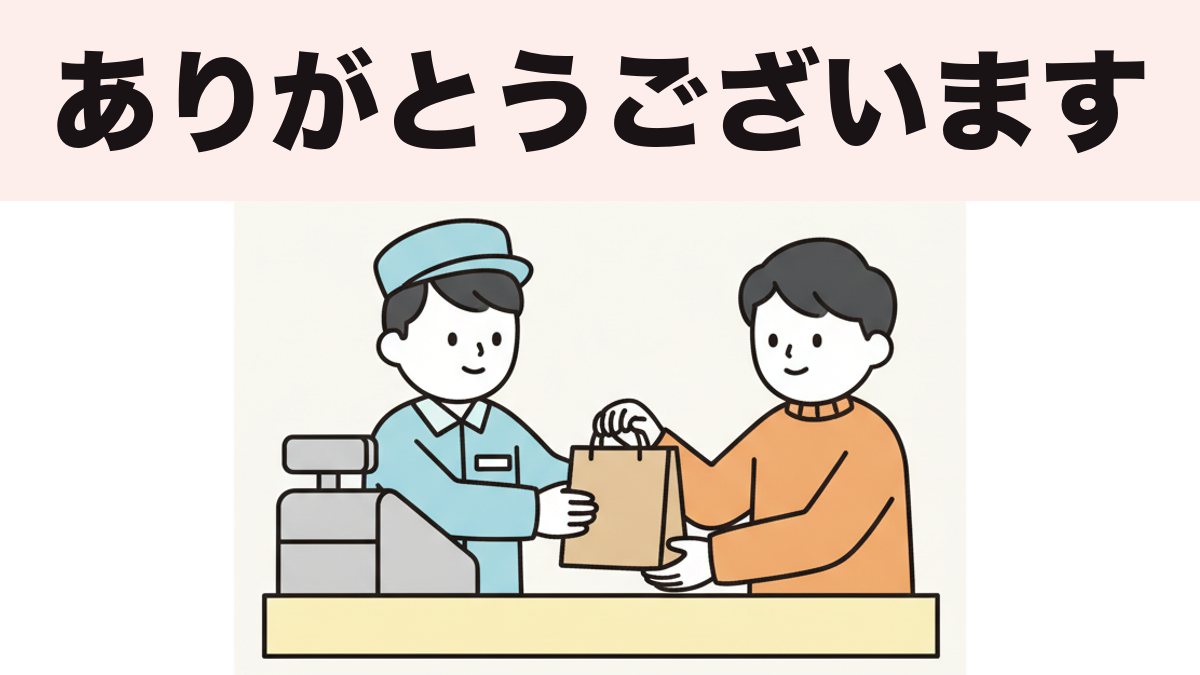
ありがとうございます is the safe default. The detail most learners miss is the past tense: ありがとうございました closes a completed thing — the end of a meal, a lesson, a stay — while ありがとうございます thanks someone for something happening now or continuing.
「ありがとうございます」がいちばん安全です。多くの人が気づかないのは、過去形です。「ありがとうございました」は、終わったことをしめます。食事の終わり、レッスンの終わり、旅の終わり。「ありがとうございます」は、今のこと・続いていることに使います。
Japanese gratitude also spreads across more phrases than English does, and several of them do not contain the word "thanks" at all: すみません, 助かりました, おかげさまで and ごちそうさま are all thank-yous doing specific jobs.
The basics
The ladder
| Phrase | Reading | Use it for |
|---|---|---|
| ありがとう | ありがとう | Friends, family. Casual. |
| ありがとうございます | ありがとうございます | The everyday polite default. |
| ありがとうございました | ありがとうございました | Something now finished. |
| どうもありがとうございます | — | Warmer, more emphatic. |
| どうも | どうも | Very casual, almost a nod in word form. |
| 感謝しています | かんしゃしています | Formal, written, weighty. |
ありがとうございます。 — Thank you. (polite; the answer to almost every situation) ありがとう。 — Thanks. (casual, friends) 本日はありがとうございました。 — Thank you for today. (polite; said at the end of a lesson, meeting or event)
Why does the past tense matter?
Because Japanese marks whether the thing you are thanking for is over. ございました closes it; ございます keeps it open.
ありがとうございます。 — Thank you. (as someone hands you something — the moment is happening) ありがとうございました。 — Thank you. (as you leave the shop — the transaction is complete)
Both are correct and both are polite. Using ございます at the end of a finished event is not wrong so much as slightly unfinished-sounding; using ございました for something ongoing sounds like you are ending it.
Shop staff will say ありがとうございました as you leave. That is the pattern in its purest form.
どうも on its own
どうも is a strange, useful word: it can mean "thanks", "hello", "sorry" and "somehow" depending on where it lands. On its own, with a nod, it is a light thank-you between people who know each other, or from someone slightly senior.
どうも。 — Thanks. (very casual; a nod in word form)
As a learner, recognise it and prefer ありがとうございます. どうも from a visitor to a shop assistant can read as a bit brusque, whereas ありがとうございます is never wrong.
Beyond the basics
The thank-yous that do not say "thank you"
すみません — acknowledges the trouble someone went to. When a stranger picks up something you dropped, this is the most natural response, often more so than ありがとうございます. The full explanation is in how to apologise, because in Japanese the two are the same gesture pointed in different directions.
助かりました (たすかりました) — "you saved me". The thank-you for practical help, and the one learners most under-use.
助かりました、ありがとうございます。 — That really helped, thank you. (polite; after someone solves a problem for you)
おかげさまで — "thanks to you" / "thanks to everyone". Used when reporting that something went well, even when the listener did nothing in particular. It is closer to a courteous frame than a literal attribution.
おかげさまで、無事に終わりました。 — Thanks to you, it finished without trouble. (polite)
ごちそうさまでした — closes a meal, and thanks whoever provided it. Say it to the person who cooked, the person who paid, and the restaurant staff on the way out.
お世話になりました — "thank you for looking after me". Said when leaving a job, a school, a host family, or ending a working relationship. お世話になっております is its present-tense business-email form, used constantly as an opening line.
What do you reply?
どういたしまして is real, and far less common than textbooks suggest. It can sound slightly formal or even distancing between friends. The everyday replies:
いえいえ。 — Not at all. (polite, warm, usually with a small hand wave) とんでもないです。 — Not at all / you're too kind. (polite, modest) こちらこそ。 — Thank you / likewise. (polite; returns the thanks)
こちらこそ is the most useful of the three. If someone thanks you and you also have something to thank them for — which is most of the time — it does the whole job in four syllables.
Business email
Two set phrases carry an enormous amount of Japanese business correspondence:
いつもお世話になっております。 — Thank you for your continued support. (formal; the standard email opening) ご確認いただき、ありがとうございます。 — Thank you for checking. (formal; 〜いただき + ありがとうございます is the standard thank-you-for-doing structure)
〜ていただき、ありがとうございます is the pattern worth memorising: attach it to any verb to thank someone for having done something. It uses the humble いただく from service keigo.
How much is too much?
Japanese repeats thanks more than English does — at the moment, again at the end, and often again the next time you meet. Saying ありがとうございます a second time when you next see the person ("先日はありがとうございました") is normal and noticed favourably.
The one place to hold back is with very close friends, where full ありがとうございます every time can build distance rather than warmth. There, ありがとう or サンキュー is the register.
Common mistakes
- Always using ありがとうございます, never ありがとうございました. The past tense is what closes a meal, a lesson or a visit.
- Using ありがとうございました for something still in progress. It sounds like you are ending it.
- Reaching for どういたしまして by default. いえいえ and こちらこそ are far more common.
- Skipping すみません as a thank-you. In many situations it is the more natural response.
- Forgetting ごちそうさま. Leaving a meal without it is one of the most visible omissions there is.
- Using どうも alone with service staff. Not rude exactly, but casual in a direction learners rarely intend.
Practice
Say each answer out loud first. Questions 1 and 2 are a pair: the same shop, two moments.
1. A clerk hands you your change. What do you say?
Show answer
ありがとうございます — the moment is happening, so the present form.
2. You are walking out of that shop. What do they say to you?
Show answer
ありがとうございました — the transaction is complete, so the past form closes it.
3. Someone fixed a problem for you at work. What do you say?
Show answer
助かりました、ありがとうございます — 助かる ("to be saved") is the thank-you for practical help.
4. You have finished a meal someone cooked. What do you say?
Show answer
ごちそうさまでした — closes the meal and thanks whoever provided it.
5. Someone thanks you, and you also have something to thank them for. What do you say?
Show answer
こちらこそ — "no, thank *you*". Four syllables, does the whole job.
6. What does おかげさまで mean?
Show answer
"Thanks to you" — used when reporting that something went well, even if the listener did nothing specific. A courteous frame, not a literal attribution.
7. You are leaving a job. What do you say to your colleagues?
Show answer
お世話になりました — "thank you for taking care of me". The phrase for ending a relationship or a stay.
8. Open a business email in Japanese.
Show answer
いつもお世話になっております。 — the standard opening line, used in an enormous share of Japanese business email.
9. Thank someone for having checked something, formally.
Show answer
ご確認いただき、ありがとうございます — 〜ていただき + ありがとうございます attaches to any verb.
10. A stranger picks up something you dropped. What is the most natural response?
Show answer
すみません (or すみません、ありがとうございます) — acknowledging the trouble they went to is often more natural than thanks alone.
FAQ
Is ありがとう rude to a stranger? Not rude, but casual. It is friends-and-family register. ありがとうございます is the version for anyone you do not know well, and it is never wrong.
What is the difference between どうも and どうもありがとうございます? どうも alone is a light, very casual thanks. Attached to ありがとうございます it becomes an intensifier, making the full phrase warmer.
Do people really say ごちそうさま every time? Yes, at home and in restaurants. It is said to the cook, to whoever paid, and often to staff on the way out. It is as automatic as いただきます at the start.
Why do Japanese emails all start the same way? Because いつもお世話になっております is a formal frame rather than a message — the equivalent of "Dear ..." in English. Its absence is more noticeable than its repetition.
How do I thank someone for something they did a while ago? 先日はありがとうございました ("thank you for the other day"). Bringing it up again at the next meeting is normal and appreciated.
Is サンキュー acceptable? Among friends, yes — it is common casual Japanese, written サンキュー. It does not belong anywhere polite.
Vocabulary from this article
Tap the block to select all of it, then copy. In Anki: File → Import, note type Basic, separator Tab — the first column becomes the front, the second the back.
ありがとう	ありがとう — thanks (casual)
ございます	ございます — polite auxiliary (formal です/あります)
どうも	どうも — thanks; hello; somehow
感謝	かんしゃ — gratitude
助かる	たすかる — to be saved, helped
おかげさまで	おかげさまで — thanks to you
お世話	おせわ — care, assistance
ごちそうさま	ごちそうさま — thanks for the meal
いただく	いただく — to receive (humble)
こちらこそ	こちらこそ — likewise, thank *you*
とんでもない	とんでもない — not at all
確認	かくにん — confirmation, checking
本日	ほんじつ — today (formal)
先日	せんじつ — the other day
無事に	ぶじに — safely, without trouble
終わる	おわる — to end, finish
渡す	わたす — to hand over
返事	へんじ — reply
I'm Yuuki, a Japanese teacher based in Tokyo. I've taught on italki as a Top 1% teacher and watched over 1,500 anime. The past-tense thank-you is one of those details nobody teaches and everybody notices — a student who says ありがとうございました at the end of a lesson sounds a level above one who does not.
Sources: the author's own lessons and standard reference grammars.
日本語のお礼は、「ありがとう」以外にもたくさんあります。「すみません」「助かりました」「おかげさまで」「ごちそうさま」も、全部お礼です。
基本
はしご
| 言い方 | 読み方 | 使う場面 |
|---|---|---|
| ありがとう | ありがとう | 友だち・家ぞく |
| ありがとうございます | — | ふつう。だれにでも |
| ありがとうございました | — | 終わったこと |
| どうもありがとうございます | — | あたたかく、強く |
| どうも | どうも | とてもカジュアル |
| 感謝しています | かんしゃしています | かたい・書き言葉 |
ありがとうございます。 — Thank you. (polite; the everyday answer) ありがとう。 — Thanks. (casual, friends) 本日はありがとうございました。 — Thank you for today. (at the end of a lesson or meeting)
なぜ過去形が大事?
日本語は「もう終わったかどうか」を表すからです。「ございました」は しめる、「ございます」は 続く。
ありがとうございます。 — Thank you. (as you are handed something) ありがとうございました。 — Thank you. (as you leave the shop)
お店の人は、帰る時に「ありがとうございました」と言います。これがいちばん分かりやすい例です。
「どうも」
「どうも」は不思議なことばで、「ありがとう」「こんにちは」「すみません」「なんだか」の意味になります。1つで使うと、軽いお礼です。
どうも。 — Thanks. (very casual)
学習者は「ありがとうございます」を使うほうが安全です。
もう少し先へ
「ありがとう」と言わないお礼
すみません — 「手間をかけました」。落とした物をひろってもらった時は、これがいちばん自然です(あやまり方)。
助かりました — 「たすかった」。実さいに手伝ってもらった時のお礼で、学習者があまり使わないことばです。
助かりました、ありがとうございます。 — That really helped, thank you. (polite)
おかげさまで — 「あなたのおかげで」。うまくいったことを報告する時に使います。相手が何もしていなくても使います。
おかげさまで、無事に終わりました。 — Thanks to you, it finished without trouble. (polite)
ごちそうさまでした — 食事の終わり。作った人、はらった人、お店の人に言います。
お世話になりました — 仕事・学校・ホームステイが終わる時。仕事のメールでは「お世話になっております」の形で毎日使います。
返事
「どういたしまして」はありますが、教科書ほど使いません。ふつうはこちらです。
いえいえ。 — Not at all. (polite, warm) とんでもないです。 — Not at all. (polite, modest) こちらこそ。 — Thank you. (polite)
「こちらこそ」がいちばん便利です。自分もお礼を言いたい時、これ1つですみます。
仕事のメール
いつもお世話になっております。 — Thank you for your continued support. (the standard email opening) ご確認いただき、ありがとうございます。 — Thank you for checking. (formal)
「〜ていただき、ありがとうございます」は、どの動詞にもつけられます。お店の敬語の「いただく」です。
何回言う?
日本語は、英語より多くお礼を言います。その時、終わりに もう一度、そして次に会った時にも「先日はありがとうございました」。これはとても good です。
仲のいい友だちにだけ、ていねいすぎると きょりを感じさせます。そこでは「ありがとう」「サンキュー」です。
よくあるまちがい
- いつも「ありがとうございます」で、過去形を使わない。 終わりには「ございました」です。
- 続いていることに「ございました」を使う。 「もう終わり」に聞こえます。
- 「どういたしまして」ばかり使う。 「いえいえ」「こちらこそ」がふつうです。
- 「すみません」をお礼に使わない。 多くの場面で、こちらが自然です。
- 「ごちそうさま」を言わない。 いちばん目立つ わすれ物です。
- お店の人に「どうも」だけ。 カジュアルすぎます。
練習
まず声に出してから、答えを見てください。1番と2番はペアです。
1. 店員さんがおつりをわたしてくれました。
答えを見る
ありがとうございます — 今おきていることなので、現在の形です。
2. その店を出る時、店員さんは何と言いますか。
答えを見る
ありがとうございました — 終わったので、過去の形でしめます。
3. 仕事で問題を直してもらいました。
答えを見る
助かりました、ありがとうございます — 実さいの手伝いには「助かる」です。
4. 作ってもらった料理を食べ終わりました。
答えを見る
ごちそうさまでした — 食事をしめて、お礼も言います。
5. お礼を言われて、自分もお礼を言いたいです。
答えを見る
こちらこそ — これ1つで足ります。
6. 「おかげさまで」の意味は?
答えを見る
あなたのおかげで — うまくいった報告に使います。相手が何もしていなくても使います。
7. 仕事をやめる日に、同僚へ何と言いますか。
答えを見る
お世話になりました — 終わる時のことばです。
8. 仕事のメールの1行目は?
答えを見る
いつもお世話になっております。 — 決まった書き出しです。
9. 「確認してくれてありがとう」をかたく言ってください。
答えを見る
ご確認いただき、ありがとうございます — 「〜ていただき」はどの動詞にもつきます。
10. 落とした物をひろってもらいました。いちばん自然な返事は?
答えを見る
すみません(+ありがとうございます) — 手間をかけたことへの返事です。
よくある質問
知らない人に「ありがとう」は失礼ですか。 失礼ではありませんが、カジュアルです。「ありがとうございます」がどこでも使えます。
「どうも」と「どうもありがとうございます」のちがいは? 「どうも」だけは軽いお礼、つけると強く、あたたかくなります。
「ごちそうさま」は毎回言いますか。 言います。家でもお店でも、「いただきます」と同じくらい自然です。
なぜ日本のメールは同じ書き出しなのですか。 「いつもお世話になっております」は、英語の "Dear ..." と同じ、形だからです。
前のことのお礼は? 「先日はありがとうございました」。次に会った時に言うのがふつうです。
「サンキュー」は使えますか。 友だちには使えます。ていねいな場面では使いません。
この記事に出た単語
下のブロックをタップして全部えらび、コピーしてください。Anki では ファイル → 読み込み、ノートの種類は 基本、区切りは タブ です。
ありがとう	ありがとう — thanks (casual)
ございます	ございます — polite auxiliary (formal です/あります)
どうも	どうも — thanks; hello; somehow
感謝	かんしゃ — gratitude
助かる	たすかる — to be saved, helped
おかげさまで	おかげさまで — thanks to you
お世話	おせわ — care, assistance
ごちそうさま	ごちそうさま — thanks for the meal
いただく	いただく — to receive (humble)
こちらこそ	こちらこそ — likewise, thank *you*
とんでもない	とんでもない — not at all
確認	かくにん — confirmation, checking
本日	ほんじつ — today (formal)
先日	せんじつ — the other day
無事に	ぶじに — safely, without trouble
終わる	おわる — to end, finish
渡す	わたす — to hand over
返事	へんじ — reply
私はユウキです。東京で日本語を教えています。 italki の Top 1% の先生で、アニメは1,500本以上見ました。過去形のお礼は、だれも教えないのに、みんなが気づくところです。レッスンの最後に「ありがとうございました」と言える人は、1つ上に聞こえます。
More drills like the ones above, plus a timed JLPT-style mock test: Practice · N5上のような練習問題と、時間つきのJLPT形式のもぎ試験: 練習ページ · N5
Want to try this in a real conversation?
本当の会話で、ためしてみませんか?
30-minute trial lesson, $13. Times shown in your own timezone.
30分の体験レッスン、$13。時間はあなたのタイムゾーンで表示されます。
Book a trial lesson · $13