How to say "both" in Japanese: 両方, どちらも, 〜とも and the one that flips to "neither「both」の言い方: 両方・どちらも・〜とも、そして「どちらも〜ない」
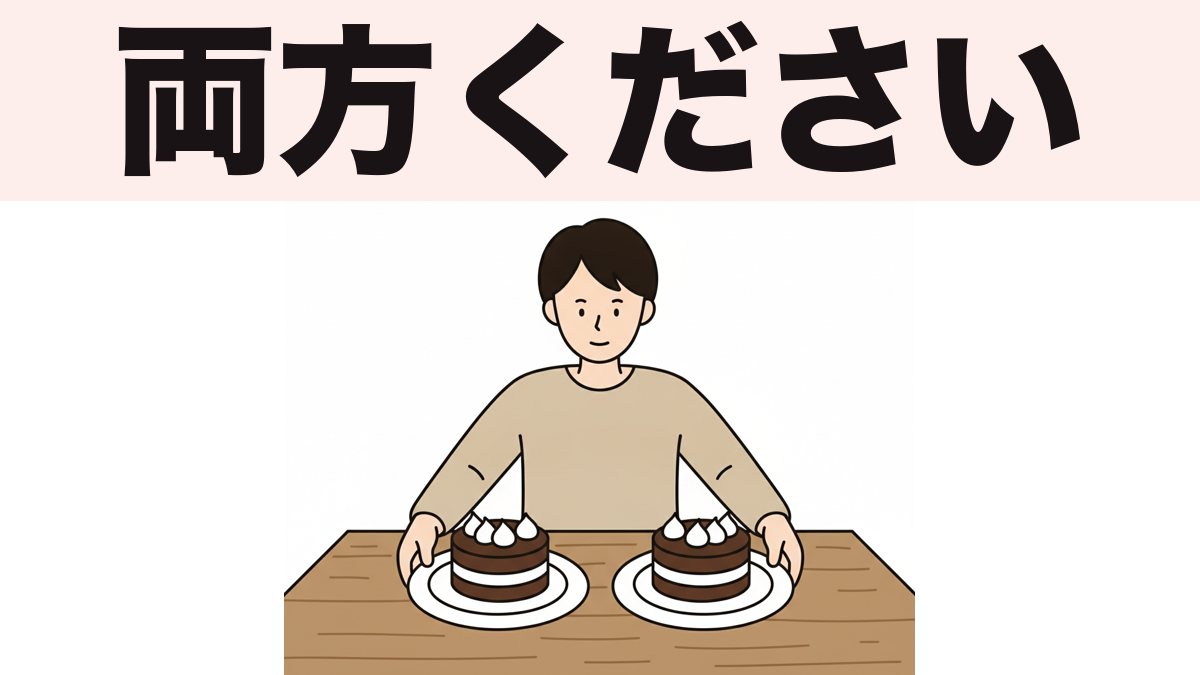
Japanese has no single word for "both". 両方 is a noun meaning "the two of them", どちらも covers "both" and — with a negative verb — "neither", 〜とも attaches to a counted number of people, and 〜も〜も links two things inside one sentence. Which one you need depends on what you are counting and where it sits in the sentence.
日本語には「both」にあたる1つの言葉がありません。「両方」は名詞、「どちらも」は「both」にも「neither」にもなり、「〜とも」は数えた人や物につき、「〜も〜も」は文の中で2つをならべます。何を数えているか、文のどこに入るかで決まります。
This is a small topic that produces a disproportionate number of stalled conversations, because the English sentence "both are annoying" has at least three natural Japanese translations and a learner who knows only one of them tends to reach for it in the wrong slot.
The basics
両方 — the noun
両方 (りょうほう) means "both sides / the two of them" and behaves like a noun. It takes particles, and it can sit anywhere a noun can.
両方ください。 — I'll take both, please. (polite, in a shop) 両方とも好きです。 — I like both of them. (polite; とも adds "all of them, without exception")
Because it is a noun, 両方が, 両方を and 両方に all work. This is the version to reach for when "both" is standing alone as the thing you are talking about.
どちらも / どっちも — the pronoun
どちら means "which of two", and adding も turns it into "both / either". どっちも is the casual spoken form.
どちらも面白いです。 — Both of them are interesting. (polite) どっちもいいよ。 — Either one's fine. (casual)
The difference from 両方 is mostly register and framing: どちらも grows out of a choice ("which one?" → "both"), while 両方 just names the pair. In practice they overlap heavily and swapping them rarely produces a wrong sentence.
〜とも — attached to a counted number
When you are counting people or things, the counter plus とも means "all of them":
二人とも学生です。 — Both of them are students. (polite; 二人 = two people) 三つとも壊れていました。 — All three were broken. (polite)
This is the pattern learners most often miss, and the one that sounds most natural for people. 二人とも is far more idiomatic than 両方の人 for "both of them" when you mean two humans. Counters themselves are covered in Japanese counters.
Beyond the basics
Why does どちらも sometimes mean "neither"?
Because も with a negative verb means "not any" — the same mechanism that turns 何も into "nothing" and 誰も into "nobody". So どちらも carries "both" with a positive verb and "neither" with a negative one:
どちらも好きです。 — I like both. (positive verb → both) どちらも好きじゃありません。 — I don't like either of them. (negative verb → neither)
Nothing changes except the verb, which is exactly why this catches people out: the "both / neither" distinction lives at the end of the sentence, not in the word you chose at the start. This is the same pattern described in question word + も, and it is worth learning as one rule rather than as a list of exceptions.
〜も〜も — "both A and B"
When the two things are named explicitly, mark each one with も:
犬も猫も好きです。 — I like both dogs and cats. (polite) 父も母も来ませんでした。 — Neither my father nor my mother came. (polite; negative verb again flips it)
This replaces the particle が or を that would otherwise be there — you say 犬も猫も好き, not 犬もと猫もが好き. The same flip applies: positive verb gives "both A and B", negative gives "neither A nor B".
The 両 prefix
両 also attaches directly to nouns as a prefix meaning "both / the pair of":
| Word | Reading | Meaning |
|---|---|---|
| 両手 | りょうて | both hands |
| 両足 | りょうあし | both feet |
| 両親 | りょうしん | parents (literally "both parents") |
| 両側 | りょうがわ | both sides |
| 両目 | りょうめ | both eyes |
| 両国 | りょうこく | both countries |
両親 is the one worth noticing: Japanese has no everyday single word for "parents" that is not built from "both".
両手で受け取ってください。 — Please take it with both hands. (polite — the standard instruction for business cards and gifts)
What about "either" and "neither" as choices?
- どちらか — "either one (of the two)", when you must pick.
- どちらでも — "either is fine", giving the choice away.
どちらかを選んでください。 — Please choose one of the two. (polite) どちらでもいいです。 — Either is fine with me. (polite — extremely common, and a genuine answer)
どちらでもいいです is worth memorising as a set phrase. It is the standard polite way to say you have no preference, and it is used constantly when someone asks where to eat.
More than two
両方 and どちらも are strictly for two. For three or more, switch to:
- 全部 (ぜんぶ) — all of them, things.
- みんな / みなさん — everyone, people.
- どれも — any of them / none of them, from a set of three or more.
どれもおいしかったです。 — All of them were delicious. (polite; three or more dishes)
Using 両方 for three things is one of the clearest small errors in this area, and it is easy to avoid once you know the boundary is literally the number two.
Common mistakes
- Using 両方 for three or more. It means two. Use 全部, みんな or どれも.
- Forgetting that the verb decides "both" or "neither". どちらも with a negative is "neither", every time.
- Keeping が or を with 〜も〜も. も replaces them: 犬も猫も好きです.
- Saying 両方の人 for "both people". 二人とも is what people actually say.
- Translating どちらでもいいです as indifference or rudeness. It is a normal, polite answer meaning "you choose".
- Mixing up どちらか (one of the two) and どちらも (both). か picks; も includes.
Quick comparison
| Form | Works with | Feel |
|---|---|---|
| 両方 | Two things, as a noun | Neutral, points at the pair |
| どちらも / どっちも | Two things, from a choice | Polite / casual; flips to "neither" with a negative |
| 二人とも, 三つとも | A counted number | Most natural for people and counted objects |
| 〜も〜も | Two named things | Both A and B — or neither, with a negative |
| どちらか | Two things, pick one | "Either one" |
| 全部 / みんな / どれも | Three or more | The larger-set versions |
Practice
Say each answer out loud first. Questions 4 and 5 are a pair: the same word, one verb apart.
1. In a shop, you want both items. What do you say?
Show answer
両方ください — 両方 is a noun, so it slots straight in before ください.
2. Say "both of them are students" about two people.
Show answer
二人とも学生です — counter + とも is the natural pattern for people. 両方の人 sounds translated.
3. Translate: 犬も猫も好きです。
Show answer
I like both dogs and cats — each item takes も, replacing が or を.
4. Translate: どちらも好きです。
Show answer
I like both — positive verb, so も means "both".
5. Translate: どちらも好きじゃありません。
Show answer
I don't like either of them — negative verb, so the same も now means "neither". The end of the sentence decides.
6. Someone asks where you want to eat and you have no preference. What do you say?
Show answer
どちらでもいいです — a normal, polite answer, not a dodge. どこでもいいです works for places generally.
7. Three dishes were all delicious. Say so.
Show answer
どれもおいしかったです — three or more, so どれも, not どちらも. 全部おいしかったです also works.
8. What does 両親 literally mean?
Show answer
"Both parents" — 両 as a prefix means "the pair of". The everyday word for parents is built from it.
9. Fix this: 犬もが猫もが好きです。
Show answer
犬も猫も好きです — も replaces が and を rather than stacking with them.
10. What is the difference between どちらか and どちらも?
Show answer
どちらか picks one of the two; どちらも includes both — か chooses, も adds. And どちらも flips to "neither" with a negative verb.
FAQ
Are 両方 and どちらも interchangeable? Usually yes, for two items. 両方 names the pair directly; どちらも comes out of a choice between two. Swapping them rarely produces a wrong sentence, only a slightly different emphasis.
Is どっちも rude? No, just casual — it is the spoken contraction of どちらも. Use どちらも in polite conversation and どっちも with friends, exactly like other casual contractions.
How do I say "both of us"? 二人とも, or 私たち二人とも for emphasis. 両方 works when you are talking about two of something rather than two people.
Why does Japanese use も for "both" and also for "nothing"? Because も means "also / even / inclusively", and inclusion inside a negative sentence becomes total exclusion. One particle, one logic, two English translations.
What is 両方とも? "Both of them, without exception" — 両方 plus the emphatic とも. It is common and slightly stronger than 両方 alone.
Can I use 両方 for two abstract things, like two opinions? Yes. 両方 counts anything that comes in a pair, including ideas, options and plans: 両方の意見 ("both opinions") is completely normal.
Vocabulary from this article
Tap the block to select all of it, then copy. In Anki: File → Import, note type Basic, separator Tab — the first column becomes the front, the second the back.
両方	りょうほう — both, the two
どちらも	どちらも — both; neither (with negative)
どっちも	どっちも — both (casual)
どちらか	どちらか — either one of the two
どちらでも	どちらでも — either is fine
二人とも	ふたりとも — both people
全部	ぜんぶ — all, everything
どれも	どれも — any of them (three or more)
両手	りょうて — both hands
両足	りょうあし — both feet
両親	りょうしん — parents
両側	りょうがわ — both sides
意見	いけん — opinion
選ぶ	えらぶ — to choose
壊れる	こわれる — to break
受け取る	うけとる — to receive, accept
面白い	おもしろい — interesting
学生	がくせい — student
I'm Yuuki, a Japanese teacher based in Tokyo. I've taught on italki as a Top 1% teacher and watched over 1,500 anime. "Both" is one of those words students assume they already have, until a conversation stops dead because the sentence needed 二人とも and the only tool in the bag was 両方.
Sources: the author's own lessons and standard reference grammars.
小さい話ですが、会話が止まる原因になりやすいところです。英語の "both are annoying" には、日本語の言い方が3つ以上あるからです。
基本
「両方」」名詞
「両方(りょうほう)」は「2つとも」という意味の名詞です。助詞がつきます。
両方ください。 — I'll take both, please. (polite, in a shop) 両方とも好きです。 — I like both of them. (polite; とも adds emphasis)
名詞なので「両方が」「両方を」「両方に」が使えます。「both」が1つの言葉として立っている時は、これです。
「どちらも」「どっちも」
「どちら」」2つのうちどれ。「も」がつくと「both」になります。「どっちも」は話し言葉です。
どちらも面白いです。 — Both of them are interesting. (polite) どっちもいいよ。 — Either one's fine. (casual)
「両方」とのちがいは、えらぶ気持ちがあるかどうかくらいです。入れかえても、まちがいにはなりません。
「〜とも」」数+とも
人や物を数える時は、助数詞+「とも」です。
二人とも学生です。 — Both of them are students. (polite) 三つとも壊れていました。 — All three were broken. (polite)
人の場合は、これがいちばん自然です。「両方の人」とは言いません。助数詞は助数詞の記事を見てください。
もう少し先へ
なぜ「どちらも」が「neither」になるの?
「も」+否定否定「1つも〜ない」だからです。「何も」「誰も」と同じしくみです。
どちらも好きです。 — I like both. (positive verb → both) どちらも好きじゃありません。 — I don't like either of them. (negative verb → neither)
変わったのは文の最後の動詞だけです。だからまちがえやすいのです。疑問詞+もと同じルールです。
「〜も〜も」
2つの名前を言う時は、両方に「も」をつけます。
犬も猫も好きです。 — I like both dogs and cats. (polite) 父も母も来ませんでした。 — Neither my father nor my mother came. (polite)
「が」「を」は消えます。「犬もが」とは言いません。ここでも、否定にすると「neither」になります。
「両〜」
「両」は名詞の前にもつきます。
| 言葉 | 読み方 | 意味 |
|---|---|---|
| 両手 | りょうて | both hands |
| 両足 | りょうあし | both feet |
| 両親 | りょうしん | parents |
| 両側 | りょうがわ | both sides |
| 両目 | りょうめ | both eyes |
| 両国 | りょうこく | both countries |
「両親」がおもしろいです。日本語の「parents」は、「両方の親」からできています。
両手で受け取ってください。 — Please take it with both hands. (polite — for business cards and gifts)
「どちらか」と「どちらでも」
- どちらか — 2つのうち1つ(えらぶ)。
- どちらでも — どちらでもいい(相手にまかせる)。
どちらかを選んでください。 — Please choose one of the two. (polite) どちらでもいいです。 — Either is fine with me. (polite, very common)
「どちらでもいいです」はそのままおぼえてください。「どこで食べる?」の答えとして、とてもよく使います。
3つ以上の時
「両方」「どちらも」は2つだけです。3つ以上は、
- 全部(ぜんぶ) — 物ぜんぶ
- みんな/みなさん — 人
- どれも — 3つ以上の中のどれも
どれもおいしかったです。 — All of them were delicious. (three or more)
よくあるまちがい
- 3つ以上に「両方」を使う。 「全部」「みんな」「どれも」です。
- 動詞で意味が変わるのを忘れる。 「どちらも+否定」」neither。
- 「〜も〜も」に「が」「を」を残す。 「犬も猫も好きです」です。
- 「両方の人」と言う。 「二人とも」です。
- 「どちらでもいいです」を失礼だと思う。 ふつうのていねいな答えです。
- 「どちらか」と「どちらも」をまぜる。 「か」はえらぶ、「も」は入れる。
まとめの表
| 形 | 使う場面 | 感じ |
|---|---|---|
| 両方 | 2つ(名詞として) | 中立。2つを指す |
| どちらも/どっちも | 2つ(えらぶ気持ち) | ていねい/カジュアル。否定で neither |
| 二人とも・三つとも | 数えた人や物 | 人にはいちばん自然 |
| 〜も〜も | 名前を言う2つ | both A and B(否定なら neither) |
| どちらか | 2つから1つ | either one |
| 全部・みんな・どれも | 3つ以上 | 大きいまとまり |
練習
まず声に出してから、答えを見てください。4番と5番はペアです。
1. お店で2つとも買いたい時は?
答えを見る
両方ください — 「両方」は名詞なので、そのまま入ります。
2. 2人が学生だと言ってください。
答えを見る
二人とも学生です — 人には「助数詞+とも」がいちばん自然です。
3. 「犬も猫も好きです」の意味は?
答えを見る
犬と猫、どちらも好き — それぞれに「も」をつけ、「が」「を」は消します。
4. 「どちらも好きです」の意味は?
答えを見る
どちらも好き(both) — 動詞が肯定だからです。
5. 「どちらも好きじゃありません」の意味は?
答えを見る
どちらも好きじゃない(neither) — 動詞が否定になると、意味が反対になります。
6. どこで食べるか聞かれて、とくにない時は?
答えを見る
どちらでもいいです — ふつうの答えです。場所なら「どこでもいいです」。
7. 料理が3つとも おいしかったです。
答えを見る
どれもおいしかったです — 3つ以上なので「どちらも」は使えません。「全部」もOKです。
8. 「両親」のもとの意味は?
答えを見る
両方の親 — 「両」は「2つの」という意味です。
9. 直してください: 犬もが猫もが好きです。
答えを見る
犬も猫も好きです — 「も」が「が」「を」の代わりです。
10. 「どちらか」と「どちらも」のちがいは?
答えを見る
「どちらか」は1つえらぶ、「どちらも」は2つとも — そして「どちらも」は否定で neither になります。
よくある質問
「両方」と「どちらも」は同じですか。 2つの物なら、だいたい同じです。「両方」は2つを指し、「どちらも」はえらぶ気持ちから来ています。
「どっちも」は失礼ですか。 いいえ、カジュアルなだけです。ていねいな場面では「どちらも」を使います。
「私たち2人とも」は? 「二人とも」、強く言うなら「私たち二人とも」です。
なぜ「も」が both と nothing の両方になるの? 「も」は「〜も入れる」という意味だからです。否定の中に入れると、「1つも入らない」になります。
「両方とも」は? 「2つとも、どちらも」という強い言い方です。よく使います。
考えや意見にも「両方」を使えますか。 使えます。「両方の意見」はふつうの言い方です。
この記事に出た単語
下のブロックをタップして全部えらび、コピーしてください。Anki では ファイル → 読み込み、ノートの種類は 基本、区切りは タブ です。
両方	りょうほう — both, the two
どちらも	どちらも — both; neither (with negative)
どっちも	どっちも — both (casual)
どちらか	どちらか — either one of the two
どちらでも	どちらでも — either is fine
二人とも	ふたりとも — both people
全部	ぜんぶ — all, everything
どれも	どれも — any of them (three or more)
両手	りょうて — both hands
両足	りょうあし — both feet
両親	りょうしん — parents
両側	りょうがわ — both sides
意見	いけん — opinion
選ぶ	えらぶ — to choose
壊れる	こわれる — to break
受け取る	うけとる — to receive, accept
面白い	おもしろい — interesting
学生	がくせい — student
私はユウキです。東京で日本語を教えています。 italki の Top 1% の先生で、アニメは1,500本以上見ました。「both」は、もう知っていると思われがちな言葉です。でも「二人とも」が必要な場面で「両方」しか持っていないと、会話がそこで止まります。
More drills like the ones above, plus a timed JLPT-style mock test: Practice · N4上のような練習問題と、時間つきのJLPT形式のもぎ試験: 練習ページ · N4
Want to try this in a real conversation?
本当の会話で、ためしてみませんか?
30-minute trial lesson, $13. Times shown in your own timezone.
30分の体験レッスン、$13。時間はあなたのタイムゾーンで表示されます。
Book a trial lesson · $13