What does "jūwari" mean?
Ten parts buckwheat, nothing else — the noodles are made from 100% buckwheat flour with no wheat flour blended in as a binder. It is the harder way to make soba, and the reason a shop puts it in its name.
Part of: Where to Eat in Akihabara: 11 Shops Compared
Browse more: Maid Cafés, Collab Cafés & Where to Eat
I ate here at lunch on 11 November 2026 and photographed the menu board outside. Every price below is transcribed from that board — this is a snapshot of one Wednesday, not a scraped listing.
The weekday lunch set I ate costs ¥1,490, and it is more carefully put together than a book-district lunch has any right to be: a small bowl of hand-made jūwari soba — noodles from 100% buckwheat flour, with no wheat to help them along — chicken tempura, rice, a side dish and a dessert, all on one tray. Jimbocho is Tokyo's secondhand-book district, one stop from my usual patch, and this is the lunch I would point a soba person at.
A small basement restaurant serving hand-made jūwari soba — jūwari means "ten parts", all buckwheat, nothing else. Most soba shops blend in wheat flour because pure buckwheat dough is fragile and hard to work; a shop that does it the hard way is making a point. The name "Marebito" (まれびと) is an old word for a rare visitor who arrives from elsewhere — a fitting name for a shop you have to know about to find.
The lunch menu is built around numbered sets, 1 to 13, pairing the soba with the shop's other half: rice bowls of keema curry or Japanese-style stew, chicken tempura, or sea-bream chazuke. At night the same room turns into a sobamae place, which I get to below.
Look for the red circular logo on the glass — the biggest sign at street level, a wide orange board reading SANGAM, belongs to a different restaurant. Marebito is underneath it. Its own markers are modest: a red circular logo on the glass window, a small plate on the wall, and the menu board. Push through the noren curtain, go down the stairs, and you are in.
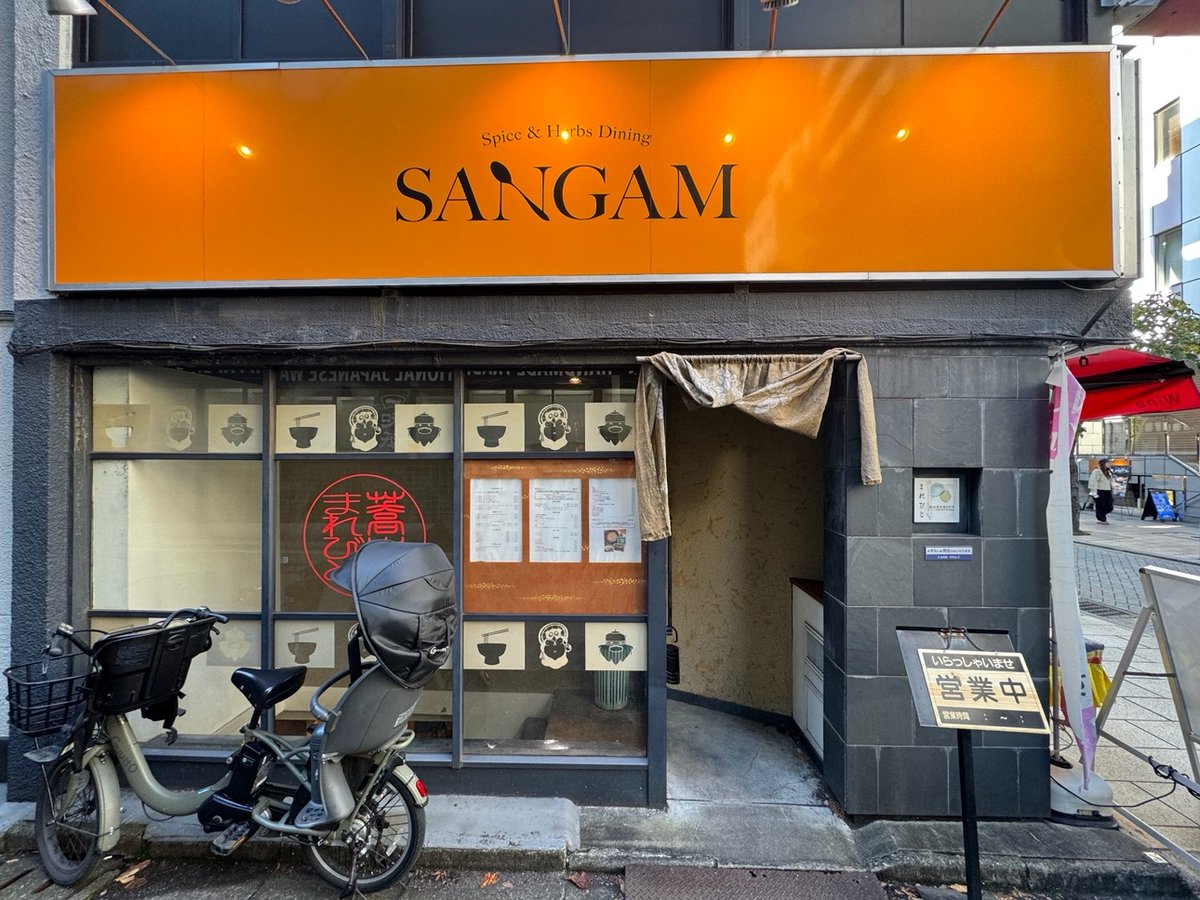
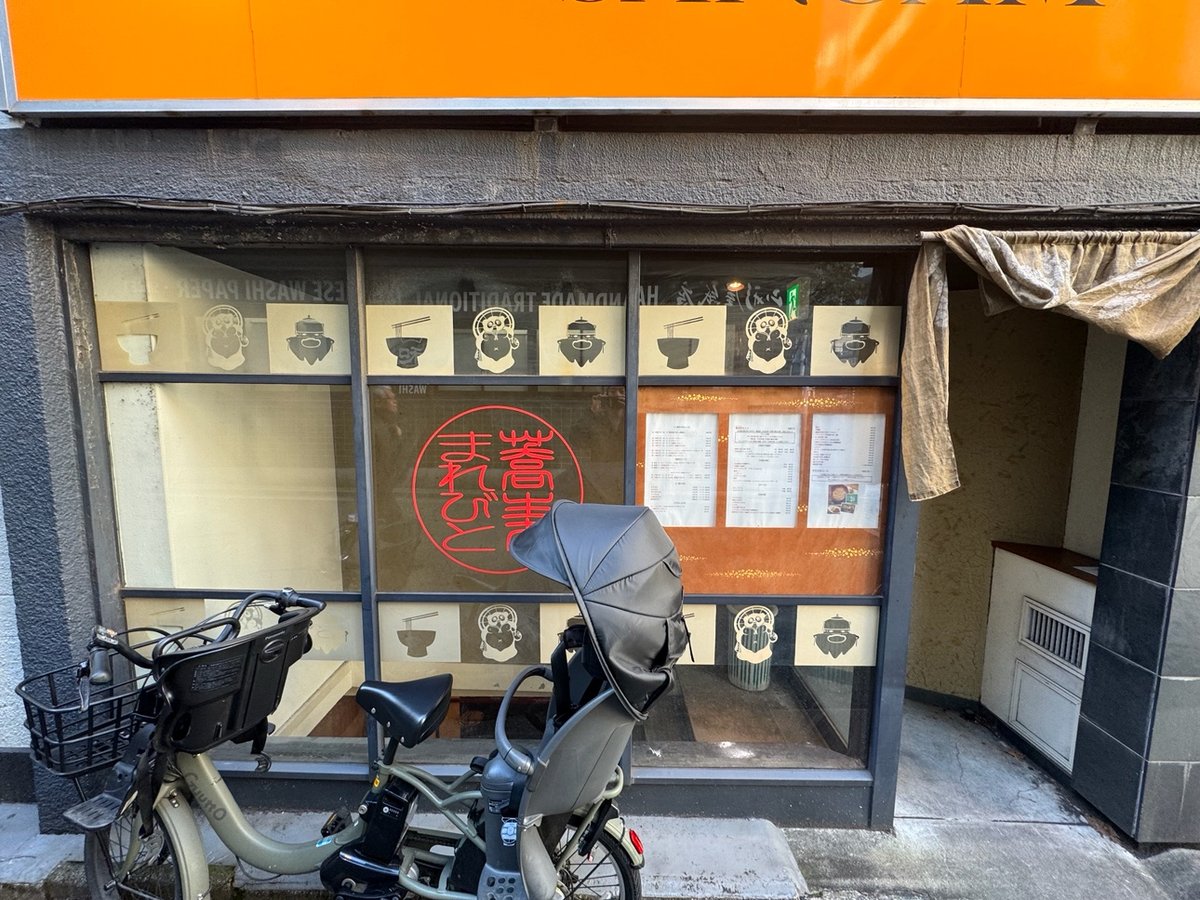
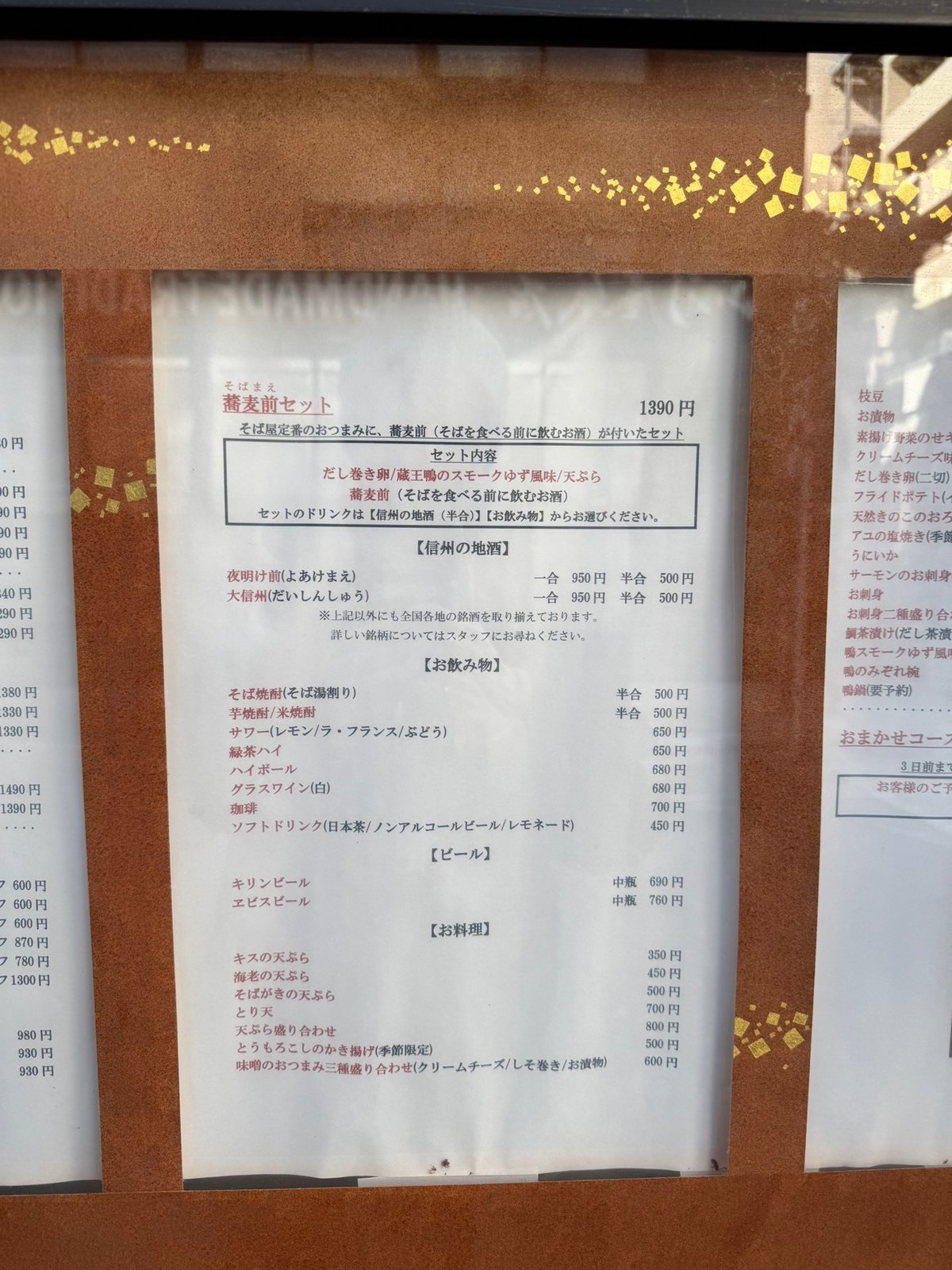
Sets run ¥1,290 to ¥1,680; a plain bowl of the soba on its own is ¥1,100, and unusually, almost everything on the soba list can be ordered in a half size for roughly half price. These are the board's prices on 11 November 2026.
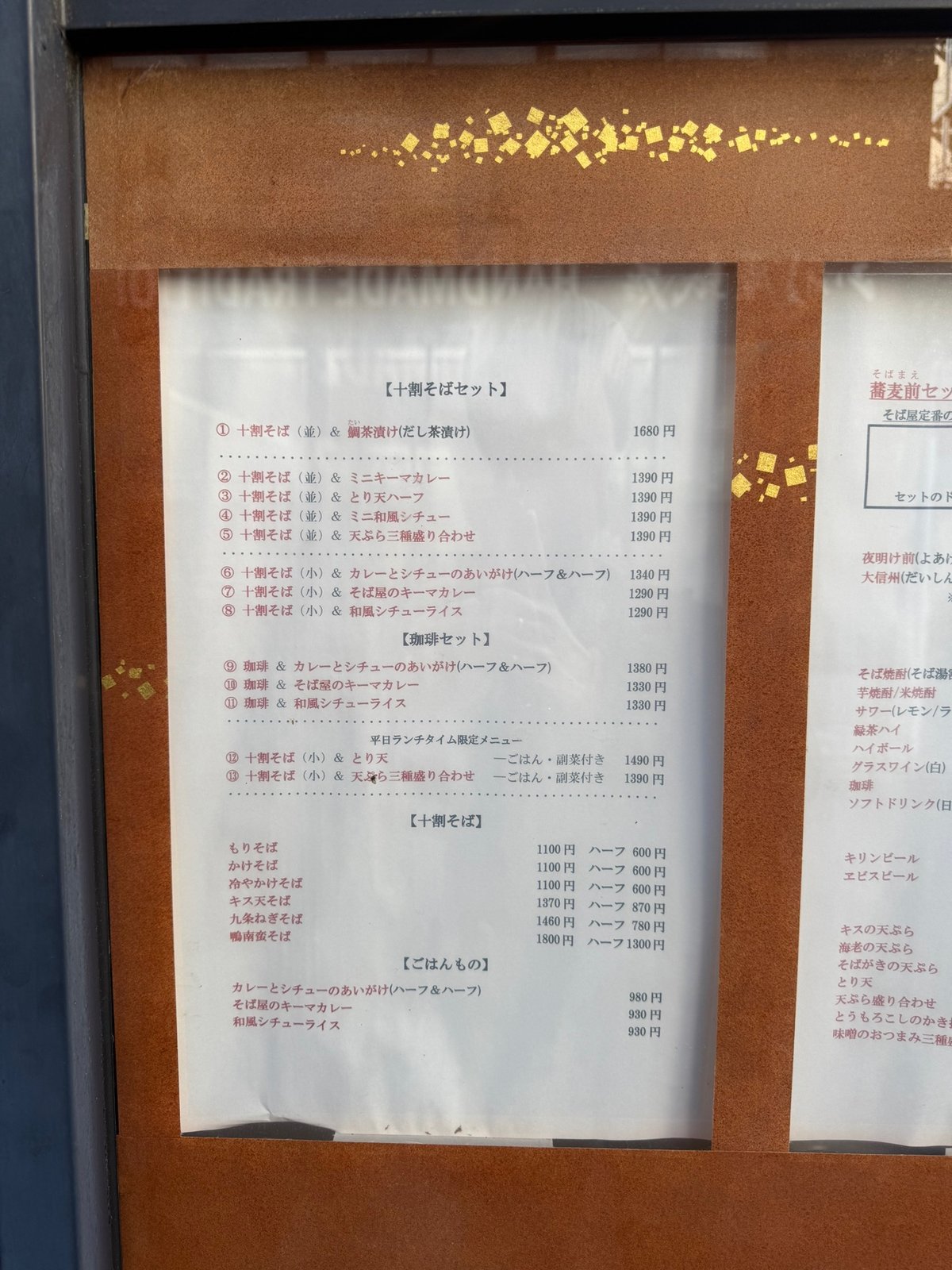
| Jūwari soba sets | Price |
|---|---|
| 1. Jūwari soba (regular) & sea-bream chazuke (dashi chazuke) | ¥1,680 |
| 2. Jūwari soba (regular) & mini keema curry | ¥1,390 |
| 3. Jūwari soba (regular) & chicken tempura (half) | ¥1,390 |
| 4. Jūwari soba (regular) & mini Japanese-style stew | ¥1,390 |
| 5. Jūwari soba (regular) & three-piece tempura assortment | ¥1,390 |
| 6. Jūwari soba (small) & curry-and-stew half & half | ¥1,340 |
| 7. Jūwari soba (small) & the soba shop's keema curry | ¥1,290 |
| 8. Jūwari soba (small) & Japanese-style stew rice | ¥1,290 |
| 9. Coffee & curry-and-stew half & half | ¥1,380 |
| 10. Coffee & the soba shop's keema curry | ¥1,330 |
| 11. Coffee & Japanese-style stew rice | ¥1,330 |
| 12. Jūwari soba (small) & chicken tempura, with rice and side dishes — weekday lunch only | ¥1,490 |
| 13. Jūwari soba (small) & three-piece tempura assortment, with rice and side dishes — weekday lunch only | ¥1,390 |
| Jūwari soba on its own | Price (half) |
|---|---|
| Mori soba (chilled, with dipping broth) | ¥1,100 (¥600) |
| Kake soba (in hot broth) | ¥1,100 (¥600) |
| Hiya-kake soba (in cold broth) | ¥1,100 (¥600) |
| Kisu tempura soba | ¥1,370 (¥870) |
| Kujō-negi soba (Kyoto green onion) | ¥1,460 (¥780) |
| Kamo nanban soba (duck and leek) | ¥1,800 (¥1,300) |
| Rice dishes | Price |
|---|---|
| Curry-and-stew half & half | ¥980 |
| The soba shop's keema curry | ¥930 |
| Japanese-style stew rice | ¥930 |
Set 12, ¥1,490 — the one I ate. It is weekday-lunch only, and it is the fullest picture of what this kitchen does. The tray holds a small bowl of the jūwari soba — thin-cut noodles, served in broth in a red bowl — a pile of chicken tempura (toriten) on paper, rice scattered with black sesame, a small side plate of tamagoyaki and tomato, a condiment dish of sliced leek and shichimi, and a glass dessert of yoghurt with a berry sauce at the end.
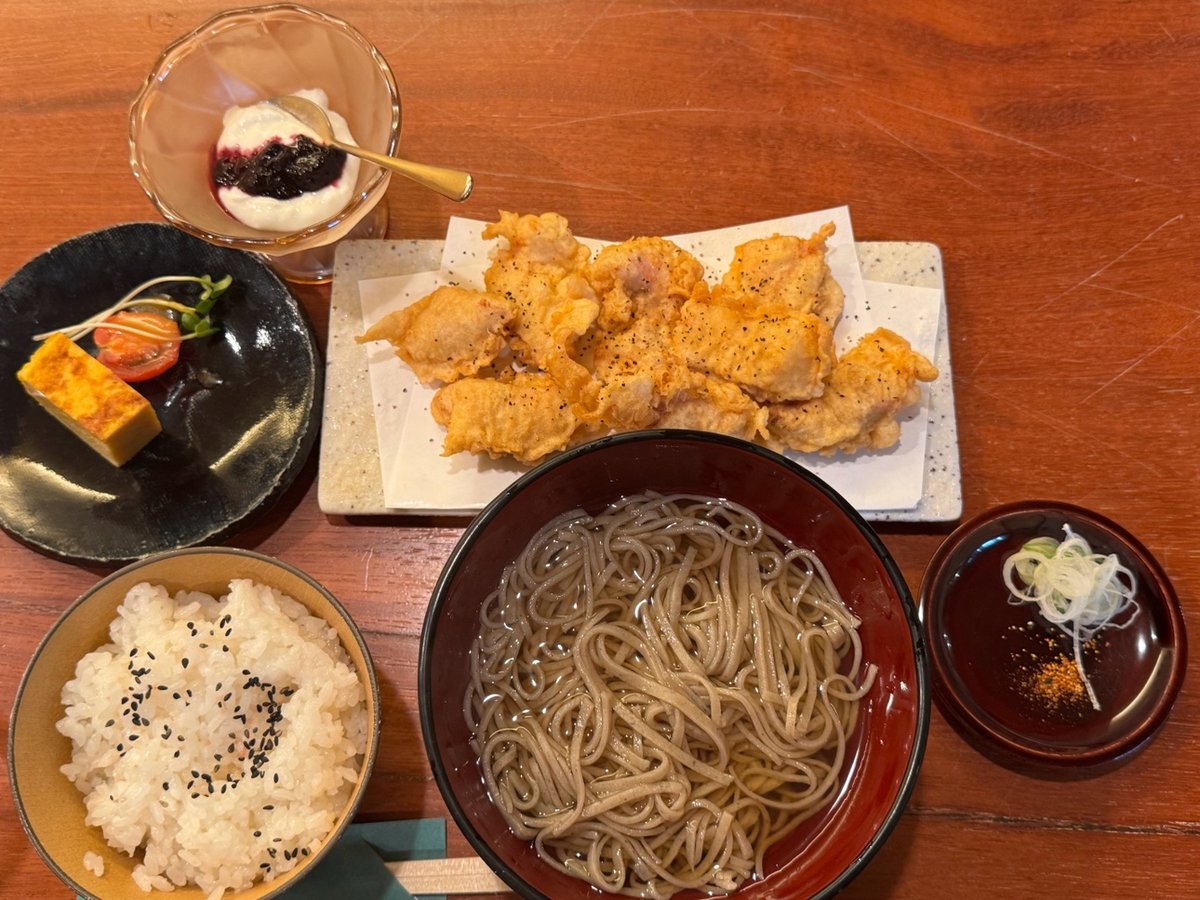
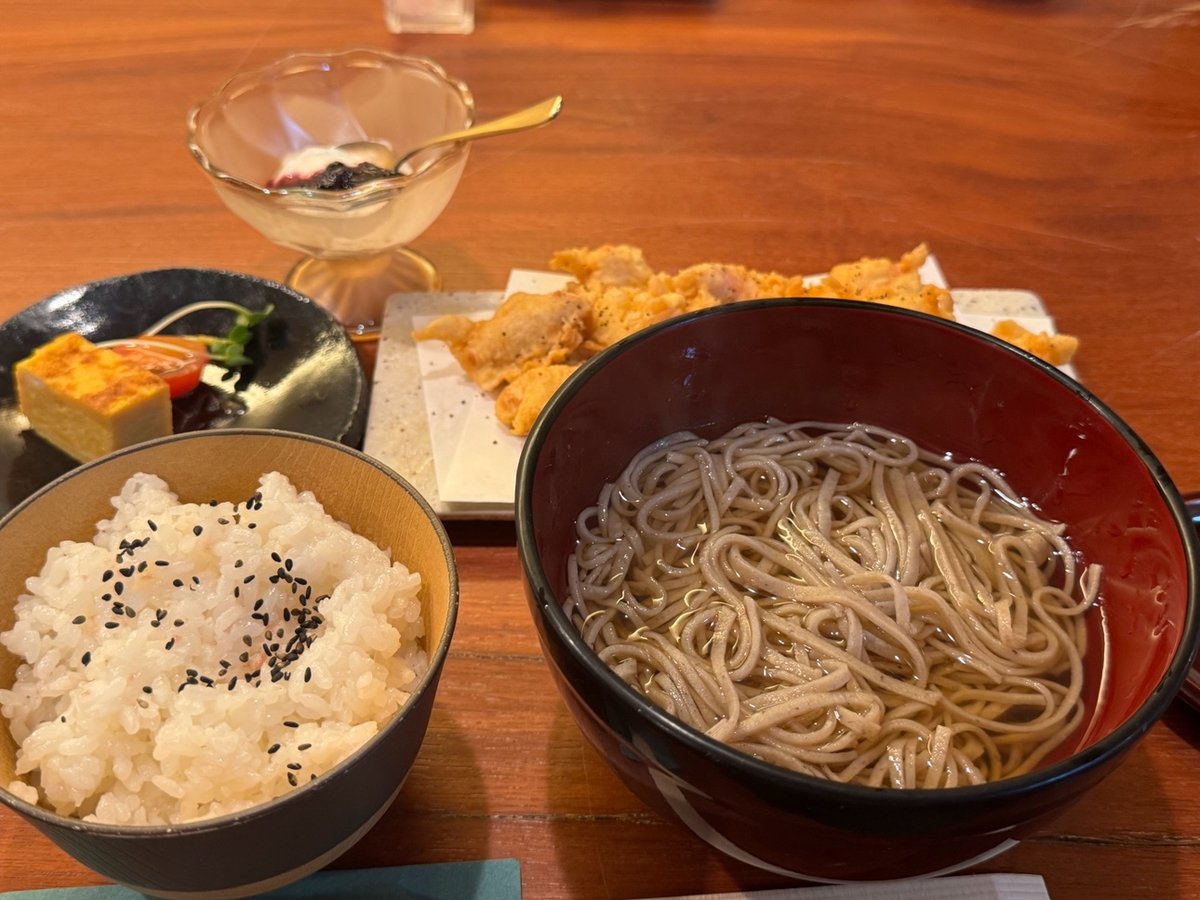
For a lunch set it is an unhurried piece of work — side dish and dessert included, where the Jimbocho lunch rush usually means in, fed, out. If you only want the noodles, the plain mori soba at ¥1,100 is the honest test of the place.
Read the middle and right panels of the board and the shop has a second life: a Sobamae Set for ¥1,390 — dashimaki egg, smoked Zaō duck with yuzu, tempura, and a drink of sake before the noodles. Sobamae is the old Edo custom of drinking sake with small dishes before the soba arrives. The sake list leans on Shinshū: Yoakemae and Daishinshū at ¥950 a gō (¥500 for a half), plus soba shōchū cut with hot soba water. There is an omakase course from ¥3,000, bookable up to three days ahead, and a duck hotpot at ¥3,000 a person, reservation only.
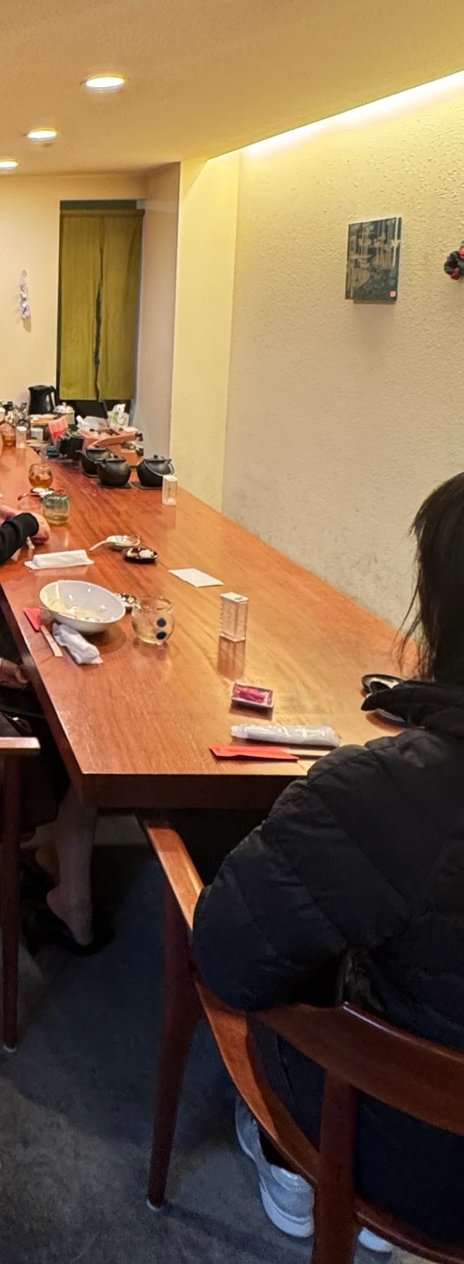
Basement-dark and calm, with one long wooden table running down the middle of the room and small pictures hung along the walls. On a weekday lunchtime it was close to full, mostly with people from the neighbourhood rather than visitors — Jimbocho at lunch is office workers and bookshop staff, and this room fits that.
The set I recommend is weekday-lunch only. Sets 12 and 13 are marked 平日ランチタイム限定 — weekday lunchtime, full stop. Come on a Saturday and the tray I photographed is not on offer, though the regular sets and the soba list are.
Beyond that: the menu board outside is in Japanese, the shop is easy to walk past because another restaurant's sign does the shouting, and it is a basement — no window, no street theatre. Payment I did not confirm, so carry cash rather than assuming, the way I would at any small independent soba shop.
For the lunch sets, a weekday lunchtime — the board's world runs 11:30 to 15:00. Arrive at the earlier end if you want the room before it fills; I flag in the honesty note below that I took those hours from an earlier check rather than re-confirming them on this visit. For the sobamae side of the shop, go in the evening and give the sake list its due.
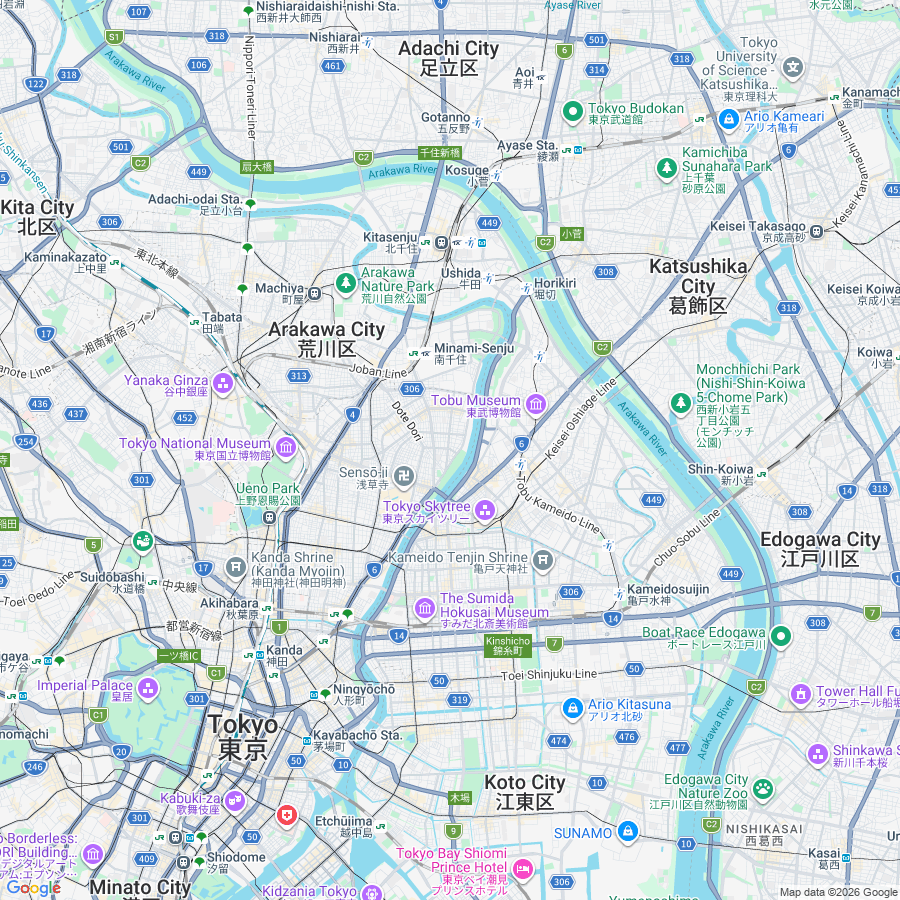
1-13-7 Kanda-Jimbocho, Chiyoda-ku — SL Building B1F, on Suzuran-dōri, about two minutes from Jimbocho Station. Do not navigate by the orange sign; navigate by the red circle on the glass.
| Style | Hand-made jūwari (100% buckwheat) soba; sobamae and sake at night |
| Budget | Sets ¥1,290–1,680; soba alone ¥1,100 (half ¥600) |
| First-timer order | Set 12 — small jūwari soba & chicken tempura with rice and sides, ¥1,490 (weekday lunch only) |
| Hours | Weekday lunch 11:30–15:00 (see honesty note) |
| Address | 1-13-7 Kanda-Jimbocho, Chiyoda-ku (SL Bldg B1F) |
| Nearest station | Jimbocho, ~2 min, on Suzuran-dōri |
| Payment | Not confirmed — bring cash |
| English | Menu board photographed is Japanese only |
| Visited | 11 November 2026 (Wednesday) |
Ten parts buckwheat, nothing else — the noodles are made from 100% buckwheat flour with no wheat flour blended in as a binder. It is the harder way to make soba, and the reason a shop puts it in its name.
Jimbocho Station, about two minutes on foot. The shop is in the basement of the SL Building on Suzuran-dōri (1-13-7 Kanda-Jimbocho). Look for the red circular logo on the glass, not the big orange SANGAM sign above it.
NOSets 12 and 13 are weekday-lunchtime only, per the board photographed on 11 November 2026. The other sets and the plain soba list are the regular menu.
11:30–15:00 on weekdays, from an earlier check of the shop's listing information. I did not re-confirm those hours from a board on this visit, so treat them as the plan, not a promise.
NONot that I saw — the board outside is Japanese only. The sets are numbered 1 to 13, though, so pointing at a number works, and the price tables in this article are that board translated.
Not for lunch — I walked in. The omakase course (from ¥3,000) is bookable up to three days ahead, and the duck hotpot (¥3,000 a person) is reservation only, per the board.
I did not confirm it on this visit, so I am not going to guess. Carry cash, the way you would at any small independent soba shop, and you cannot go wrong.
YESOn a private, tailor-made day. My regular tours run in Akihabara, one stop away; mention Marebito when you book and we will build the day around it.
Prices, set numbers and dish names are transcribed from photographs of the menu board outside the shop, taken on 11 November 2026. What set 12 contained is described from the photographs of the tray itself.
One correction, made from those same photographs: I first recorded this visit in my notes as set 7, the keema curry set at ¥1,290. The tray in the photographs is set 12 — soba, chicken tempura, rice, sides — at ¥1,490. The article follows the photographs, not my notes.
The lunch hours (weekdays 11:30–15:00) come from an earlier check of the shop's listing information, not from a hours board I verified on this visit — the weekday-only restriction on sets 12 and 13 is printed on the board I photographed. I did not confirm which payment methods the shop takes, so the article says to bring cash rather than guessing. I have kept taste judgements out of this piece beyond what the tray's composition shows; soba preferences are personal and a photograph is not a review of flavour.
The interior photograph is cropped so that no other customer's face can be identified.
No affiliate links. I eat in Jimbocho because the bookshops are there and lunch has to happen somewhere; this is the somewhere I would repeat.
About the author. I am Yuuki, an anime tour guide based in Akihabara. I run small-group tours in English most weeks, and I have watched over 1,500 anime series, which is either a qualification or a warning depending on your point of view.
See the private Akihabara tour →
Sources · checked 11 November 2026
A private half-day with a local otaku guide, planned around your fandom. Three to four hours in English, never mixed with other travelers, rated 4.96 by 171 Airbnb guests. Booking here goes straight into my calendar.
Book the private Akihabara anime tour direct See Yuuki's Japan Kit