I ate here on 19 September 2026 and photographed the whole ticket machine. Every price below is what it was charging that night.
Yes, and IFU is the one I point people to. Nineteen of its twenty-one ramen bowls are under ¥1,100, the cheapest is ¥790, a large portion of noodles costs nothing extra, and it is four minutes from the station on the Showa-dori side. The ticket machine switches to English and Chinese. It is open from 5am to 4am, every day.
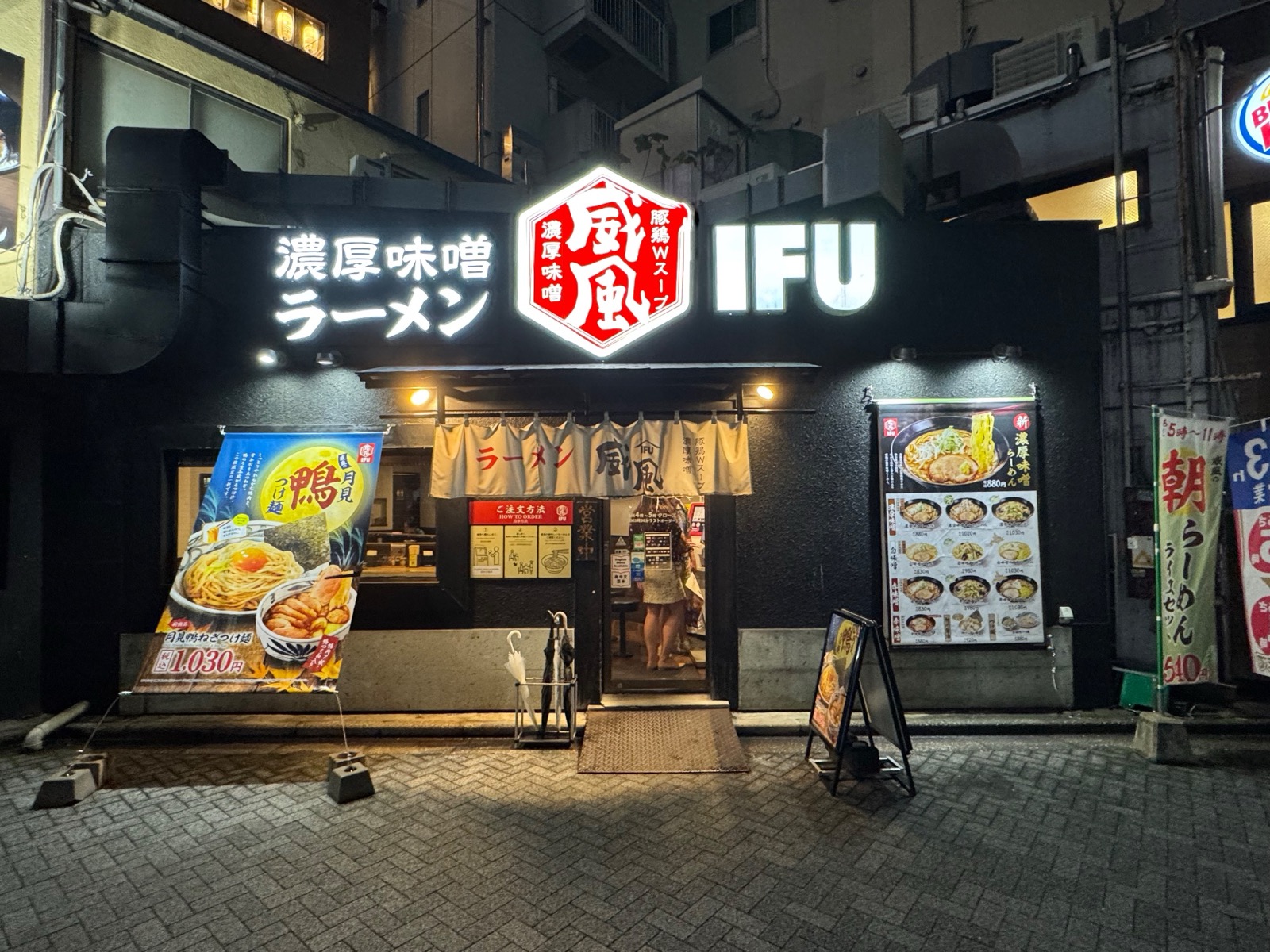
What is IFU?
A miso ramen specialist. The kanji on the sign, 威風, is read ifu, and the shop writes it in roman letters right beside it, so you are looking for either. The whole menu is built on one broth — chicken and pork simmered to a thick white paitan — with four different miso pastes stirred into it, plus a soy-sauce option for people who do not want miso at all.
How much does it actually cost?
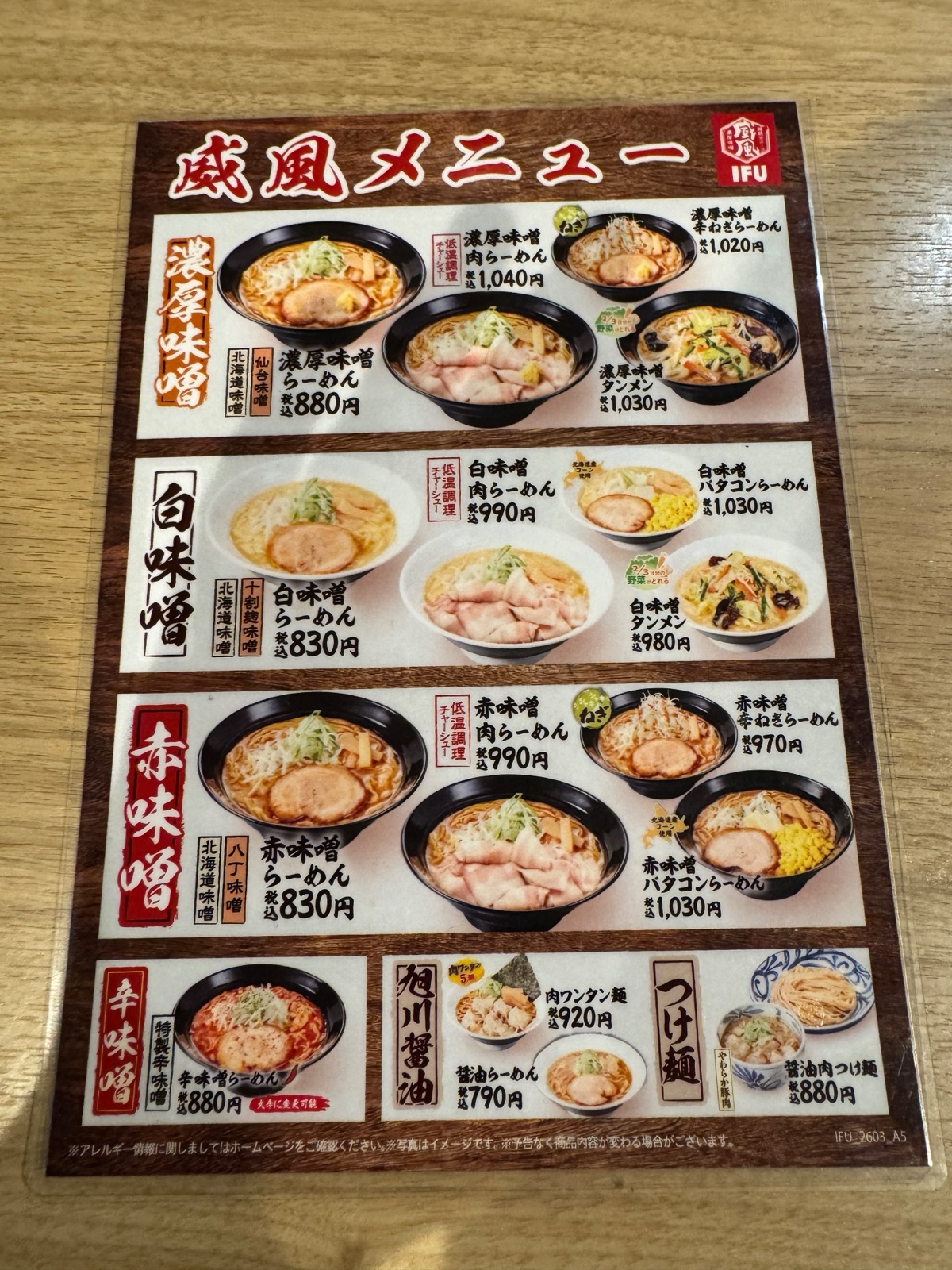
¥790 to ¥1,130 for a bowl. That is the entire ramen menu, and it is the reason this place ends up in my recommendations: you are not choosing between cheap and good. Here is every bowl on the machine that night.
| Bowl | Price |
|---|---|
| Soy-based Ramen (Asahikawa style) | ¥790 |
| White Miso Ramen | ¥830 |
| Red Miso Ramen | ¥830 |
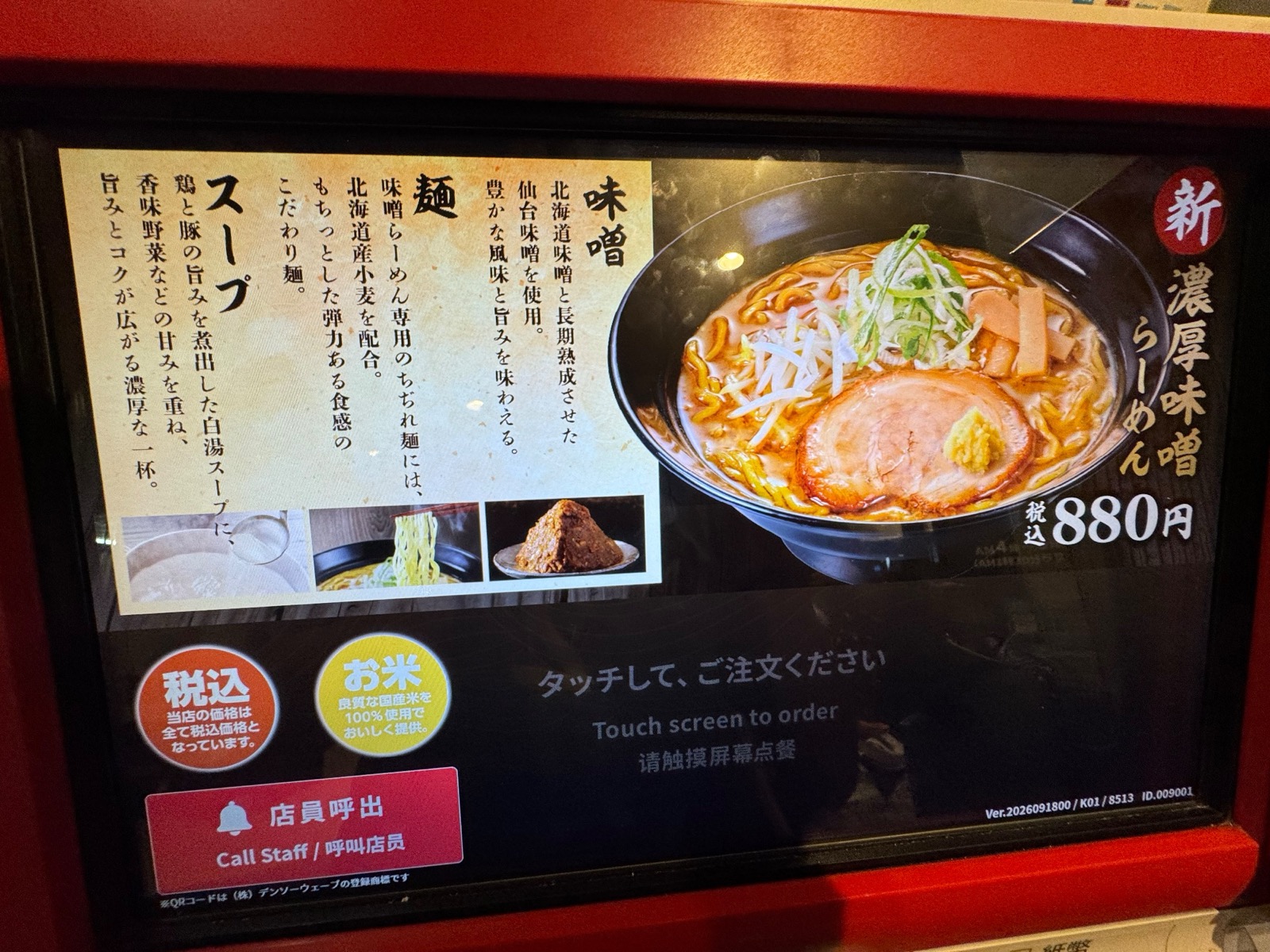
| Extra Rich Miso Ramen | ¥880 |
| Spicy Miso Ramen | ¥880 |
| Soy-based Dip Noodles with Pork Belly | ¥880 |
| Soy-based Ramen with Wonton | ¥920 |
| White Miso Ramen with Pork | ¥990 |
| Red Miso Ramen with Pork | ¥990 |
| Extra Rich Miso Ramen with Egg | ¥990 |
| Red Miso Ramen with Shredded Leek | ¥970 |
| White Miso Ramen with Stir-Fried Veggies | ¥980 |
| Red Miso Ramen with Stir-Fried Veggies | ¥980 |
| Extra Rich Miso Ramen with Shredded Leek | ¥1,020 |
| Extra Rich Miso Ramen with Stir-Fried Veggies | ¥1,030 |
| White Miso Ramen with Corn & Butter | ¥1,030 |
| Red Miso Ramen with Corn & Butter | ¥1,030 |
| Extra Rich Miso Ramen with Pork | ¥1,040 |
| Extra Rich Miso Ramen with Corn & Butter | ¥1,080 |
| Extra Rich Miso Ramen Special | ¥1,130 |
| Extra Rich Miso Ramen with Extra Chashu | ¥1,130 |
Is a large portion really free?
Yes. On the size screen, regular and large sit side by side and the large one is marked ¥0. You pick it before you pay, not after, and nobody will ask you to justify it. If you are hungry, this is the single biggest reason to come here rather than anywhere else at this price.
What are the four miso types?
Four genuinely different miso pastes, not four strengths of one. Extra Rich is a Hokkaido and aged-Sendai blend and is the house bowl; White is the mildest; Red uses Hatchō miso and tastes drier; Spicy is a chilli-miso stirred into the broth rather than sprinkled on top. All four sit on the same chicken-and-pork paitan.
| Line | Paste | What it tastes like |
|---|---|---|
| Extra Rich (濃厚味噌) | Hokkaido miso blended with long-aged Sendai miso | The house bowl. Thick, sweet-savoury, clings to the noodles |
| White (白味噌) | Hokkaido jūwari kōji white miso | The mildest. Closest to miso soup, good if you dislike salty ramen |
| Red (赤味噌) | Hatchō miso | Darker and drier-tasting, slightly bitter edge |
| Spicy (辛味噌) | House chilli-miso blend | The heat is stirred in, not sprinkled on |
If it is your first visit, order the Extra Rich Miso Ramen at ¥880. It is the bowl on every poster and the one the shop is built around.
Does the ticket machine have English?
Yes — it is a touch screen, and the language control sits at the bottom left of every page. The start screen already says Touch screen to order in English and Chinese before you touch anything. Pick a bowl, pick your noodle size, add toppings if you want, then pay. No conversation is required at any point.
There is also an allergen button on the ordering screen. That is rare on a ticket machine at this price and it is the reason I am comfortable bringing groups here.
Can you pay with a card?
Bring cash or a transport IC card. The machine takes notes and coins, and the sticker panel above it shows the usual IC family — Suica, PASMO, ICOCA, nanaco, WAON, iD, QUICPay, Rakuten Edy. Google's business listing says credit cards are not accepted, and I did not photograph the payment slots closely enough to contradict it, so assume no Visa or Mastercard.
What can you add to a bowl?
Six toppings, from ¥100 for a slice of chashu to ¥290 for five pork wontons, plus side sets at ¥250–¥420 and drinks from ¥190. Adding an egg and a slice of chashu to the ¥880 house bowl still lands under ¥1,100, which is the point of eating here.
| Topping | Extra |
|---|---|
| Chashu, one slice | +¥100 |
| Seasoned egg | +¥110 |
| Slow-cooked chashu, half portion | +¥160 |
| Shredded white leek | +¥190 |
| Pile of stir-fried vegetables | +¥250 |
| Pork wontons, five | +¥290 |
Side sets are ¥250–¥420 (mini chashu rice bowl, half fried rice, gyoza and rice, gyoza and half fried rice). Drinks: cola or ramune ¥200, oolong ¥190, highball or lemon sour ¥390, bottled beer ¥450.
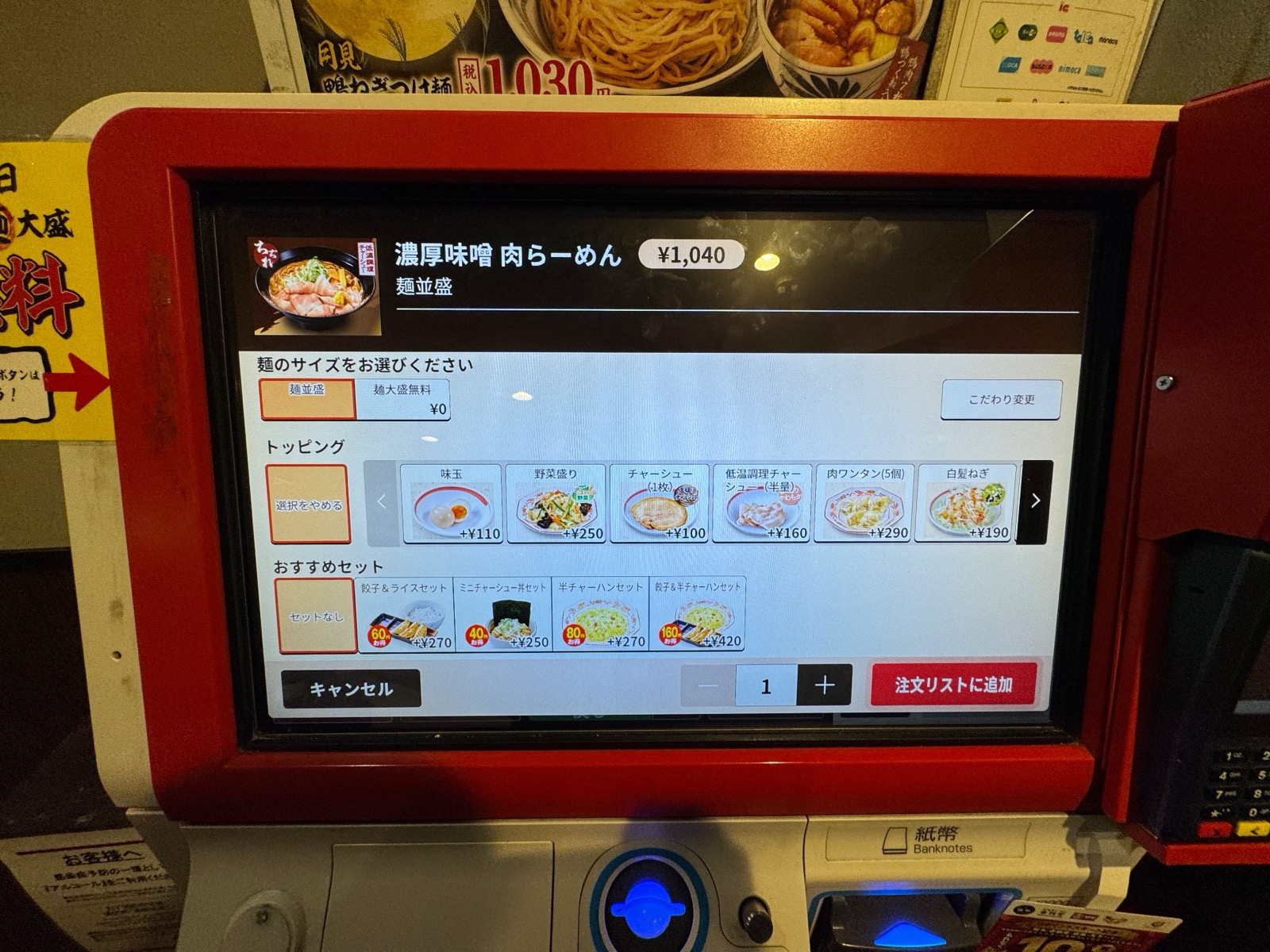
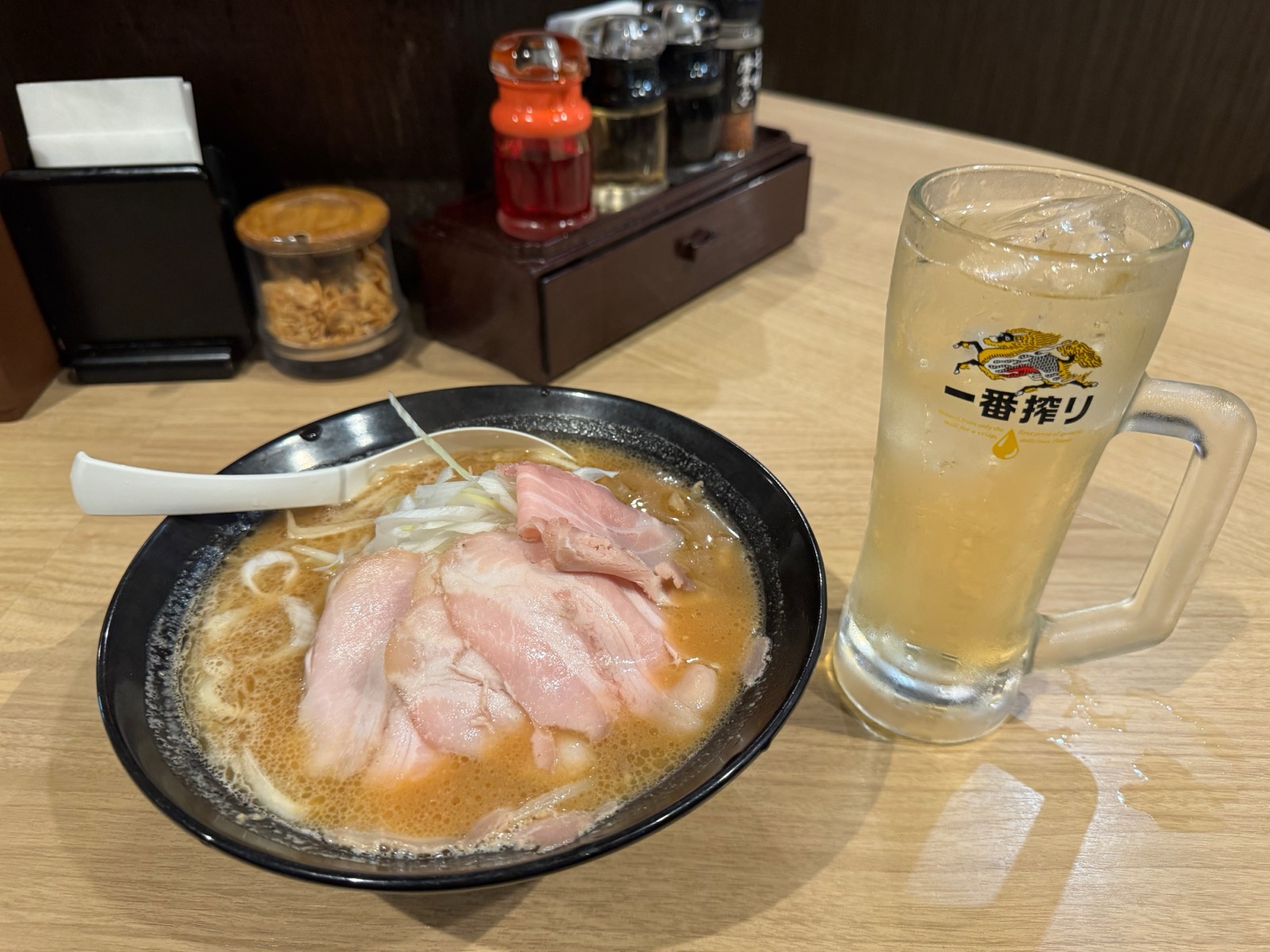
A worked example. I had the Extra Rich Miso Ramen with Pork (¥1,040) and a highball (¥390). Total ¥1,430, on the table in a few minutes, at half past eight on a Saturday night.
When is it open?
05:00 to 04:00, every day. In practice that means the only hour it is shut is between four and five in the morning. Two things follow from that: if you are jet-lagged and awake before dawn, this is a real hot meal near the station, and if you have been drinking in Akihabara until the trains start again, so is this. There is a morning ramen set advertised on the banner outside at ¥540 — I have not eaten it and cannot tell you what comes with it.
What's the catch?
It is a chain-style shop, not a destination ramen-ya. Google reviewers give it 3.1 from over 900 ratings, which is fair: nobody is going to tell you this is the best ramen in Tokyo. What it is, is consistently under ¥1,000, open at hours when nothing else is, and easy to order in if you read no Japanese. Those are different things and this article is about the second one.
There is nothing for vegetarians. The broth is chicken and pork for every bowl on the menu, including the vegetable ones — the stir-fried vegetables sit on the same paitan. If that matters, go elsewhere.
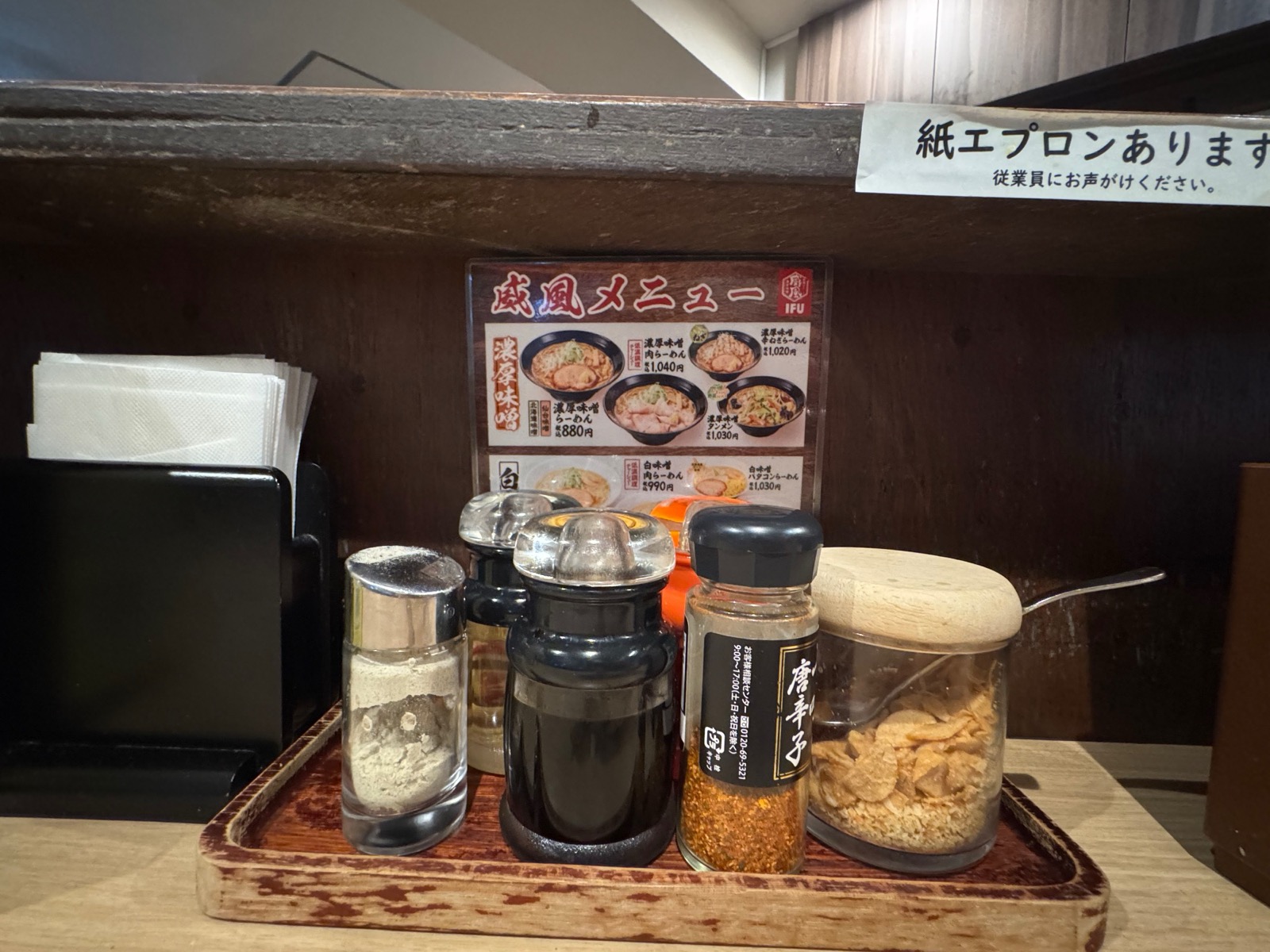
Beyond that: it is a narrow shop, it gets loud, and at lunchtime you may wait. Paper aprons are free if you ask — worth doing, because the thick broth spits.
Where exactly is it?
1-20 Kanda-Sakumachō, Chiyoda-ku — about four minutes from JR Akihabara, on the Showa-dori side rather than the Electric Town side. Look for the black frontage with the red hexagonal seal and the white letters IFU.
How does it compare to the other cheap places near the station?
Different jobs. Shōwa Shokudō is a teishoku diner — rice bowls and set meals, from ¥920. Go!Go!Curry is one dish done one way. IFU is the ramen answer: cheaper at the bottom end than either, free large noodles, and open through the night. If someone in your group reads no Japanese and everyone wants something different, the four miso lines plus the soy option cover more people than a one-dish shop can.
All four shops I have eaten at and photographed are side by side in one table on Where should you eat in Akihabara?
In one table
| Style | Miso ramen specialist |
| Budget | ¥790–¥1,130 for a bowl |
| First-timer order | Extra Rich Miso Ramen, ¥880 |
| Large noodles | Free — choose before you pay |
| Hours | 05:00 – 04:00, daily |
| Address | 1-20 Kanda-Sakumachō, Chiyoda-ku |
| Nearest exit | JR Akihabara, Showa-dori side, ~4 min |
| Payment | Cash and transport IC cards; no credit cards |
| Vegetarian | No — chicken and pork broth throughout |
| English | Full menu translation on the ticket machine |
| Allergens | Allergen information button on the machine |
Frequently asked questions
Do I need to speak Japanese to eat at IFU? No. The ticket machine is a touch screen with English and Chinese, you pick from photographs, and you hand the printed ticket to staff.
Is a large portion of noodles really free at IFU? Yes. Choose it on the size screen before paying — it is listed at ¥0.
Which miso should I order first at IFU? Extra Rich, ¥880. It is the house bowl and the one every poster is advertising.
Can I eat ramen at four in the morning in Akihabara? Almost. It runs 05:00 to 04:00 daily, so the one hour to avoid is 4–5am.
Is there anything for vegetarians at IFU? No. Every bowl, including the vegetable ones, is built on a chicken-and-pork broth.
Can we eat at IFU on an Akihabara tour? Yes. It is fast, it is under ¥1,000, and the multilingual machine plus the allergen button means nobody in the group gets stuck. Tell me in advance if anyone is vegetarian and I will pick somewhere else.
Sources and honesty note
Prices, dish names, topping costs and the free large-noodle option are transcribed from photographs I took of the ticket machine and the counter menu on 19 September 2026. The address and the 05:00–04:00 opening hours come from the shop's Google business listing, not from a sign I photographed. The ¥540 morning set is read off the banner outside and I have not eaten it. I have not confirmed whether credit cards are accepted, so the article says to bring cash or an IC card rather than guessing.
No affiliate links. I eat here because it is four minutes from where my tours start and it is open when nothing else is.
About the author. I am Yuuki, an anime tour guide based in Akihabara. I run small-group tours in English most weeks, and I have watched over 1,500 anime series, which is either a qualification or a warning depending on your point of view.
See the Akihabara anime tour →
Want a local to walk Akihabara with you?
Half a day, one local, and a route built around your fandom — rated 4.96 / 5 on Airbnb. Booking here goes straight into my calendar. Doing Japan solo? I also keep a short list of what I actually recommend to guests.
Book the private Akihabara anime tour direct — ¥18,000 See Yuuki's Japan Kit