I drank here on the afternoon of 11 November 2026 and photographed the menu. Every price below is transcribed from that menu — this is a snapshot of one Wednesday, not a scraped listing.
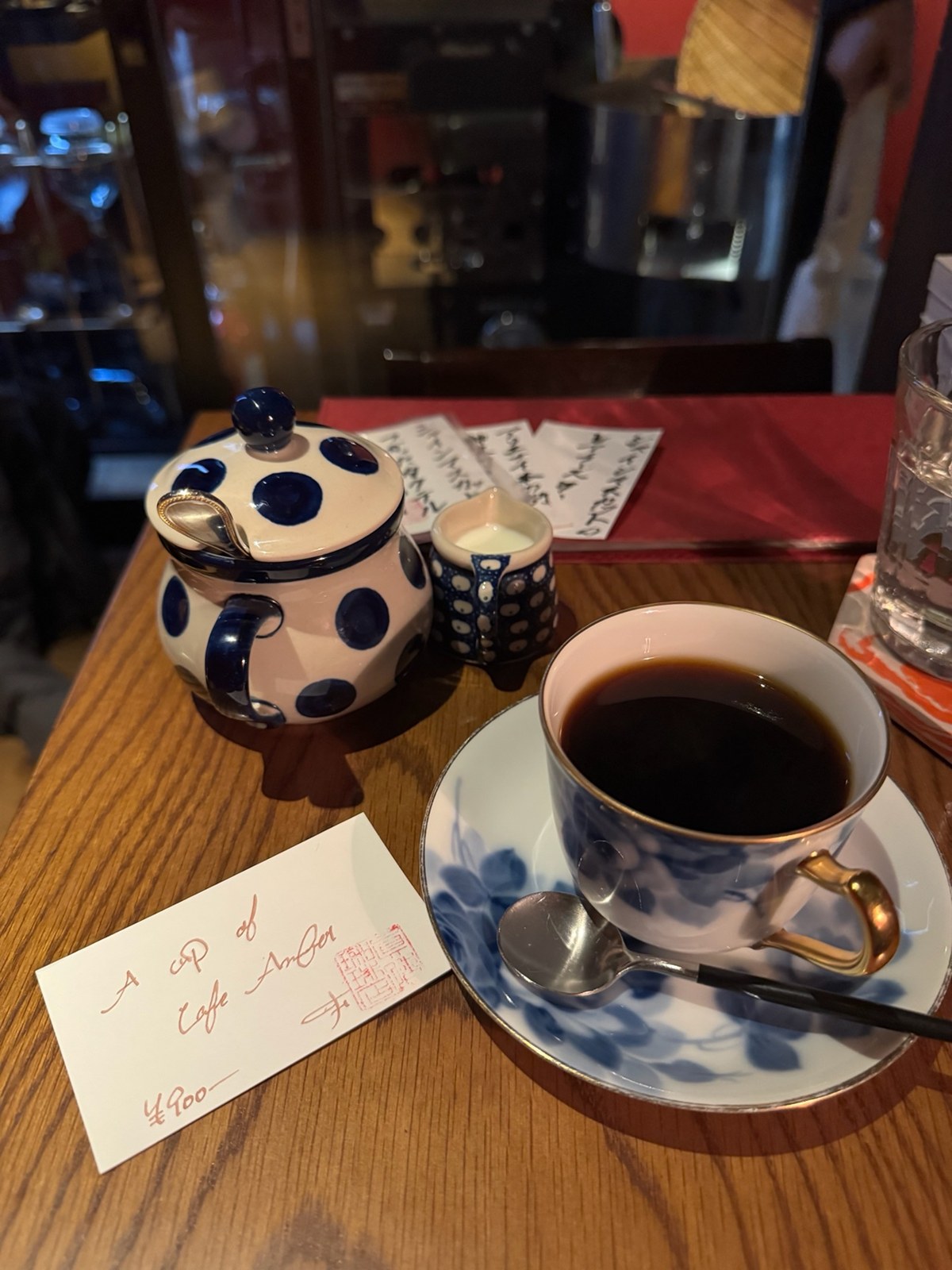
There is no printed bill at Mafumi Coffee and Books. My coffee arrived with a small card lettered by hand in brown ink — "A cup of Cafe Amber, ¥900" — and stamped with the shop's red seal, like a signature on a letter. In a café shelved with some 4,000 books, the receipt doubles as a bookmark. That one card is the whole shop in miniature: beans roasted in the building, coffee poured slowly through cloth, and nothing done the fast way when the slow way is better.
Mafumi Coffee and Books (眞踏珈琲店, "Mafumi" from here) stands in Kanda-Ogawamachi, on the edge of Jimbocho, Tokyo's secondhand-book district, one stop from my usual patch in Akihabara. The cup I drank costs ¥900 for a small pour — priced like a ticket to the room as much as a drink — and I would pay it again for the two hours of reading that came with it.
What is Mafumi Coffee and Books?
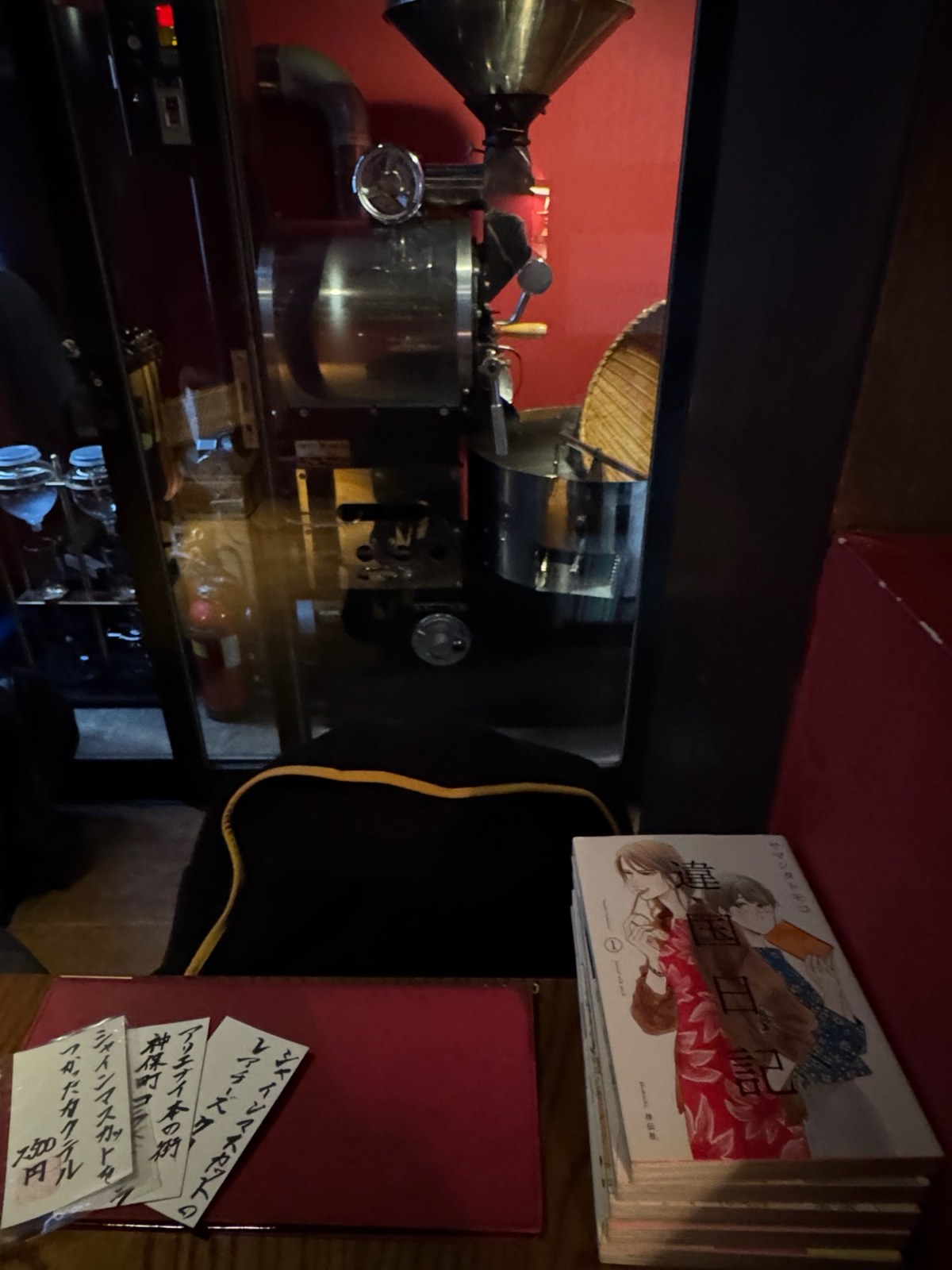
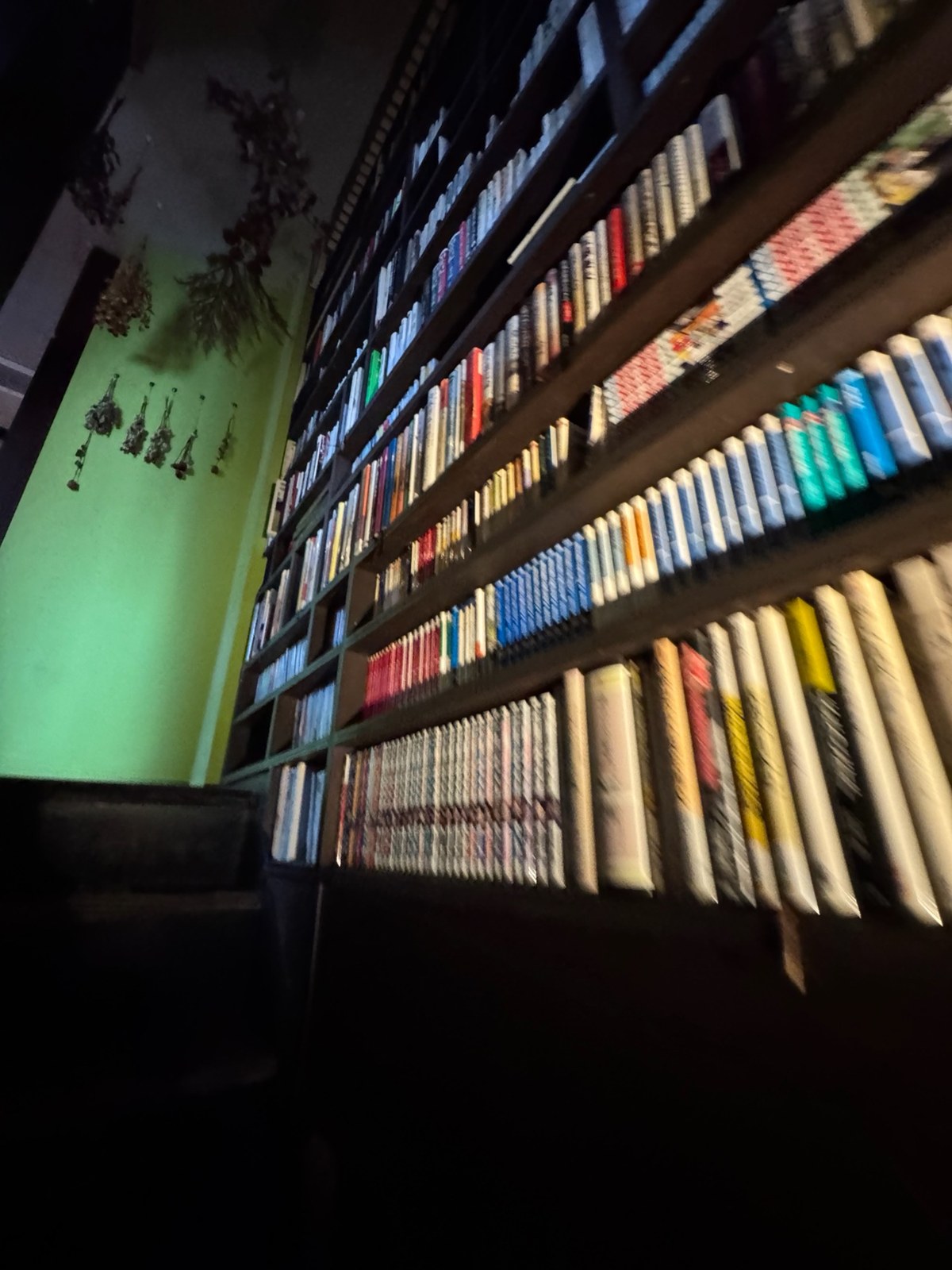
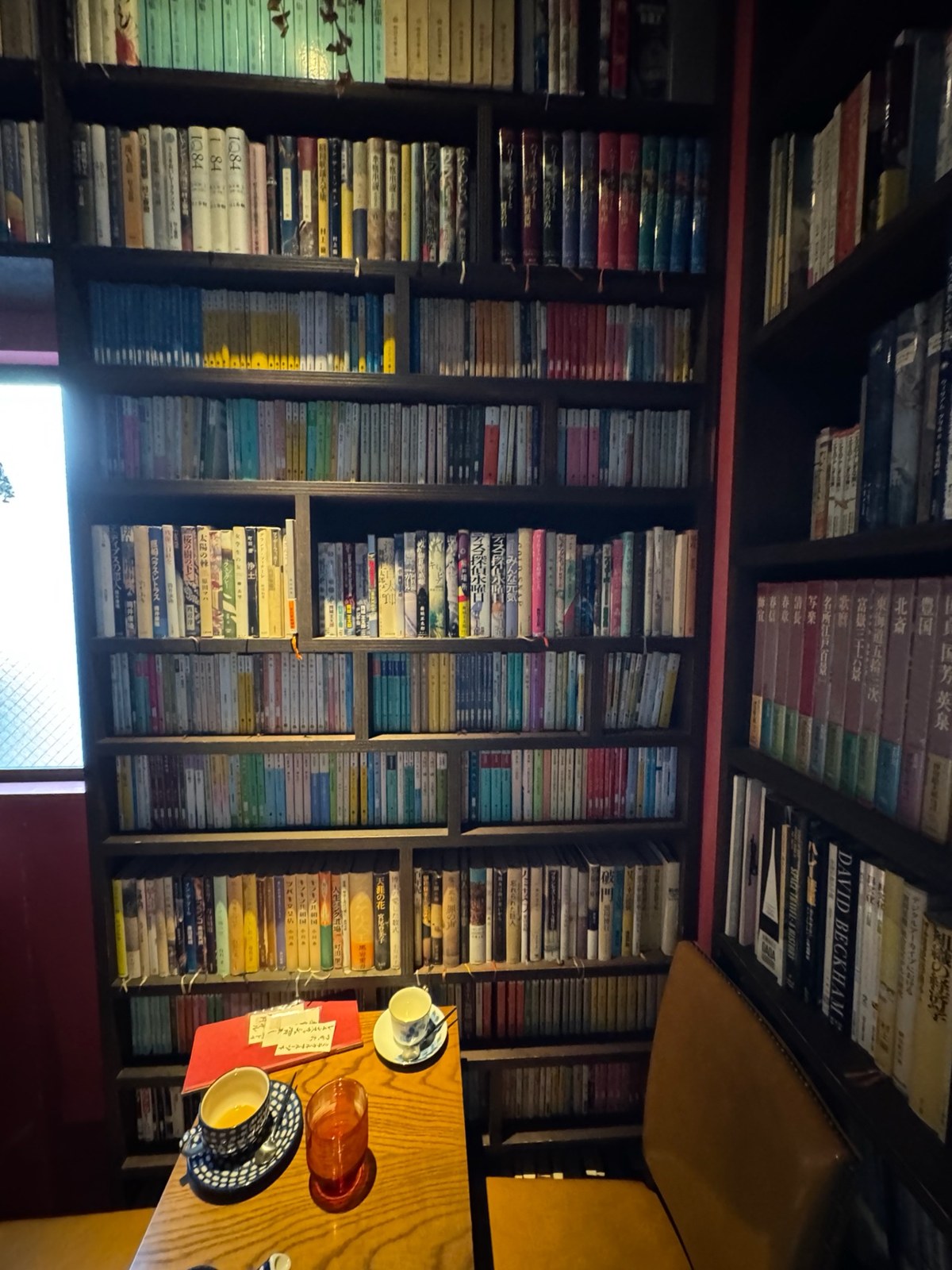
A book café in the literal sense: around 4,000 books on the shelves, and the coffee roasted behind glass a few metres from your table. The English half of the name, MAFUMI COFFEE AND BOOKS, is simply the truth. The shop opened in 2016, and the shelves hold the owner's own collection — novels, manga and research books mixed together, all of them there to be read at your table. The hot coffees are poured by nel drip, the old cloth-filter method that predates paper filters and rewards patience.
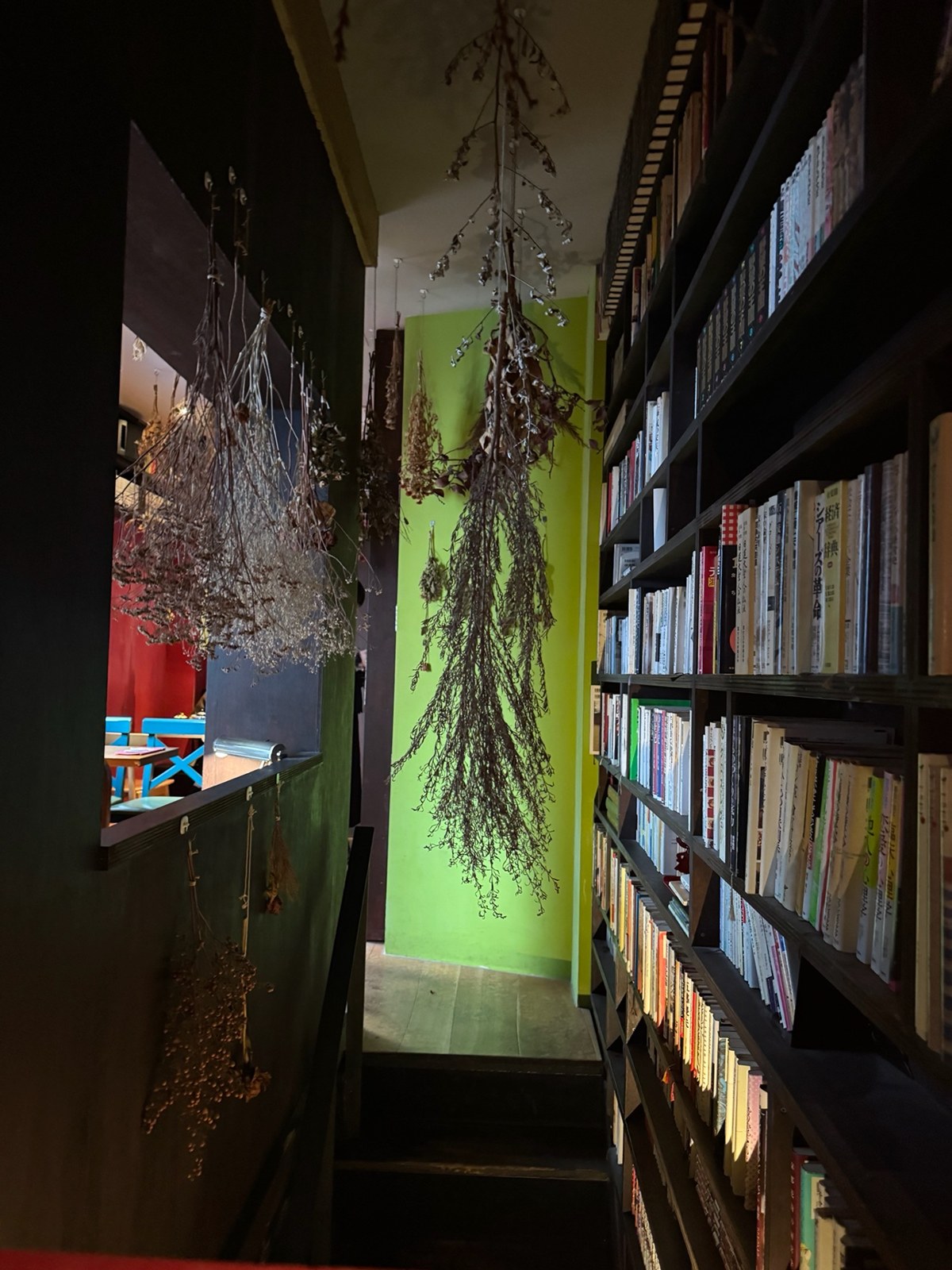
From the street it gives almost nothing away: a brick wall, a heavy wooden door with an iron ring handle, a small brass plaque, and greenery doing most of the talking. There is a counter on the ground floor and table seats up the stairs — and the stairs themselves are a bookshelf, which tells you most of what you need to know about the place. Start with the coffee, though. Specifically, with what to order first.
What should you order the first time?
The Cafe Amber (珈琲 琥珀), ¥900 — order that first. It is the house coffee, and the one I drank. The menu describes the house pours as nel-drip, made carefully, cup by cup: the Amber is served as a 100cc cup, while its sibling, the Cafe Crimson Lake, is a house-roasted Brazilian single origin served at half that volume, 50cc, for ¥1,400. These are tasting pours, not mugs — judge them the way you would a small glass of something at a bar, not a chain-store coffee.
The card from the top of this page arrives with the Amber, and it is not a prop for writers — it is simply how the bill comes here, lettered by hand and sealed in red. Small thing. It is the thing I photographed twice.
If you want more coffee rather than more ceremony, the menu softens the blow: a second cup of any coffee or tea is ¥400 off. The cold side of the list is worth knowing about too — the Cafe Lapis Lazuli is a cold brew steeped for 15 hours that the menu itself describes as whisky-like, and the Café Royal involves a brandy-soaked sugar cube set alight. First visit, though: the Amber, a shelf book, and no agenda.
How much does it cost?
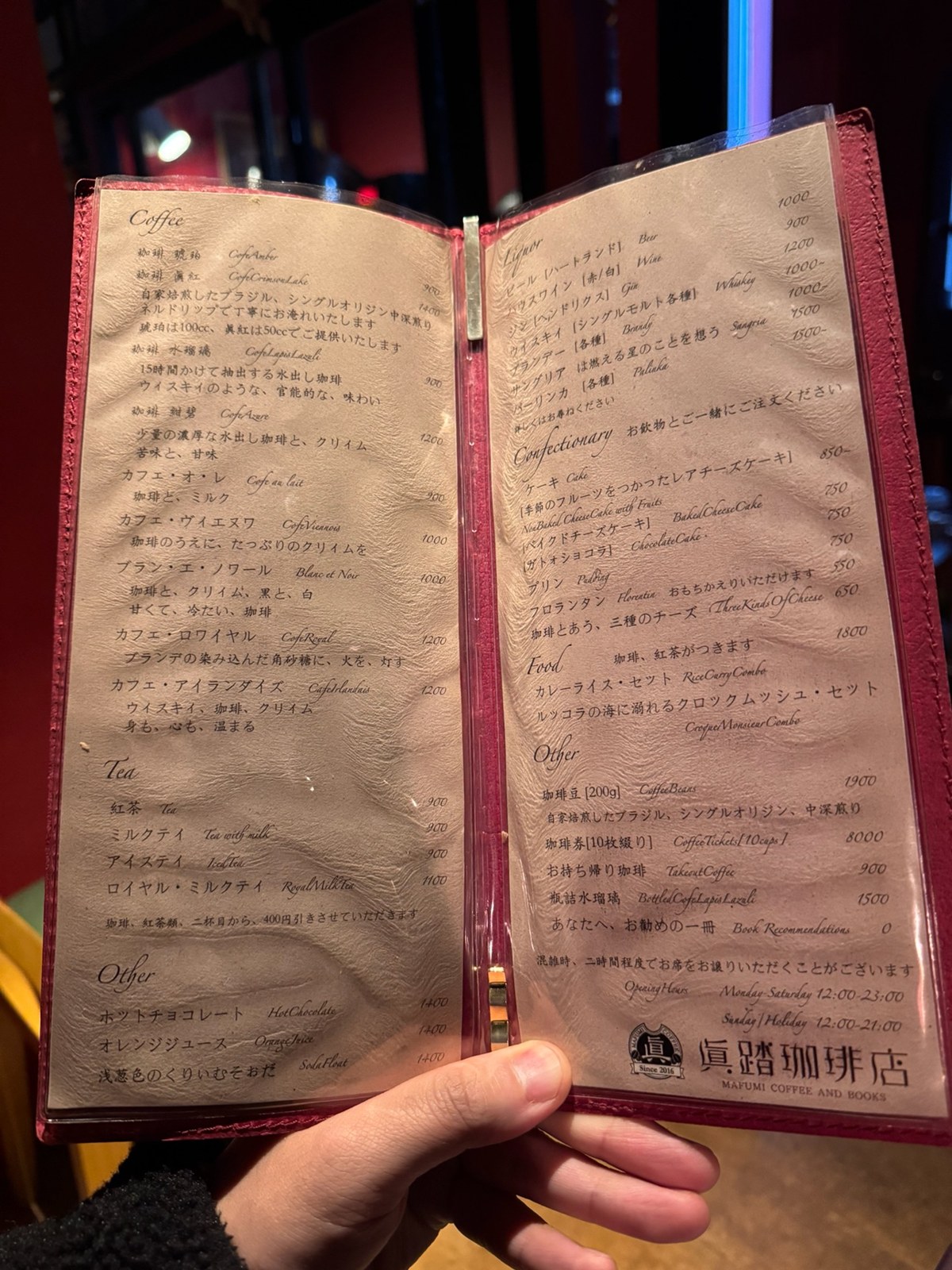
Coffee runs ¥900 to ¥1,400, sweets ¥550 to ¥850, and the two food sets are ¥1,800 with a drink included. Beans and a bottled cold brew go home with you if you ask. These are the menu's prices on 11 November 2026.
Coffee (nel drip, roasted in-house)
Price
Cafe Amber (琥珀) — the house coffee, 100cc
¥900
Cafe Crimson Lake (真紅) — Brazil single origin, medium-dark, 50cc
Cafe Azure (紺碧) — a small, rich cold brew with cream
¥1,200
Café au lait
¥900
Cafe Viennois — coffee under plenty of cream
¥1,000
Blanc et Noir — coffee, cream, black and white
¥1,000
Café Royal — a brandy-soaked sugar cube, set alight
¥1,200
Café Irlandaise — whisky, coffee, cream
¥1,200
Tea & other drinks
Price
Tea / milk tea / iced tea
¥900
Royal milk tea
¥1,100
Hot chocolate / orange juice / pale-blue cream soda
¥1,400 each
Second cup of coffee or tea
¥400 off
Sweets (to order with a drink)
Price
No-bake cheesecake with seasonal fruit
¥850~
Baked cheesecake / gateau chocolat / pudding
¥750
Three kinds of cheese, chosen to go with coffee
¥650
Florentine (takeaway available)
¥550
Food (coffee or tea included)
Price
Curry rice set
¥1,800
Croque-monsieur set
¥1,800
To take home
Price
Coffee beans, 200g (house-roasted Brazil single origin)
¥1,900
Bottled Cafe Lapis Lazuli
¥1,500
Takeout coffee
¥900
A book recommendation — "a book for you", chosen by the staff
¥0
That last line is really on the menu, and it is the shop in miniature: a book recommendation costs nothing. Tell the staff what you like, and they will pick a volume off the shelves for you.
What's it like inside?
You climb to the upstairs tables on a staircase that is itself a bookshelf, between floor-to-ceiling spines. Dried flowers hang from the ceiling in long strands, the walls are colour-blocked in deep green and red, the reading light comes from brass banker's lamps, and the tables hold whatever the last reader left stacked — on mine, a pile of the manga Ikoku Nikki (違国日記). It feels closer to a private library that serves coffee than to a café that happens to own books.
Reviewers of the shop swear there is a hidden door in one of the bookshelves. I did not test that on this visit, so it stays a rumour I am passing on, not a fact I am printing — pull books gently, just in case.
What's the catch?
Know before you go: you are paying for the room, not the volume. ¥900 buys a 100cc cup — by café-chain arithmetic that is expensive coffee. By the arithmetic of two unhurried hours in a quiet room five minutes from Jimbocho Station, it is priced like a museum ticket with a drink included. Know which purchase you are making, and the price stops being a surprise.
Three more things worth knowing first. At busy times the menu asks you to give up your seat after about two hours, so time your visit for the reading, not a whole afternoon. The seating is upstairs and the stairs are the bookshelf — this is not a step-free space. And it is a reading room before it is anything else: people come here to be quiet with a book, so it is the wrong pick for a group that wants to talk loudly or spread laptops across a table. The printed menu is Japanese with English drink names only, and I did not confirm payment — bring cash, the way you would at any small independent kissaten.
When should you go?
Go in the evening. The hours printed on the menu run Monday to Saturday, 12:00–23:00; Sundays and holidays, 12:00–21:00 — and Jimbocho's bookshops shut early, which makes Mafumi the district's after-dark room: buy a paperback in the late afternoon, then read it here with the banker's lamps on. Go on a weekday if you can; weekends are when the two-hour request at busy times is most likely to apply.
Where exactly is it?
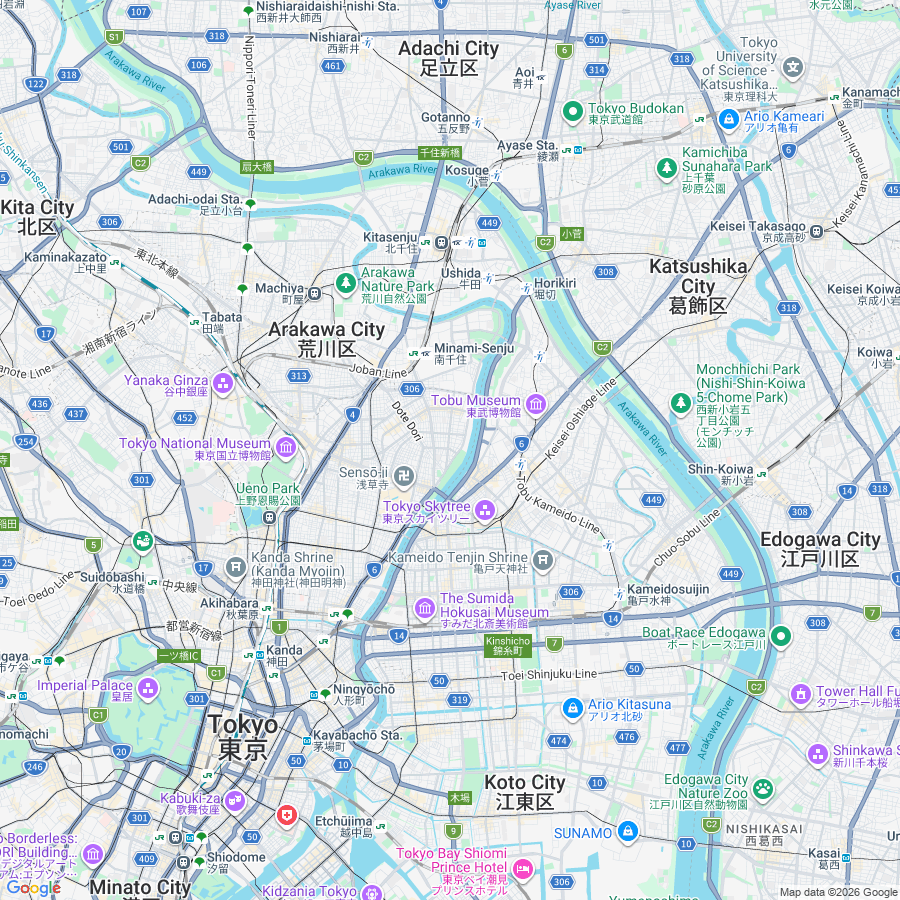
3-1-7 Kanda-Ogawamachi, Chiyoda-ku — a side street just off Yasukuni-dōri. Four stations are all about five minutes away on foot — Jimbocho, Ogawamachi, Awajicho and Shin-Ochanomizu — so it fits into almost any route through the book district. Look for the brick wall and the wooden door, not a sign; there barely is one.
Book café / kissaten — read the shelves, nel-drip coffee roasted in-house
Budget
Coffee ¥900–1,400; sweets ¥550–850; food sets ¥1,800 with a drink
First-timer order
Cafe Amber (琥珀), ¥900 — and ask for the free book recommendation
Hours
Mon–Sat 12:00–23:00; Sun & holidays 12:00–21:00 (printed on the menu)
Seat limit
About 2 hours when busy (printed on the menu)
Address
3-1-7 Kanda-Ogawamachi, Chiyoda-ku
Nearest station
Jimbocho, Ogawamachi, Awajicho, Shin-Ochanomizu — ~5 min from each
Payment
Not confirmed — bring cash
English
Drink names in English on the menu; descriptions Japanese only
Visited
11 November 2026 (Wednesday)
Frequently asked questions
Q
Can you read the books on the shelves?
YESThat is what they are there for. The books are the café's own library — around 4,000 volumes from the owner's collection — shelved within reach of the seats so you can pull one down and read it with your coffee.
Q
How do I get there?
About five minutes on foot from Jimbocho Station. Ogawamachi, Awajicho and Shin-Ochanomizu stations are all roughly the same distance. The address is 3-1-7 Kanda-Ogawamachi, Chiyoda-ku — look for the brick wall and the heavy wooden door.
Q
Is there an English menu?
NONot a full one — the printed menu pairs an English name with every drink (Cafe Amber, Cafe Lapis Lazuli), but the descriptions are Japanese only. The names, the prices and the photographs in this article will get you through an order.
Q
Can I pay by card?
I did not confirm it on this visit, so I am not going to guess. Carry cash, the way you would at any small independent kissaten, and you cannot go wrong.
Q
Is there Wi-Fi?
I did not confirm it, and I would not plan around it. This is a room built for paper books — treat connectivity as a question to ask at the counter, not a feature.
Q
Do I need to book?
NOTabelog lists the café as not taking reservations, and I walked in on a Wednesday afternoon. At busy times the menu asks you to give up your seat after about two hours.
Q
What is the handwritten card?
Instead of a printed bill, my Cafe Amber arrived with a small card lettered by hand — "A cup of Cafe Amber", the price, ¥900 — and stamped with the shop's red seal. It doubles as a bookmark, which in a book café feels exactly right.
Q
Can we stop here on a tour?
YESOn a private, tailor-made day. Jimbocho borders Akihabara, and an hour here pairs well with the bookshops — mention Mafumi when you book and I will build the day around it. Stops like this are the reason to go private: they never appear on the big lists.
Sources and honesty note
Prices, drink names, the opening hours and the two-hour note at busy times are transcribed from photographs of the café's printed menu, taken on 11 November 2026. The Cafe Amber and the handwritten card are described from the photographs of my own table on the same visit.
The address, telephone number and opening hours were cross-checked on the same day against Chiyoda City's tourism site (visit-chiyoda.tokyo) and Tabelog, and they agree with the menu. The figure of about 4,000 books, and that the collection is the owner's, comes from those same listings rather than from a count of my own. The no-reservations point is Tabelog's listing, not something I tested.
I did not confirm which payment methods the café takes, whether there is Wi-Fi or power at the seats, or how much English the staff speak — the article marks all four as unconfirmed rather than guessing. The hidden door in a bookshelf is a detail from other visitors' reviews; I did not test it and it is written above as a rumour, not a fact. The shop is rated 4.4 on Google with 671 reviews at the time of the visit; ratings move, and I have kept my own taste judgements to what the photographs and the menu can support.
No affiliate links. I went to Jimbocho for lunch and stayed for the books; this is the café I would send a reader to.
About the author. I am Yuuki, a local guide based in Akihabara. I run private tours in English, tailor-made for one group at a time, and I find places like this one by walking the neighbourhoods myself — this article is one of the finds. I have also watched over 1,500 anime series, which is either a qualification or a warning depending on your point of view.
A private half-day with a local otaku guide, planned around your fandom. Three to four hours in English, never mixed with other travelers, rated 4.96 by 171 Airbnb guests. Booking here goes straight into my calendar.