〜やすい and 〜にくい: easy to do, hard to do, and prone to happening〜やすい・〜にくい: しやすい、しにくい、そうなりやすい
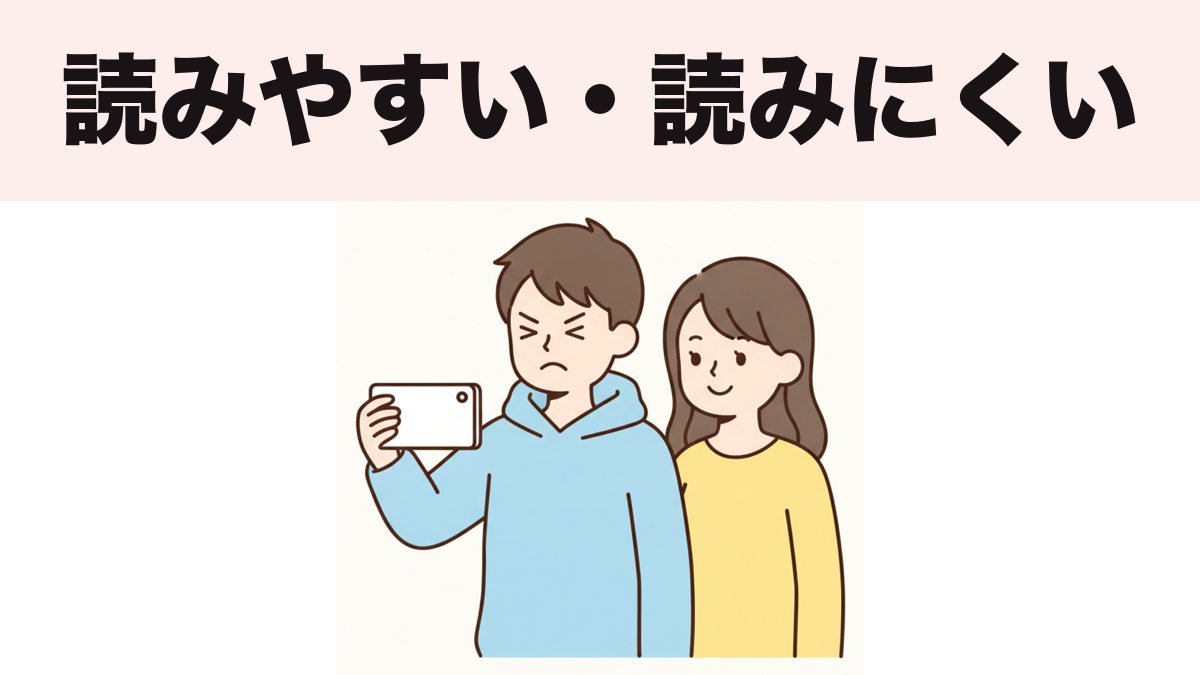
Attach やすい or にくい to the ます-stem of a verb and you build a brand-new い-adjective: 読みやすい (easy to read), 食べにくい (hard to eat). The catch is that やすい has a second meaning — "prone to" — and 壊れやすい does not mean something is easy to break on purpose.
動詞の「ます形」に「やすい」「にくい」をつけると、新しい「い形容詞」ができます。「読みやすい」「食べにくい」。ただし「やすい」にはもう1つの意味があります。「そうなりやすい」です。「壊れやすい」は「わざと壊すのがかんたん」ではありません。
This is one of the highest-value grammar points at N4, because it turns every verb you know into two adjectives. Learners who have it produce natural sentences that would otherwise need a whole clause.
The basics
How do you build it?
Take the ます-form, drop ます, add やすい or にくい.
| Verb | ます-form | + やすい | + にくい |
|---|---|---|---|
| 読む | 読みます | 読みやすい | 読みにくい |
| 使う | 使います | 使いやすい | 使いにくい |
| 分かる | 分かります | 分かりやすい | 分かりにくい |
| 食べる | 食べます | 食べやすい | 食べにくい |
| する | します | しやすい | しにくい |
この本は読みやすいです。 — This book is easy to read. (polite) この漢字は覚えにくいです。 — This kanji is hard to remember. (polite)
The dictionary form does not work here. 読むやすい is wrong — it has to be the stem, 読み. If you can make the ます-form, you can make this.
The result is an い-adjective
This is the part that unlocks everything. 読みやすい behaves exactly like 高い or 安い:
前の携帯の方が使いやすかったです。 — My old phone was easier to use. (polite past — やすい took かった) 字が小さくて読みにくくないですか。 — Isn't the text hard to read, being so small? (polite negative question)
So all your い-adjective conjugation transfers directly: 〜かった for past, 〜くない for negative, 〜くて to connect, 〜そう for "looks."
What can it attach to?
Almost any action verb. It sounds natural with verbs where difficulty is a real variable — reading, using, eating, saying, walking, remembering — and odd with verbs that are all-or-nothing.
このスプーンは食べやすいです。 — This spoon is easy to eat with. (polite — note the tool, not the food, is the subject) 雨の日は歩きにくいです。 — It's hard to walk on rainy days. (polite)
Beyond the basics
やすい also means "prone to," and that's a different idea
Here's the trap. With verbs that describe things happening to something rather than actions you choose, やすい means "tends to" or "easily happens":
このコップは壊れやすいです。 — This cup breaks easily. (polite — fragile, not "easy to break on purpose") 冬は風邪をひきやすいです。 — You catch colds easily in winter. (polite) この服はしわになりやすい。 — These clothes wrinkle easily. (casual)
Same ending, different meaning: the first sense is "easy for me to do," the second is "likely to happen." Which one you get is decided by the verb, not by the grammar. Intransitive or spontaneous verbs (壊れる, ひく a cold, 汚れる, 忘れる) give you "prone to."
にくい does the reverse: 壊れにくい means "durable," 汚れにくい means "stain-resistant." Japanese product packaging is full of these.
にくい vs づらい: hard for anyone, or hard for me?
Both mean "difficult to." The split is subtle but real, and native speakers feel it:
| Form | Feel | Typical use |
|---|---|---|
| 〜にくい | An objective property of the thing | この字は読みにくい |
| 〜づらい | Discomfort for the speaker | 足が痛くて歩きづらい |
| 〜がたい | Nearly impossible; formal, literary | 信じがたい話 |
言いにくいことなんですが… — This is a hard thing to say, but… (polite — socially awkward, the classic bad-news opener) 喉が痛くて話しづらいです。 — My throat hurts, so it's uncomfortable to talk. (polite — physical discomfort, personal)
づらい comes from 辛い (painful), which is why it leans toward "it hurts me to do this." がたい is written 難い and appears mostly in set phrases: 信じがたい (hard to believe), 理解しがたい (hard to comprehend), ありがたい (thankful — literally "hard to exist," i.e. rare and precious).
The social 言いにくい
言いにくい is worth calling out on its own, because it does enormous work in Japanese conversation. It means "hard to say" in the awkward sense, and it is how people open difficult topics:
ちょっと言いにくいんですけど、明日行けません。 — This is a bit awkward to say, but I can't come tomorrow. (polite — softening a refusal)
Paired with the explanatory んです and a trailing けど, it is a complete apology structure before you have said anything at all.
What about "easy" as in simple?
やすい is not 簡単. 簡単 describes the task itself as uncomplicated; やすい describes it as low-friction for the doer.
この問題は簡単です。 — This question is easy. (the problem is not difficult)
読みやすい字 is handwriting that doesn't strain your eyes; 簡単な字 is a kanji with few strokes. Different claims.
Common mistakes
- Using the dictionary form. 読むやすい, 食べるにくい — both wrong. Use the ます-stem: 読みやすい, 食べにくい.
- Forgetting it conjugates. 読みやすいでした is wrong; it's 読みやすかったです, because やすい is an い-adjective now.
- Reading 壊れやすい as "easy to break." It means fragile. Nobody is planning to break it.
- Using にくい for personal discomfort. 足が痛くて歩きにくい is understandable, but 歩きづらい is what a native speaker says when their own foot hurts.
- Confusing にくい with 憎い. They're homophones — 憎い means "hateful." Context separates them completely, but the kanji are different (難い vs 憎い), and the grammar one is normally written in kana.
Practice
Answers are hidden — build yours first, then open. Questions 5 and 6 are a pair: the same ending, two different meanings.
1. Make "easy to read" from 読む.
Show answer
読みやすい — ます-form 読みます, drop ます, add やすい. The dictionary form does not work.
2. Something is wrong here: この漢字は覚えるにくいです。
Show answer
覚えにくいです — the stem is 覚え, from 覚えます. Never the dictionary form.
3. Something is wrong here: 前の携帯は使いやすいでした。
Show answer
使いやすかったです — やすい is an い-adjective, so the past is かった. でした does not attach to い-adjectives.
4. Say "isn't this hard to read?" politely.
Show answer
読みにくくないですか — the negative of an い-adjective: くない. Then ですか for the question.
5. What does このコップは割れやすいです mean?
Show answer
"This cup breaks easily" — with a spontaneous verb, やすい means "prone to," not "easy to do on purpose."
6. What does このスプーンは食べやすいです mean?
Show answer
"This spoon is easy to eat with" — with a chosen action, やすい means low effort for the doer. This is the pair to question 5: the verb decides which meaning you get.
7. Your throat hurts and talking is uncomfortable. にくい or づらい?
Show answer
話しづらい — づらい comes from 辛い and covers personal discomfort. にくい describes a property of the thing itself.
8. Open a refusal softly, using 言いにくい.
Show answer
ちょっと言いにくいんですけど… — 言いにくい is the socially awkward "hard to say," and the んですけど leaves the sentence open so the listener can help you finish it.
9. What does 汚れにくい on a shirt label promise?
Show answer
Stain-resistant — にくい with a spontaneous verb means "does not easily happen." Product packaging uses this constantly.
10. What is the difference between 読みやすい字 and 簡単な字?
Show answer
Legible handwriting vs a simple character — やすい is about low friction for the reader; 簡単 is about the thing itself being uncomplicated.
FAQ
Can I use these with する verbs? Yes: 勉強しやすい, 説明しにくい. The stem of します is し, so it attaches cleanly.
Do they work with the potential form? Not usually — 読めやすい is not natural. Difficulty and ability are separate ideas; use できる for ability and やすい/にくい for how much effort something takes.
Is にくい ever written in kanji? It can be written 難い, but kana is far more common for the grammatical use, partly to avoid confusion with 憎い.
What is the negative of 読みやすい? 読みやすくない ("not easy to read"). Note that this is not the same as 読みにくい ("hard to read") — the first denies ease, the second asserts difficulty, and the second is stronger.
Are there fixed words built from this? Plenty: 分かりやすい (clear), 使いやすい (user-friendly), ありがたい (grateful), 忘れやすい (forgetful). They function as ordinary vocabulary.
Can it attach to adjectives? No — verbs only. For "easily becomes cold," you'd verbalise it first: 冷めやすい.
Vocabulary from this article
Tap the block to select all of it, then copy. In Anki: File → Import, note type Basic, separator Tab — the first column becomes the front, the second the back.
読む	よむ — to read
使う	つかう — to use
分かる	わかる — to understand
覚える	おぼえる — to remember, to learn
食べる	たべる — to eat
歩く	あるく — to walk
言う	いう — to say
話す	はなす — to speak
漢字	かんじ — kanji
携帯	けいたい — mobile phone
字	じ — character, handwriting
小さい	ちいさい — small
壊れる	こわれる — to break
割れる	われる — to crack, to shatter
風邪	かぜ — a cold
汚れる	よごれる — to get dirty
喉	のど — throat
足	あし — leg, foot
痛い	いたい — painful
簡単	かんたん — easy, simple
問題	もんだい — problem, question
冬	ふゆ — winter
服	ふく — clothes
説明	せつめい — explanation
I'm Yuuki, a Japanese teacher based in Tokyo. I've taught on italki as a Top 1% teacher and watched over 1,500 anime. When a learner says 簡単に掃除できる and I offer 掃除しやすい instead, you can watch the idea land — one ending, and every verb they own turns into two more adjectives.
Sources: the author's own lessons and standard reference grammars.
これはN4でいちばん役に立つ文法の1つです。知っている動詞が、ぜんぶ2つの形容詞になります。
基本
作り方
「ます形」から「ます」をとって、「やすい」か「にくい」をつけます。
| 動詞 | ます形 | +やすい | +にくい |
|---|---|---|---|
| 読む | 読みます | 読みやすい | 読みにくい |
| 使う | 使います | 使いやすい | 使いにくい |
| 分かる | 分かります | 分かりやすい | 分かりにくい |
| 食べる | 食べます | 食べやすい | 食べにくい |
| する | します | しやすい | しにくい |
この本は読みやすいです。 — This book is easy to read. この漢字は覚えにくいです。 — This kanji is hard to remember.
じしょ形は使えません。「読むやすい」は間違いです。
できたものは「い形容詞」
ここが大事です。「読みやすい」は「高い」「安い」と同じように使えます。
前の携帯の方が使いやすかったです。 — My old phone was easier to use. 字が小さくて読みにくくないですか。 — Isn't the text hard to read, being so small?
かこは「かった」、うちけしは「くない」、つなぐ時は「くて」。ぜんぶそのまま使えます。
どんな動詞につくか
ほとんどの動作の動詞につきます。むずかしさが変わる動詞(読む・使う・食べる・言う・歩く・覚える)と合います。
このスプーンは食べやすいです。 — This spoon is easy to eat with. 雨の日は歩きにくいです。 — It's hard to walk on rainy days.
もう少しくわしく
「やすい」のもう1つの意味
自分でえらぶ動作ではなく、「そうなる」動詞につくと、「そうなりやすい」という意味になります。
このコップは壊れやすいです。 — This cup breaks easily. 冬は風邪をひきやすいです。 — You catch colds easily in winter. この服はしわになりやすい。 — These clothes wrinkle easily.
同じ形ですが、意味がちがいます。1つ目は「自分がするのがかんたん」。2つ目は「そうなることが多い」。どちらになるかは、動詞がきめます。
「にくい」は反対です。「壊れにくい」」じょうぶ。「汚れにくい」」よごれない。日本の商品のパッケージによく書いてあります。
「にくい」と「づらい」
どちらも「むずかしい」です。ちがいは小さいですが、日本人は感じています。
| 形 | 感じ | れい |
|---|---|---|
| 〜にくい | そのものの性しつ | この字は読みにくい |
| 〜づらい | 自分がつらい | 足が痛くて歩きづらい |
| 〜がたい | ほとんど不可のう・かたい言い方 | 信じがたい話 |
言いにくいことなんですが… — This is a hard thing to say, but… 喉が痛くて話しづらいです。 — My throat hurts, so it's uncomfortable to talk.
「づらい」は「辛い」から来ています。だから「自分がつらい」感じです。「がたい」は「難い」で、「信じがたい」「理解しがたい」「ありがたい」のようにかたまりで使います。
「言いにくい」は社交の道具
「言いにくい」は「気まずくて言えない」という意味です。むずかしい話を始める時の定番です。
ちょっと言いにくいんですけど、明日行けません。 — This is a bit awkward to say, but I can't come tomorrow.
「やすい」と「簡単」はちがう
「簡単」は、そのことがふくざつでないこと。「やすい」は、する人にとって力がいらないこと。
この問題は簡単です。 — This question is easy.
「読みやすい字」は目がつかれない字。「簡単な字」は画数の少ない字です。
よくある間違い
- じしょ形につける。 「読むやすい」「食べるにくい」は間違いです。
- 形容詞だと忘れる。 「読みやすいでした」は間違い。「読みやすかったです」です。
- 「壊れやすい」を「壊すのがかんたん」と読む。 「こわれやすい」です。
- 自分がつらい時に「にくい」を使う。 足が痛い時は「歩きづらい」です。
- 「憎い」とまぜる。 同じ読みですが、べつのことばです。文法の方はかなで書きます。
練習
答えはかくれています。まず自分で作ってから開いてください。5番と6番が対です。同じ形で、意味が2つあります。
1. 「読む」から「読みやすい」を作ってください。作り方を言ってください。
答えを見る
ます形「読みます」から「ます」をとって「やすい」 — じしょ形は使えません。
2. 直してください: この漢字は覚えるにくいです。
答えを見る
覚えにくいです — 「覚えます」の「覚え」につきます。
3. 直してください: 前の携帯は使いやすいでした。
答えを見る
使いやすかったです — 「やすい」はい形容詞なので、かこは「かった」です。
4. 「読みにくくないですか」を作ってください。もとの形は?
答えを見る
読みにくい → 読みにくくない → 読みにくくないですか — い形容詞のうちけしは「くない」です。
5. 「このコップは割れやすいです」はどういう意味ですか。
答えを見る
このコップはすぐ割れます — 「そうなる」動詞では「〜しやすい」」「よくそうなる」です。
6. 「このスプーンは食べやすいです」はどういう意味ですか。
答えを見る
このスプーンだと食べるのがらくです — えらぶ動作では「力がいらない」です。5番と対で、動詞が意味をきめます。
7. のどが痛くて話すのがつらいです。「にくい」と「づらい」のどちらですか。
答えを見る
話しづらい — 「づらい」は「辛い」から来ていて、自分のつらさを言います。
8. ことわる話を、「言いにくい」でやわらかく始めてください。
答えを見る
ちょっと言いにくいんですけど… — 「言いにくい」は気まずさです。「んですけど」で文を開けたままにします。
9. シャツのラベルの「汚れにくい」は何を言っていますか。
答えを見る
よごれにくい=よごれがつきにくい — 「にくい」+「そうなる」動詞は「そうなりにくい」です。
10. 「読みやすい字」と「簡単な字」のちがいは?
答えを見る
読みやすい字字目がつかれない字/簡単な字字画数の少ない字 — 「やすい」は読む人の力、「簡単」はそのもののふくざつさです。
この記事に出た単語
ブロックをタップすると全部選べます。そのままコピーしてください。Anki では ファイル → 読み込み、ノートタイプ 基本、区切り タブ。1列目が表、2列目が裏になります。
読む	よむ — to read
使う	つかう — to use
分かる	わかる — to understand
覚える	おぼえる — to remember, to learn
食べる	たべる — to eat
歩く	あるく — to walk
言う	いう — to say
話す	はなす — to speak
漢字	かんじ — kanji
携帯	けいたい — mobile phone
字	じ — character, handwriting
小さい	ちいさい — small
壊れる	こわれる — to break
割れる	われる — to crack, to shatter
風邪	かぜ — a cold
汚れる	よごれる — to get dirty
喉	のど — throat
足	あし — leg, foot
痛い	いたい — painful
簡単	かんたん — easy, simple
問題	もんだい — problem, question
冬	ふゆ — winter
服	ふく — clothes
画数	かくすう — stroke count
私はユウキです。東京で日本語を教えています。 italki の Top 1% の先生で、アニメは1,500本以上見ました。「簡単に掃除できる」と言った人に「掃除しやすい」と出すと、その場で分かってもらえます。この1つの形で、持っている動詞がぜんぶ2つの形容詞に変わります。
More drills like the ones above, plus a timed JLPT-style mock test: Practice · N4上のような練習問題と、時間つきのJLPT形式のもぎ試験: 練習ページ · N4
Want to try this in a real conversation?
本当の会話で、ためしてみませんか?
30-minute trial lesson, $13. Times shown in your own timezone.
30分の体験レッスン、$13。時間はあなたのタイムゾーンで表示されます。
Book a trial lesson · $13