声優 (seiyuu): what the word means, and why Japan has a separate word for it声優: どうして日本には、この言葉があるのか
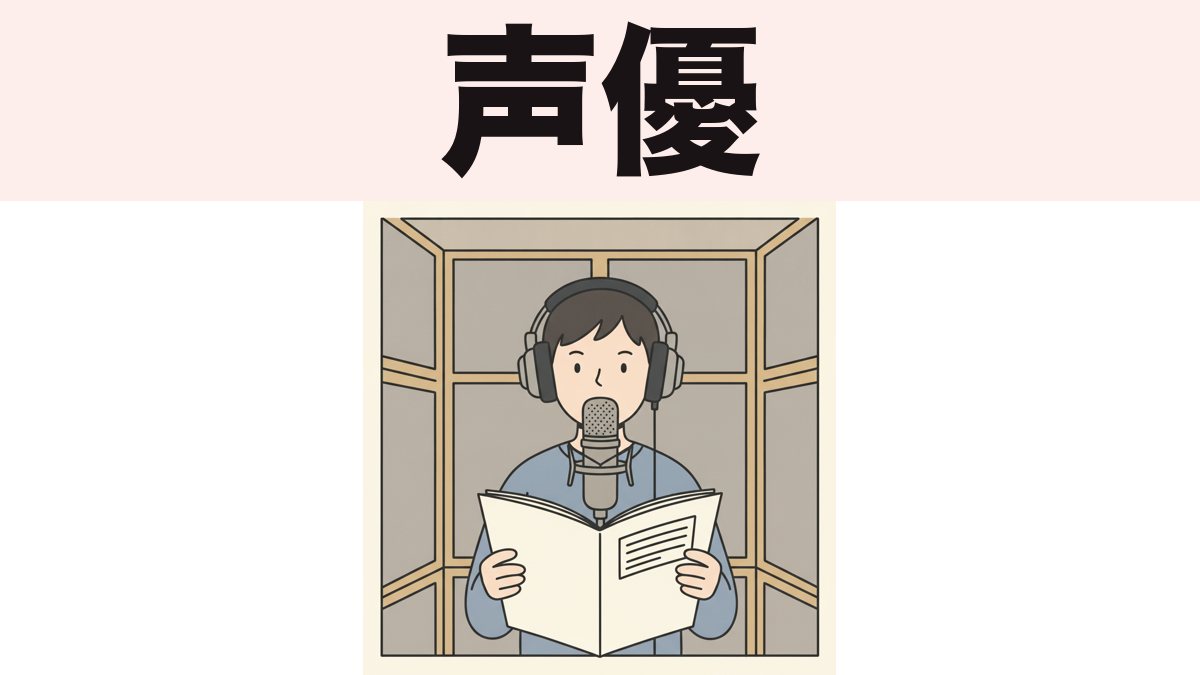
声優 (せいゆう) means "voice actor" — 声 (voice) plus 優, the character in 俳優 (actor). The word exists separately because in Japan it is a separate career with its own training schools, agencies, concerts and fanbase, not a side job for screen actors.
「声優(せいゆう)」は voice actor という意味です。「声」と、「俳優」の「優」でできています。日本では、俳優が空いた時間にやる仕事ではありません。専門の学校があって、事務所があって、ライブもある、別の仕事です。だから別の言葉があります。
If you watch anime with Japanese audio, this is one of the first pieces of industry vocabulary worth owning, because it unlocks a huge amount of fan conversation, credits, and event listings that otherwise stay opaque.
The basics
What the kanji are doing
- 声 (こえ / せい) — voice
- 優 (ゆう) — actor, performer; the same 優 in 俳優 (はいゆう, actor) and 女優 (じょゆう, actress)
So 声優 is literally "voice performer." The 優 character on its own also means "gentle" or "superior," which is unrelated to the acting sense — it is one of those kanji carrying two unconnected meanings that you simply learn separately.
好きな声優は誰ですか。 — Who's your favourite voice actor? (polite, a very normal question among anime fans) あの人、声優さんですよ。 — That person is a voice actor, you know. (polite-casual, the さん is standard here)
声優さん: why the honorific is almost automatic
Japanese fans say 声優さん far more often than bare 声優 when referring to a person, even someone they have never met. The さん is doing polite-distance work, the same way 店員さん (shop staff) or お医者さん (doctor) does — it softens a job label into a person.
Bare 声優 is fine when you mean the profession as a category: 声優になりたい ("I want to become a voice actor"). Once you point at a human being, さん tends to appear.
俳優, 女優, 声優: the three 優 words
| Japanese | Reading | Meaning |
|---|---|---|
| 俳優 | はいゆう | actor (screen/stage, any gender) |
| 女優 | じょゆう | actress |
| 男優 | だんゆう | male actor (used less; 俳優 covers it) |
| 声優 | せいゆう | voice actor |
| 舞台俳優 | ぶたいはいゆう | stage actor |
俳優 is the default word for an actor and is not gendered in modern usage, despite 女優 existing. If you describe a woman as 俳優, that is entirely normal and increasingly the preferred usage in the industry.
Beyond the basics
How to say who voices whom
There are two common patterns, and both use 役 (やく), meaning "role."
主人公の声をやっている人は誰ですか。 — Who does the main character's voice? (polite, natural spoken Japanese) この役の声優さんが好きです。 — I like the voice actor for this role. (polite, fan conversation)
Credits use a more compact form: the character name, a colon or a space, then the performer. You will see 〜役 attached directly to a name in event listings, as in 〜役の声優さん — "the voice actor who plays ~."
The verb in casual speech is usually やる (to do) or 演じる (えんじる, to perform). 声を当てる (こえをあてる, "to apply a voice") is the industry term you will hear in interviews.
中の人: "the person inside"
中の人 literally means "the person inside," and it originally referred to whoever is inside a costumed mascot. It has spread to mean the performer behind any character — a voice actor, a VTuber, or whoever runs a company's social media account.
中の人が変わりましたね。 — The person behind it changed, didn't they. (casual, said about a recast or a new account manager)
This phrase carries a faint sense of revealing something you are not supposed to point at, which is why it is used jokingly. In VTuber fandom, 中の人 is a genuinely sensitive term and some communities avoid it entirely.
アフレコ, 吹き替え, 収録
Three words that get confused, all about recording:
- アフレコ — recording voices over finished or in-progress animation. From English "after recording," which is wasei-eigo — no English speaker says it.
- 吹き替え (ふきかえ) — dubbing, replacing the original language of a foreign film with Japanese
- 収録 (しゅうろく) — recording session, the general word, used for any studio work
昨日、アフレコでした。 — I had a recording session yesterday. (polite-casual, industry speech)
アフレコ is anime; 吹き替え is foreign films getting a Japanese track. A 声優 does both, and many built their careers on 吹き替え work before anime became the higher-profile side.
Why the career is structured differently
In much of the world, voice acting is something screen actors do between jobs. In Japan it is entered directly: specialist 養成所 (ようせいじょ, training schools) feed into talent agencies, and performers are expected to sing, appear at live events, host radio shows and release records alongside the acting.
That is why a 声優 can headline a concert, and why anime opening themes are frequently performed by the cast. It also explains a piece of vocabulary you will meet constantly in fan spaces: 推し, the person or character you actively support.
推しの声優さんのライブに行きます。 — I'm going to my favourite voice actor's live show. (casual, completely ordinary fan sentence)
The vocabulary of credits and events
| Japanese | Reading | Meaning |
|---|---|---|
| 主人公 | しゅじんこう | main character |
| 役 | やく | role, part |
| 出演 | しゅつえん | appearing in (a production) |
| キャスト | きゃすと | cast |
| 主題歌 | しゅだいか | theme song |
| 挿入歌 | そうにゅうか | insert song |
| イベント | いべんと | event |
| 舞台挨拶 | ぶたいあいさつ | stage greeting (cast appearance at a screening) |
| サイン会 | さいんかい | signing event |
出演 is the word to watch for on posters: 出演:… introduces the cast list, and 出演する means "to appear in." It covers voice work, screen work and event appearances equally.
Common mistakes
- Saying 声優者. The word is complete at 声優. Adding 者 (person) is a natural-looking guess and it is wrong.
- Using 俳優 for a voice actor. It is not incorrect as a broad category, but it will read as though you do not know the industry has its own word.
- Dropping the さん when talking about a specific person. 声優さん is the default when pointing at a human being.
- Assuming 女優 is required for women. 俳優 is gender-neutral in current usage, and many performers prefer it.
- Using 吹き替え for anime. Anime recording is アフレコ. 吹き替え is for dubbing foreign material into Japanese.
- Reading 声優 as こえゆう. It is せいゆう — the on-reading of 声.
Which word do I want?
| You mean | Word | Note |
|---|---|---|
| Voice actor | 声優(さん) | さん when pointing at a person |
| Screen or stage actor | 俳優 | Gender-neutral in current usage |
| The performer behind a character | 中の人 | Slightly cheeky; sensitive in VTuber contexts |
| Recording anime voices | アフレコ | wasei-eigo, anime-specific |
| Dubbing a foreign film | 吹き替え | Not used for anime |
| A recording session, generally | 収録 | The neutral industry word |
| The role someone plays | 〜役 | 主人公役, 先生役 |
Practice
Questions 4 and 5 are the pair: two recording words that fans mix up constantly.
1. Ask politely who someone's favourite voice actor is.
Show answer
好きな声優は誰ですか。 — Bare 声優 is fine here because you are asking about a category, not pointing at a person.
2. Say "that person is a voice actor," politely.
Show answer
あの人、声優さんですよ。 — さん appears because you are pointing at a specific human being.
3. Ask who does the main character's voice.
Show answer
主人公の声をやっている人は誰ですか。 — やる is the natural spoken verb here. 演じる is the more formal alternative.
4. Which word describes recording voices for an anime?
Show answer
アフレコ — From "after recording," a wasei-eigo term. Anime-specific.
5. Which word describes dubbing a foreign film into Japanese?
Show answer
吹き替え — Replacing an original foreign language track. Not used for anime.
6. Say "I'm going to my favourite voice actor's live show," casually.
Show answer
推しの声優さんのライブに行きます。 — 推し is the person you actively support. Two の in a row is completely normal here.
7. What does 中の人 literally mean, and what does it refer to?
Show answer
「中にいる人」 — literally "the person inside." It refers to the performer behind a character, mascot, VTuber or account.
8. Fix this: 声優者になりたいです。
Show answer
声優になりたいです。 — The word is complete at 声優. There is no 声優者.
9. How do you read 声優, and which reading of 声 is it?
Show answer
せいゆう — The on-reading せい, not the kun-reading こえ. こえゆう is not a word.
10. You see 出演:on a poster. What follows it?
Show answer
キャスト(出る人の名前) — The cast list. 出演 means appearing in a production, and covers voice, screen and event work alike.
FAQ
Is 声優 only used for anime? No. It covers game voices, dubbing foreign films, narration, commercials and audio dramas. Anime is the most visible part of the job, not the whole of it.
Why do voice actors sing? Because the career in Japan is built as a performance career rather than a studio job. Agencies expect live events and music releases, and cast-performed theme songs are an established part of how a series is promoted.
Is 中の人 rude? It depends on the community. For anime voice actors it is casual and mostly harmless. In VTuber fandom it points at the separation between performer and character, which many viewers treat as something not to be raised, so it is safer to avoid it there.
What is a 養成所? A training school for aspiring voice actors, usually attached to or feeding into a talent agency. It is the standard entry route into the profession and typically runs for one to two years.
Should I say 女優 or 俳優 for a woman? 俳優 is safe and increasingly standard. 女優 is not offensive and appears constantly in media, but if you are unsure, 俳優 will never be wrong.
What does 〜役 attach to? A character name or a description: 主人公役 ("the role of the main character"), 先生役 ("the teacher role"). It is read やく and appears in credits, event listings and casual conversation alike.
Vocabulary from this article
Tap the block to select all of it, then copy. In Anki: File → Import, note type Basic, separator Tab — the first column becomes the front, the second the back.
声優	せいゆう — voice actor
俳優	はいゆう — actor
女優	じょゆう — actress
声	こえ — voice
役	やく — role, part
主人公	しゅじんこう — main character
中の人	なかのひと — the person inside, the performer behind
吹き替え	ふきかえ — dubbing
収録	しゅうろく — recording session
出演	しゅつえん — appearing in a production
主題歌	しゅだいか — theme song
挿入歌	そうにゅうか — insert song
舞台挨拶	ぶたいあいさつ — stage greeting
サイン会	さいんかい — signing event
養成所	ようせいじょ — training school
演じる	えんじる — to perform, to play a role
推し	おし — the one you support, your favourite
変わる	かわる — to change
I'm Yuuki, a Japanese teacher based in Tokyo. I've taught on italki as a Top 1% teacher and watched over 1,500 anime. 声優 is usually the first industry word a student asks me about unprompted — normally right after they notice the same voice in two shows and want to say so in Japanese.
Sources: the author's own lessons and standard reference grammars.
日本語の音でアニメを見るなら、まず覚えるといい言葉です。ファンの会話も、クレジットも、イベントの案内も読めるようになります。
基本
漢字の意味
- 声(こえ / せい) — voice
- 優(ゆう) — 俳優(はいゆう)・女優(じょゆう)の「優」。演じる人
だから「声優」は「声で演じる人」です。「優」には「やさしい」という意味もありますが、それは別の意味です。同じ漢字でも、意味は分けて覚えてください。
好きな声優は誰ですか。 — Who's your favourite voice actor? (polite, a very normal question among anime fans) あの人、声優さんですよ。 — That person is a voice actor, you know. (polite-casual, the さん is standard here)
「声優さん」の「さん」
日本のファンは、人を指す時「声優さん」と言います。会ったことがなくても言います。「店員さん」「お医者さん」と同じです。仕事の名前を、人の名前のようにやわらかくします。
仕事そのものを言う時は「さん」はいりません。「声優になりたい」です。人を指す時は「さん」がつきます。
「優」がつく言葉
| 日本語 | 読み方 | 意味 |
|---|---|---|
| 俳優 | はいゆう | actor |
| 女優 | じょゆう | actress |
| 男優 | だんゆう | male actor(あまり使いません) |
| 声優 | せいゆう | voice actor |
| 舞台俳優 | ぶたいはいゆう | stage actor |
今は「俳優」が男女どちらにも使えます。女の人を「俳優」と言っても、ぜんぜん変ではありません。
もう少し先へ
「だれが声をやっているか」の言い方
2つの形があります。どちらも「役(やく)」を使います。
主人公の声をやっている人は誰ですか。 — Who does the main character's voice? (polite, natural spoken Japanese) この役の声優さんが好きです。 — I like the voice actor for this role. (polite, fan conversation)
話す時は「やる」がふつうです。かたく言う時は「演じる(えんじる)」です。仕事の場では「声を当てる」とも言います。
「中の人」
「中の人」は、もともと着ぐるみの中にいる人のことです。今は、キャラクターを動かしている人全部を指します。声優、VTuber、会社のSNSの担当者などです。
中の人が変わりましたね。 — The person behind it changed, didn't they. (casual, said about a recast or a new account manager)
「言ってはいけないことを言う」感じがあるので、じょうだんで使います。VTuberのファンの間では、使わないほうがいい言葉です。
「アフレコ」「吹き替え」「収録」
- アフレコ — アニメの絵に、あとから声を入れること。英語の「after recording」から作った和製英語です。
- 吹き替え(ふきかえ) — 外国の映画を日本語にすること
- 収録(しゅうろく) — 録音すること全部
昨日、アフレコでした。 — I had a recording session yesterday. (polite-casual, industry speech)
アニメは「アフレコ」、外国の映画は「吹き替え」です。声優はどちらもやります。
仕事の形がちがいます
外国では、俳優が空いた時間に声の仕事をします。日本では、初めから声優になります。養成所(ようせいじょ)という学校があって、事務所に入って、歌も歌って、ライブにも出て、ラジオもやります。
だから声優がコンサートをします。アニメの主題歌を、出ている声優が歌うこともよくあります。
推しの声優さんのライブに行きます。 — I'm going to my favourite voice actor's live show. (casual, completely ordinary fan sentence)
クレジットとイベントの言葉
| 日本語 | 読み方 | 意味 |
|---|---|---|
| 主人公 | しゅじんこう | main character |
| 役 | やく | role |
| 出演 | しゅつえん | appearing in |
| キャスト | きゃすと | cast |
| 主題歌 | しゅだいか | theme song |
| 挿入歌 | そうにゅうか | insert song |
| 舞台挨拶 | ぶたいあいさつ | stage greeting |
| サイン会 | さいんかい | signing event |
ポスターの「出演:」のあとに、出る人の名前が並びます。
よくある間違い
- 「声優者」と言う。 「声優」で終わりです。「者」はつけません。
- 声優を「俳優」と言う。 間違いではありませんが、業界の言葉を知らない感じになります。
- 人を指す時に「さん」を落とす。 「声優さん」がふつうです。
- 女の人は必ず「女優」だと思う。 今は「俳優」でだいじょうぶです。
- アニメに「吹き替え」を使う。 アニメは「アフレコ」です。
- 「声優」を「こえゆう」と読む。 「せいゆう」です。
どの言葉を使うか
| 言いたいこと | 言葉 | メモ |
|---|---|---|
| 声の仕事をする人 | 声優(さん) | 人を指す時は「さん」 |
| 画面・舞台の俳優 | 俳優 | 男女どちらも |
| キャラクターの中の人 | 中の人 | VTuberでは気をつける |
| アニメの録音 | アフレコ | 和製英語 |
| 外国映画の日本語版 | 吹き替え | アニメには使いません |
| 録音すること全部 | 収録 | ふつうの言葉 |
| 役 | 〜役 | 主人公役、先生役 |
練習
4番と5番が組です。ファンがよくまちがえる2つです。
1. 「好きな声優は誰ですか」と、ていねいに聞いてください。
答えを見る
好きな声優は誰ですか。 — 仕事の種類を聞いているので「さん」はいりません。
2. 「あの人は声優です」と、ていねいに言ってください。
答えを見る
あの人、声優さんですよ。 — 人を指すので「さん」がつきます。
3. 「主人公の声は誰ですか」と聞いてください。
答えを見る
主人公の声をやっている人は誰ですか。 — 話す時は「やる」がふつうです。
4. アニメの録音は、何と言いますか。
答えを見る
アフレコ — 「after recording」から作った和製英語です。
5. 外国映画を日本語にすることは、何と言いますか。
答えを見る
吹き替え — アニメには使いません。
6. 「推しの声優さんのライブに行きます」と言ってください。
答えを見る
推しの声優さんのライブに行きます。 — 「の」が続いても大丈夫です。
7. 「中の人」は、もともと何の意味ですか。
答えを見る
着ぐるみの中にいる人 — 今はキャラクターを動かしている人全部を指します。
8. 直してください: 声優者になりたいです。
答えを見る
声優になりたいです。 — 「者」はつけません。
9. 「声優」の読み方は何ですか。
答えを見る
せいゆう — 「こえゆう」とは読みません。
10. ポスターの「出演:」のあとには、何が来ますか。
答えを見る
出る人の名前(キャスト) — 声の仕事も、画面の仕事も、イベントも同じ言葉です。
よくある質問
「声優」はアニメだけですか。 いいえ。ゲーム、外国映画の吹き替え、ナレーション、コマーシャル、ラジオドラマも入ります。
どうして声優が歌うのですか。 日本では「演じる人」として売るからです。事務所がライブや音楽の仕事も用意します。
「中の人」は失礼ですか。 場所によります。アニメの声優にはふつうに使います。VTuberのファンの中では、使わないほうが安全です。
「養成所」は何ですか。 声優になるための学校です。事務所につながっていることが多く、1〜2年通います。
女の人は「女優」ですか「俳優」ですか。 「俳優」でだいじょうぶです。今はそのほうがふつうになってきています。
「〜役」は何につきますか。 キャラクターの名前や説明につきます。「主人公役」「先生役」です。
この記事に出た単語
このブロックを長く押して全部選び、コピーしてください。Ankiでは ファイル → 読み込み、ノートタイプは 基本、区切りは タブ にします。左が表、右が裏になります。
声優	せいゆう — voice actor
俳優	はいゆう — actor
女優	じょゆう — actress
声	こえ — voice
役	やく — role, part
主人公	しゅじんこう — main character
中の人	なかのひと — the person inside, the performer behind
吹き替え	ふきかえ — dubbing
収録	しゅうろく — recording session
出演	しゅつえん — appearing in a production
主題歌	しゅだいか — theme song
挿入歌	そうにゅうか — insert song
舞台挨拶	ぶたいあいさつ — stage greeting
サイン会	さいんかい — signing event
養成所	ようせいじょ — training school
演じる	えんじる — to perform, to play a role
推し	おし — the one you support, your favourite
変わる	かわる — to change
日本語教師のユウキです。東京にいます。 italkiで Top 1% の教師をしています。アニメは1,500本以上見ました。「声優」は、生徒が自分から聞いてくる最初の業界のことばです。だいたい、2つの作品で同じ声に気づいた日に聞かれます。
More drills like the ones above, plus a timed JLPT-style mock test: Practice上のような練習問題と、時間つきのJLPT形式のもぎ試験: 練習ページ
Want to try this in a real conversation?
本当の会話で、ためしてみませんか?
30-minute trial lesson, $13. Times shown in your own timezone.
30分の体験レッスン、$13。時間はあなたのタイムゾーンで表示されます。
Book a trial lesson · $13