Japanese personality adjectives: how to describe someone without insulting them性格のことば: 人をどう言うか、どこで気をつけるか
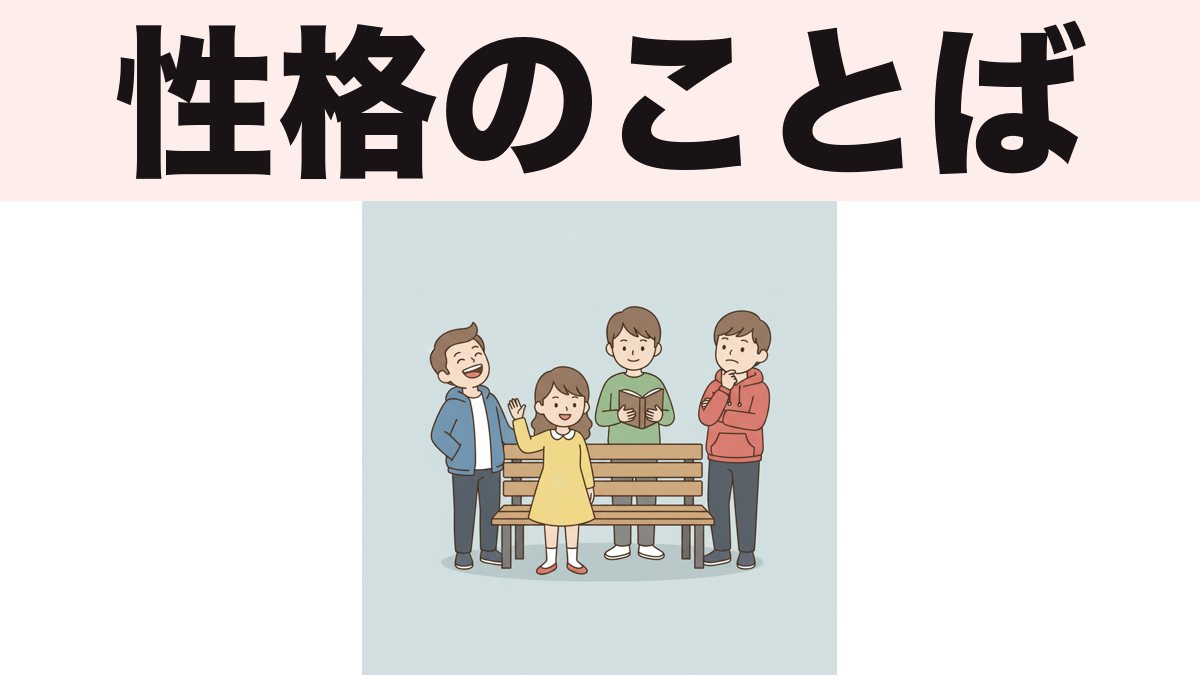
性格 (せいかく) is the word for personality, and the adjectives that describe it split into three groups: safe compliments (優しい, 明るい), words that sound positive and carry an edge (真面目, おとなしい), and words that are simply negative. The middle group is the one that matters, because those are the ones learners deploy as compliments and land somewhere else entirely.
「性格(せいかく)」は personality です。人を表すことばは3つに分かれます。安全なほめことば(優しい・明るい)、いい意味に見えて少しとげのあることば(真面目・おとなしい)、そしてはっきり悪いことばです。むずかしいのは真ん中です。ほめたつもりが、ちがう意味になります。
Describing people is a conversation you will have constantly — about friends, colleagues, family, and characters in whatever you are watching. The grammar is trivial; the social calibration is not.
The basics
The safe compliments
| Japanese | Reading | Meaning |
|---|---|---|
| 優しい | やさしい | kind, gentle |
| 明るい | あかるい | cheerful, sunny |
| 面白い | おもしろい | funny, interesting |
| 親切 | しんせつ | helpful, considerate |
| 素直 | すなお | honest, straightforward, unguarded |
| 頼りになる | たよりになる | dependable |
| 努力家 | どりょくか | a hard worker |
優しい人ですね。 — They're a kind person, aren't they. (polite — the safest compliment in the language) 明るくて話しやすいです。 — She's cheerful and easy to talk to. (polite)
優しい is the default positive word for a person and is almost impossible to misuse. If you only learn one, learn that one.
素直 is worth a note: it describes someone who takes things at face value and does not posture. It is a genuine compliment in Japanese, warmer than the English "honest," and it is often used about children and about people who accept advice well.
The words with an edge
These are the ones that get learners into trouble.
- 真面目 (まじめ) — serious, diligent. A compliment at work, and mildly "no fun" socially.
- おとなしい — quiet, docile. Neutral-to-positive about children, and faintly limiting about an adult.
- プライドが高い — proud. Almost always a criticism in Japanese, unlike English "proud."
- こだわりが強い — particular, uncompromising. Positive about a craftsperson, difficult about a colleague.
- 天然 (てんねん) — endearingly scatterbrained. Affectionate between friends, patronizing from a stranger.
真面目な人です。 — He's a serious, diligent person. (polite — praise in a work context) 真面目すぎるかも。 — Maybe a bit too serious. (casual — now it's a criticism)
The edge usually comes from context rather than the word, which is why すぎる and ちょっと do so much work in this area. ちょっと真面目すぎる is a complete, socially legible criticism made entirely out of hedges.
The clearly negative ones
| Japanese | Reading | Meaning |
|---|---|---|
| わがまま | わがまま | selfish, demanding |
| 冷たい | つめたい | cold, unfeeling |
| 短気 | たんき | quick-tempered |
| いい加減 | いいかげん | sloppy, irresponsible |
| 面倒くさがり | めんどうくさがり | someone who can't be bothered |
These are the words to recognize rather than produce. Saying any of them about a person present is a serious move; saying them about someone absent is gossip, which has its own rules.
Beyond the basics
性格 and how to build a sentence
性格がいいです。 — They have a good personality. (polite — very common) 明るい性格です。 — They have a cheerful personality. (polite)
性格がいい is a stock phrase and much more common in Japanese than "has a good personality" is in English. It is genuine praise, not faint praise.
Note the two shapes: adjective + 性格 (明るい性格) or 性格が + adjective (性格が明るい). Both are natural, and the first is slightly more descriptive, the second slightly more evaluative.
You cannot state another person's feelings directly
This is the grammar point hiding inside this vocabulary. Japanese does not let you assert what someone else feels as a fact.
彼女は嬉しいです。 — (odd — you are claiming direct access to her feelings) 彼女は嬉しそうです。 — She looks happy. (polite — an inference) 彼女は嬉しがっています。 — She's showing that she's happy. (polite — observed behaviour)
〜そう infers from appearance; 〜がる describes observable behaviour. Personality adjectives mostly escape this because a personality is a lasting attribute rather than a current feeling — 彼女は優しいです is fine. But the moment you switch to an emotion, the rule bites. See ほしい vs たい for the version of this that catches everyone first.
地味 and 派手: plain and flashy
地味な人です。 — They're an unshowy person. (polite — can be neutral or slightly dismissive) 派手な人です。 — They're a flashy person. (polite — usually about style, often mildly critical)
地味 (じみ) and 派手 (はで) describe presentation rather than character, and both can be compliments or criticisms depending on delivery. 地味だけどいい店 ("an unassuming but good shop") is warm; 地味な人 about a colleague is not.
Softening any of it
The standard move is to hedge the adjective rather than choose a softer word.
ちょっと真面目すぎるかもしれません。 — He might be a little too serious. (polite — three layers of hedging)
ちょっと, 〜すぎる and かもしれません stack, and stacking them is normal rather than excessive. A flat criticism with no hedges reads as unusually harsh, which is a calibration worth getting right before you try to give honest feedback in Japanese.
Asking about someone's personality
どんな人ですか。 — What are they like? (polite — the standard question) 性格はどうですか。 — What's their personality like? (polite — more specific)
どんな人ですか is the one you want. It is open, it is polite, and the answer will tell you which adjectives that particular speaker considers worth mentioning — which is its own kind of information.
Common mistakes
- Using 真面目 as an unqualified compliment. At work it is praise. Socially it can read as "no fun."
- Translating "proud" as プライドが高い. In Japanese that is a criticism. For "proud of," use 誇りに思う.
- Stating another person's emotion directly. 彼は悲しいです claims access you do not have. Use 悲しそう or 悲しがっている.
- Using おとなしい about an adult as praise. It is not an insult, but it is faintly limiting. 落ち着いている ("calm, composed") is the compliment you probably meant.
- Using 地味 about a person casually. About a shop or a design it is often warm. About a person it can sting.
- Criticizing without hedges. ちょっと and かもしれません are not optional padding; their absence is itself a message.
Sorted by how safe it is to say
| Word | Reading | Safe to say to their face? |
|---|---|---|
| 優しい | やさしい | Yes — the safest compliment there is |
| 明るい | あかるい | Yes |
| 親切 | しんせつ | Yes |
| 素直 | すなお | Yes, warm |
| 努力家 | どりょくか | Yes |
| 真面目 | まじめ | At work yes; socially, depends |
| おとなしい | おとなしい | About children yes; about adults, careful |
| 天然 | てんねん | Between friends only |
| 地味 | じみ | About things yes; about people, careful |
| プライドが高い | プライドがたかい | No — this is a criticism |
| わがまま | わがまま | No |
| 冷たい | つめたい | No |
Practice
Questions 3 and 4 are the pair: a personality trait and a current emotion behave differently.
1. Pay someone the safest possible compliment about their character.
Show answer
優しい人ですね。 — 優しい is almost impossible to misuse. If you learn one word from this page, learn this one.
2. Say "she's cheerful and easy to talk to," politely.
Show answer
明るくて話しやすいです。 — 明るい connects with the て-form, and 〜やすい does the rest.
3. Say "she is kind" as a statement of character.
Show answer
彼女は優しいです。 — Fine, because a personality is a lasting attribute rather than a current feeling.
4. Now say "she looks happy" — a current emotion.
Show answer
彼女は嬉しそうです。 — 彼女は嬉しいです claims direct access to her feelings. Use そう or がる.
5. Praise a colleague's diligence at work.
Show answer
真面目な人です。 — Praise in a work context. Said socially, it can imply "no fun."
6. Criticize the same person gently: "maybe a bit too serious."
Show answer
ちょっと真面目すぎるかもしれません。 — ちょっと, すぎる and かもしれません stack. This is normal, not excessive.
7. Ask what someone is like.
Show answer
どんな人ですか。 — Open, polite, and the answer tells you what that speaker thinks is worth mentioning.
8. Say "they have a good personality," politely.
Show answer
性格がいいです。 — A stock phrase, and genuine praise rather than faint praise.
9. Fix this: 彼はプライドが高い人ですね。(intended as a compliment)
Show answer
彼は自分の仕事に誇りを持っています。 — プライドが高い is a criticism in Japanese. For "proud of," use 誇り.
10. You want to compliment an adult for being calm. Which word, and which one to avoid?
Show answer
落ち着いている(○)/おとなしい(△) — おとなしい is not an insult, but about an adult it is faintly limiting.
FAQ
Is 優しい really that safe? Yes. It covers kind, gentle, considerate and easy-going, and it is the default positive word for a person. It is also the word Japanese speakers reach for first when asked what they like about someone.
Why is プライドが高い negative? Because it describes someone protecting their own status rather than doing good work. English "proud" splits into 誇り (a positive pride in something) and プライド (self-regard), and the loanword took the less flattering half.
What is 天然 exactly? Someone charmingly oblivious — the person who misses the obvious in an endearing way. It is affectionate between friends and condescending from a stranger, so it is safest to recognize rather than use.
Can I describe anime characters with these? Yes, and it is good practice, because character types have names people agree on. ツンデレ and 天然 are both character-description vocabulary that doubles as real-life vocabulary.
How do I say someone is smart? 頭がいい ("clever") is the everyday one. 賢い (かしこい) is warmer and often used about children and animals. 優秀 (ゆうしゅう) is formal and about performance rather than character.
What if I need to give honest negative feedback? Hedge it, name the behaviour rather than the person, and put it in the past or the conditional. ちょっと急ぎすぎたかもしれませんね ("maybe we rushed that a bit") criticizes an action without describing anyone's character, which is the safer frame.
Vocabulary from this article
Tap the block to select all of it, then copy. In Anki: File → Import, note type Basic, separator Tab — the first column becomes the front, the second the back.
性格	せいかく — personality
優しい	やさしい — kind, gentle
明るい	あかるい — cheerful
親切	しんせつ — helpful, considerate
素直	すなお — honest, unguarded
努力家	どりょくか — a hard worker
真面目	まじめ — serious, diligent
おとなしい	おとなしい — quiet, docile
落ち着く	おちつく — to be calm, composed
天然	てんねん — charmingly oblivious
地味	じみ — plain, unshowy
派手	はで — flashy
わがまま	わがまま — selfish
冷たい	つめたい — cold, unfeeling
短気	たんき — quick-tempered
誇り	ほこり — pride (positive)
頭がいい	あたまがいい — clever
賢い	かしこい — wise, bright
I'm Yuuki, a Japanese teacher based in Tokyo. I've taught on italki as a Top 1% teacher and watched over 1,500 anime. 真面目 is the one worth slowing down on — it is taught as a straightforward compliment, and whether it lands as one depends entirely on whether you are in an office.
Sources: the author's own lessons and standard reference grammars.
友だち、同僚、家族、アニメのキャラクター。人の話はよくします。文法は簡単です。むずかしいのは、ことばの強さの調整です。
基本
安全なほめことば
| 日本語 | 読み方 | 意味 |
|---|---|---|
| 優しい | やさしい | kind, gentle |
| 明るい | あかるい | cheerful |
| 面白い | おもしろい | funny, interesting |
| 親切 | しんせつ | helpful |
| 素直 | すなお | honest, unguarded |
| 頼りになる | たよりになる | dependable |
| 努力家 | どりょくか | a hard worker |
優しい人ですね。 — They're a kind person, aren't they. (polite — the safest compliment in the language) 明るくて話しやすいです。 — She's cheerful and easy to talk to. (polite)
「優しい」は、人をほめる時の基本のことばです。まちがえて使うことがほとんどありません。1つだけ覚えるなら、これです。
「素直」は「そのまま受け取る、かっこつけない」という意味です。英語の「honest」よりあたたかいことばです。
とげのあることば
ここでみんな困ります。
- 真面目(まじめ) — 仕事ではほめことば。ふだんの会話では「つまらない」に近くなることがあります
- おとなしい — 子どもには自然。大人には「おさえている」という感じが少し入ります
- プライドが高い — 日本語では、ほとんど悪口です
- こだわりが強い — 職人にはほめことば。同僚には「めんどう」に近くなります
- 天然(てんねん) — 友だちの間ではかわいい意味。知らない人に言うと失礼です
真面目な人です。 — He's a serious, diligent person. (polite — praise in a work context) 真面目すぎるかも。 — Maybe a bit too serious. (casual — now it's a criticism)
ことばではなく、場面で意味が変わります。だから「すぎる」と「ちょっと」がよく使われます。「ちょっと真面目すぎる」で、はっきりした批判になります。
はっきり悪いことば
| 日本語 | 読み方 | 意味 |
|---|---|---|
| わがまま | わがまま | selfish |
| 冷たい | つめたい | cold |
| 短気 | たんき | quick-tempered |
| いい加減 | いいかげん | sloppy |
| 面倒くさがり | めんどうくさがり | can't be bothered |
これは、読めればいいことばです。本人の前で言うのは大きなことです。
もう少し先へ
「性格」の文の作り方
性格がいいです。 — They have a good personality. (polite — very common) 明るい性格です。 — They have a cheerful personality. (polite)
「性格がいい」は決まった言い方で、英語より多く使います。本当のほめことばです。
形が2つあります。「明るい性格」と「性格が明るい」です。どちらも自然です。
ほかの人の気持ちは、そのまま言えません
ここが文法のポイントです。
彼女は嬉しいです。 — (変です。人の気持ちを直接は言えません) 彼女は嬉しそうです。 — She looks happy. (polite — an inference) 彼女は嬉しがっています。 — She's showing that she's happy. (polite — observed behaviour)
「〜そう」は見た感じ、「〜がる」は見えるふるまいです。
性格のことばは大丈夫です。「彼女は優しいです」と言えます。性格は、その時の気持ちではなく、ずっとの性質だからです。でも、気持ちのことばに変わったとたん、このルールが出てきます。
「地味」と「派手」
地味な人です。 — They're an unshowy person. (polite — neutral or slightly dismissive) 派手な人です。 — They're a flashy person. (polite — often mildly critical)
これは、性格ではなく見た目・見せ方のことばです。「地味だけどいい店」はほめことばです。「地味な人」は、同僚について言うと少しきつくなります。
やわらかくする
ことばを変えるのではなく、まわりをやわらかくします。
ちょっと真面目すぎるかもしれません。 — He might be a little too serious. (polite)
「ちょっと」「〜すぎる」「かもしれません」を重ねます。重ねるのがふつうです。やわらげずに言うと、とても強く聞こえます。
人について聞く
どんな人ですか。 — What are they like? (polite — the standard question) 性格はどうですか。 — What's their personality like? (polite)
「どんな人ですか」がいちばん使えます。答え方で、その人が何を大事にしているかも分かります。
よくある間違い
- 「真面目」をそのままほめことばにする。 仕事ではほめことば、ふだんの会話ではちがうこともあります。
- 「proud」を「プライドが高い」にする。 日本語では悪口です。「誇りに思う」を使います。
- 人の気持ちをそのまま言う。 「彼は悲しいです」ではなく「悲しそうです」です。
- 大人に「おとなしい」とほめる。 「落ち着いている」のほうがいいです。
- 人に「地味」と言う。 もののことなら大丈夫です。
- やわらげずに言う。 「ちょっと」「かもしれません」がないと、とても強くなります。
本人の前で言えるか
| ことば | 読み方 | 本人に言える? |
|---|---|---|
| 優しい | やさしい | はい(いちばん安全) |
| 明るい | あかるい | はい |
| 親切 | しんせつ | はい |
| 素直 | すなお | はい(あたたかい) |
| 努力家 | どりょくか | はい |
| 真面目 | まじめ | 仕事では はい/ふだんは場面による |
| おとなしい | おとなしい | 子どもには はい/大人には注意 |
| 天然 | てんねん | 友だちだけ |
| 地味 | じみ | ものなら はい/人には注意 |
| プライドが高い | プライドがたかい | いいえ(悪口) |
| わがまま | わがまま | いいえ |
| 冷たい | つめたい | いいえ |
練習
3番と4番が組です。性格と、その時の気持ちはちがいます。
1. いちばん安全なほめことばを言ってください。
答えを見る
優しい人ですね。 — 1つだけ覚えるなら、これです。
2. 「明るくて話しやすいです」と言ってください。
答えを見る
明るくて話しやすいです。 — て形でつなぎます。
3. 「彼女は優しいです」と言ってください。
答えを見る
彼女は優しいです。 — 性格はずっとの性質なので、そのまま言えます。
4. 「彼女はうれしそうです」と言ってください。
答えを見る
彼女は嬉しそうです。 — 気持ちは、そのままでは言えません。
5. 仕事で同僚をほめてください。
答えを見る
真面目な人です。 — 仕事ではほめことばです。
6. 同じ人を、やわらかく批判してください。
答えを見る
ちょっと真面目すぎるかもしれません。 — 3つ重ねるのがふつうです。
7. 「どんな人ですか」と聞いてください。
答えを見る
どんな人ですか。 — いちばん使える質問です。
8. 「性格がいいです」と言ってください。
答えを見る
性格がいいです。 — 決まった言い方で、本当のほめことばです。
9. 直してください: 彼はプライドが高い人ですね。(ほめたい)
答えを見る
彼は自分の仕事に誇りを持っています。 — 「プライドが高い」は悪口です。
10. 大人を「落ち着いている」とほめたい時、どちらを使いますか。
答えを見る
落ち着いている(○)/おとなしい(△) — 「おとなしい」は少しおさえた感じになります。
よくある質問
「優しい」はそんなに安全ですか。 はい。「やさしい」「親切」「おだやか」を全部ふくみます。日本の人が最初に言うほめことばです。
どうして「プライドが高い」は悪い意味ですか。 「自分を守っている」という感じになるからです。いい意味の「pride」は「誇り」です。
「天然」は何ですか。 「かわいく、少しぬけている人」です。友だちならかわいい意味、知らない人が言うと失礼です。
アニメのキャラクターにも使えますか。 使えます。いい練習になります。「ツンデレ」「天然」は、実際の人にも使うことばです。
「頭がいい」はどう言いますか。 ふだんは「頭がいい」です。「賢い(かしこい)」はあたたかい言い方で、子どもや動物にも使います。「優秀」はかたい言い方です。
悪いことを正直に伝えたい時は? やわらげて、人ではなく「したこと」を言います。「ちょっと急ぎすぎたかもしれませんね」のように言うと、性格の話になりません。
この記事に出た単語
このブロックを長く押して全部選び、コピーしてください。Ankiでは ファイル → 読み込み、ノートタイプは 基本、区切りは タブ にします。左が表、右が裏になります。
性格	せいかく — personality
優しい	やさしい — kind, gentle
明るい	あかるい — cheerful
親切	しんせつ — helpful, considerate
素直	すなお — honest, unguarded
努力家	どりょくか — a hard worker
真面目	まじめ — serious, diligent
おとなしい	おとなしい — quiet, docile
落ち着く	おちつく — to be calm, composed
天然	てんねん — charmingly oblivious
地味	じみ — plain, unshowy
派手	はで — flashy
わがまま	わがまま — selfish
冷たい	つめたい — cold, unfeeling
短気	たんき — quick-tempered
誇り	ほこり — pride (positive)
頭がいい	あたまがいい — clever
賢い	かしこい — wise, bright
日本語教師のユウキです。東京にいます。 italkiで Top 1% の教師をしています。アニメは1,500本以上見ました。いちばん立ち止まってほしいのは「真面目」です。教科書ではほめことばですが、ほめことばになるかどうかは、そこが会社かどうかで決まります。
More drills like the ones above, plus a timed JLPT-style mock test: Practice · N4上のような練習問題と、時間つきのJLPT形式のもぎ試験: 練習ページ · N4
Want to try this in a real conversation?
本当の会話で、ためしてみませんか?
30-minute trial lesson, $13. Times shown in your own timezone.
30分の体験レッスン、$13。時間はあなたのタイムゾーンで表示されます。
Book a trial lesson · $13