Japanese filler words: えーと, あの, なんか — and why silence is worseフィラー: えーと・あの・なんか と、だまるより言う方がいい理由
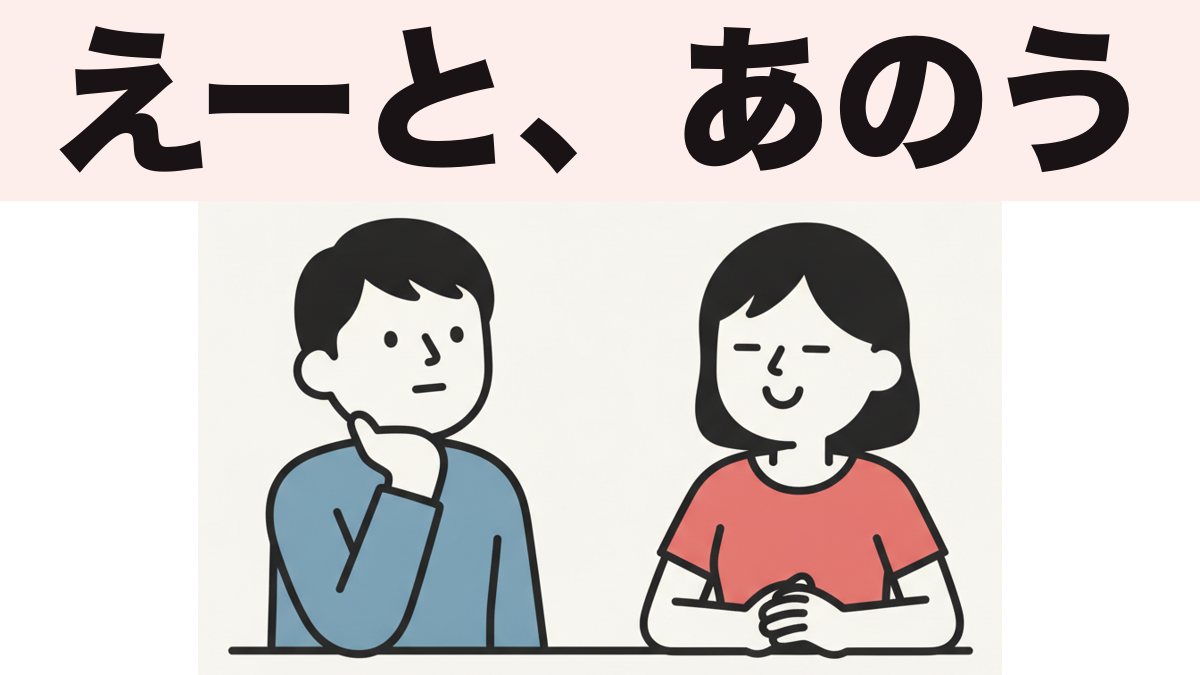
Filler words are not sloppiness — they are how a speaker signals "still here, still thinking." A learner who pauses silently looks like they have stopped understanding, and the conversation gets rescued away from them. A learner who says えーと sounds like someone searching for a word, which is exactly what they are.
フィラーはだらしなさではありません。「まだここにいます、考えています」という合図です。だまって止まる学習者は「分からなくなった」ように見えて、会話を取り上げられます。「えーと」と言う学習者は「ことばをさがしている人」に聞こえます。そして、まさにそのとおりです。
Nobody teaches these, because they are not "real" Japanese. They are, however, the difference between a conversation that continues and one that quietly becomes a monologue.
The basics
The five that do most of the work
| Filler | What it does | Rough English |
|---|---|---|
| えーと / えーっと | Thinking, searching your own memory | "um…", "let me see" |
| あの / あのう | Getting attention, or hesitating before something awkward | "er…", "excuse me…" |
| その | Reaching for a word mid-sentence | "the, uh…" |
| まあ | Softening, hedging, conceding | "well…", "sort of" |
| なんか | Vagueness, approximation | "like", "kind of" |
えーと、三時ぐらいですね。 — Um, around three, I think. あのう、すみません。 — Er, excuse me. まあ、大丈夫だと思います。 — Well, I think it'll be fine. なんか、変な感じ。 — It feels kind of weird.
えーと and あの are aimed at different people
This is the distinction worth having, and it is not in any textbook.
えーと is internal. You are searching your own head, and the listener is just waiting.
あの is directed at the listener. It opens a channel: it says "I am about to say something to you." That is why あのう、すみません works to get a stranger's attention, and えーと、すみません does not.
えーと、名前は… — Um, the name was… (searching) あのう、ちょっといいですか。 — Er, do you have a moment? (approaching someone)
あの is also the softener for anything awkward — a request, a correction, bad news. あの、実は… ("er, actually…") is the standard opener for a sentence the listener will not enjoy.
なんか: useful, and easy to overdo
なんか is the Japanese "like." It vagues things up, and it is extremely common in casual speech.
なんか疲れた。 — I'm kind of tired. なんか、よく分からないけど。 — Like, I don't really get it, but…
Used occasionally it makes you sound natural. Used every sentence it marks you as young and casual, exactly as "like" does in English. In a job interview or with a client, cut it entirely.
Beyond the basics
あいづち: the listener's job
Japanese conversation expects the listener to make noise. These are called あいづち, and a silent listener is read as bored, confused or disagreeing.
| Sound | When |
|---|---|
| はい / ええ | Steady acknowledgement, polite |
| うん | Same, casual |
| そうですね | Agreeing, or buying time |
| なるほど | "Ah, I see" — you followed the point |
| そうなんですか | Genuine surprise or interest |
| へえ | Casual surprise |
A: 昨日、京都に行ってきました。 B: へえ、いいですね。
The frequency is higher than English speakers expect — a Japanese listener will make a sound every few seconds, and it does not interrupt. Learning to do this is one of the fastest ways to sound like you are actually in the conversation rather than waiting out someone's turn.
なるほど is the most satisfying one to start using, because it tells the speaker their explanation landed. It pairs naturally with asking what something means — question, answer, なるほど, and the conversation keeps moving.
ちょっと: the most useful word in Japanese
ちょっと is not exactly a filler, but it does the same softening work and it has an unusual range.
ちょっと待って。 — Wait a sec. (literally "a little") ちょっとすみません。 — Excuse me a moment. (getting attention) ちょっと分かりません。 — I don't really know. (softening a negative) ちょっと… — (trailing off = no)
That last one is the important one. ちょっと followed by nothing is a refusal. If you invite someone out and they say 今日はちょっと…, the answer is no, and the sentence is finished. Waiting for the rest is the beginner's mistake.
やっぱり and そうですね as thinking time
Two more that buy you seconds while sounding like content.
やっぱり、やめておきます。 — On reflection, I'll pass. (やっぱり = as I thought / after all) そうですね… — Let me think…
そうですね is doing double duty: as an answer it means "you're right," and as an opener with a pause it means "hmm, let me see." Tone and length decide which. Stretching it — そうですねぇ — makes it unambiguously the thinking version.
How does it sound in anime?
Fillers are written into dialogue deliberately, because they characterise:
え、えっと… — U-um… (flustered) あの、その… — Er, um… (cornered, stalling) まあ、いいけど。 — Well, whatever. (conceding, unimpressed) なんていうか… — How do I put it…
なんていうか is worth adding to your set: it means "how shall I say," and it is the polite way to stall before something difficult to phrase. It is a full phrase rather than a noise, so it sounds thoughtful rather than lost.
Buying time with a whole sentence
Beyond single fillers, a few complete sentences work as elegant stalling — they sound like content while you think.
ちょっと考えさせてください。 — Let me think for a moment. (polite, buys you real time) えーと、何て言うんでしたっけ。 — Um, what's the word again? 日本語で何と言うか分からないんですが… — I don't know how to say it in Japanese, but…
That last one is worth memorising whole. It admits the gap and keeps the floor, and it almost always produces the word you were looking for — the other person supplies it, which is exactly how asking works when you make it easy for them.
The pattern behind all three: never hand back the turn silently. Say something that signals you are still working on it, and Japanese conversation will wait.
Common mistakes
- Pausing in silence. Silence reads as "I have stopped understanding," and someone will switch to English to rescue you. A filler keeps the floor.
- Using えーと to get someone's attention. That is あのう's job. えーと is internal.
- なんか in every sentence. Natural occasionally; in a work context, cut it.
- Waiting for the rest of ちょっと… There is no rest. It is a complete refusal.
- Staying silent as the listener. Japanese expects あいづち every few seconds. Silence reads as disagreement.
- Using English fillers. "Um" and "uh" mark every pause as foreign. The Japanese versions are two syllables and cost nothing to learn.
Practice
Answers are hidden — build yours first, then open. Questions 2 and 3 are a pair: the same moment of hesitation, aimed at two different people.
1. You need a moment to remember a time. What do you say?
Show answer
えーと… — you are searching your own memory, so the internal filler is right. えーと、三時ぐらいですね.
2. You want to get a stranger's attention politely. What do you say?
Show answer
あのう、すみません — あの is aimed at the listener and opens a channel. It is the right tool for approaching someone.
3. Why does えーと、すみません not work for the same job?
Show answer
えーと is internal — it tells the world you are thinking, not that you are addressing someone. This is the pair to question 2: same hesitation, different direction.
4. Someone invites you out and says 今日はちょっと… What did they mean?
Show answer
No — ちょっと followed by nothing is a complete refusal. Waiting for the rest of the sentence is the beginner's mistake.
5. What does なるほど tell the speaker?
Show answer
That their explanation landed — "ah, I see." It is the most satisfying あいづち to start using, because it confirms you followed rather than just heard.
6. Your friend says 昨日、京都に行ってきました. Give a natural casual reaction.
Show answer
へえ、いいですね — へえ is casual surprise. Japanese expects the listener to make a sound every few seconds; silence reads as disinterest.
7. What is the difference between そうですね as an answer and そうですね… as an opener?
Show answer
Agreement vs thinking time — as an answer it means "you're right." Stretched with a pause (そうですねぇ…) it means "hmm, let me see."
8. When should you cut なんか entirely?
Show answer
Work and formal situations — it is the Japanese "like." Natural occasionally in casual speech, and it marks you as very casual if it is in every sentence.
9. What does なんていうか mean, and why is it useful?
Show answer
"How shall I put it…" — it is a full phrase rather than a noise, so stalling with it sounds thoughtful rather than lost.
10. Why is a silent pause worse than a filler?
Show answer
It reads as not understanding — and the other person will usually rescue the conversation by switching to English or changing the subject. A filler says "still here, still thinking."
FAQ
Do fillers make me sound less fluent? The opposite. Fluent speakers of every language use them constantly. What marks a learner is English fillers in Japanese sentences, or silence where a filler should be.
How many should I learn? Three is enough to start: えーと for thinking, あのう for addressing someone, and なるほど for listening. Add まあ and なんか once those are automatic.
Is あいづち really expected that often? Yes, and noticeably more often than in English. On the phone especially, Japanese speakers say はい or ええ every few seconds — its absence makes the other person ask もしもし? to check you are still there.
Is うん rude? Not among friends, and not to someone younger. To a customer or someone senior, use はい or ええ. うん to a client would land as offhand.
What is ええ, exactly? A softer, slightly more formal-sounding はい, common in polite conversation and on the phone. It is not casual — if anything it is a touch more refined than はい in some registers.
What about the long drawn-out えーーーと? Perfectly normal, and useful. Length signals how hard you are searching, and a stretched filler buys more time without anyone feeling the pause has gone wrong.
Vocabulary from this article
Tap the block to select all of it, then copy. In Anki: File → Import, note type Basic, separator Tab — the first column becomes the front, the second the back.
えーと	えーと — um, let me see
あのう	あのう — er, excuse me
その	その — the, uh… (searching for a word)
まあ	まあ — well, sort of
なんか	なんか — like, kind of
ちょっと	ちょっと — a little; excuse me; (trailing off) no
やっぱり	やっぱり — as I thought, after all
なるほど	なるほど — ah, I see
そうですね	そうですね — you're right; let me think
そうなんですか	そうなんですか — is that so?
へえ	へえ — oh really (casual surprise)
疲れる	つかれる — to get tired
変	へん — strange
感じ	かんじ — feeling, impression
名前	なまえ — name
実は	じつは — actually, to tell the truth
大丈夫	だいじょうぶ — fine, all right
京都	きょうと — Kyoto
I'm Yuuki, a Japanese teacher based in Tokyo. I've taught on italki as a Top 1% teacher and watched over 1,500 anime. Learners spend years on grammar and none on this, and it is the thing that decides whether a Japanese person keeps speaking Japanese to them — a silent pause invites a rescue, and えーと does not.
Sources: the author's own lessons and standard reference grammars.
だれも教えません。「ちゃんとした日本語」ではないからです。でも、会話が続くか、相手の一人語りになるかは、ここで決まります。
基本
よく使う5つ
| フィラー | 何をするか | 英語だと |
|---|---|---|
| えーと / えーっと | 自分の中をさがしている | "um…", "let me see" |
| あの / あのう | 相手に声をかける・言いにくいことの前 | "er…", "excuse me…" |
| その | 文のとちゅうでことばをさがす | "the, uh…" |
| まあ | やわらかくする・ゆずる | "well…", "sort of" |
| なんか | はっきりさせない | "like", "kind of" |
えーと、三時ぐらいですね。 — Um, around three, I think. あのう、すみません。 — Er, excuse me. まあ、大丈夫だと思います。 — Well, I think it'll be fine. なんか、変な感じ。 — It feels kind of weird.
「えーと」と「あの」は向きがちがいます
これは教科書に出ませんが、いちばん大事なちがいです。
「えーと」は自分の中です。自分の頭の中をさがしていて、相手は待っているだけです。
「あの」は相手に向かっています。 「これからあなたに話しかけます」という合図です。だから知らない人に「あのう、すみません」は使えますが、「えーと、すみません」は使えません。
えーと、名前は… — Um, the name was… (さがしている) あのう、ちょっといいですか。 — Er, do you have a moment? (話しかけている)
「あの」は、言いにくいことの前にも使います。おねがい、訂正、悪い知らせ。「あの、実は…」は、相手がうれしくない話を切り出す決まった形です。
なんか: 便利ですが、使いすぎに注意
「なんか」は日本語の "like" です。はっきりさせない働きをして、くだけた会話にとても多いです。
なんか疲れた。 — I'm kind of tired. なんか、よく分からないけど。 — Like, I don't really get it, but…
ときどき使うと自然です。毎回使うと、とても若くてくだけた話し方になります。面せつやお客さんの前では、ぜんぶやめてください。
もう少し先へ
あいづち: 聞く人の仕事
日本語の会話では、聞く人が音を出します。これを「あいづち」と言います。だまって聞いていると、つまらない・分からない・反対している、と受け取られます。
| 音 | いつ |
|---|---|
| はい / ええ | ていねいなうなずき |
| うん | 同じ・くだけた形 |
| そうですね | さんせい/時間をかせぐ |
| なるほど | 「なるほど」」話が分かった |
| そうなんですか | おどろき・きょうみ |
| へえ | くだけたおどろき |
A: 昨日、京都に行ってきました。 B: へえ、いいですね。
回数は、英語の人が思うよりずっと多いです。数びょうに1回は音を出しますが、じゃまにはなりません。これができると、「相手の番が終わるのを待っている人」ではなく「会話の中にいる人」になります。
「なるほど」がいちばん気もちのいいあいづちです。話した人に「ちゃんと伝わった」と教えるからです。
ちょっと: 日本語でいちばん便利なことば
「ちょっと」はフィラーそのものではありませんが、同じようにやわらかくします。そして、はばがとても広いです。
ちょっと待って。 — Wait a sec. ちょっとすみません。 — Excuse me a moment. ちょっと分かりません。 — I don't really know. (否定をやわらかく) ちょっと… — (そこで終わるるいいえ)
さいごが大事です。後ろが何もない「ちょっと」は、ことわりです。さそって「今日はちょっと…」と言われたら、答えは「いいえ」で、文はもう終わっています。続きを待つのが初級の人のまちがいです。
やっぱり と そうですね も時間をかせげます
意味があるように聞こえながら、数びょうをかせげます。
やっぱり、やめておきます。 — On reflection, I'll pass. そうですね… — Let me think…
「そうですね」は2つの仕事をします。答えなら「そのとおりです」、少し止まって言えば「うーん、そうですね」です。のばして「そうですねぇ」にすると、考えている方だとはっきりします。
アニメではどう聞こえますか?
フィラーは、キャラクターを表すためにわざと書かれています。
え、えっと… — U-um… (あわてている) あの、その… — Er, um… (こまって止まっている) まあ、いいけど。 — Well, whatever. なんていうか… — How do I put it…
「なんていうか」も持っておいてください。言いにくいことの前に使う、考えている感じのことばです。音ではなく1つのフレーズなので、こまっているのではなく、考えているように聞こえます。
1文で時間をかせぐ
1語のフィラーのほかに、「考えている内よう」に聞こえる文がいくつかあります。
ちょっと考えさせてください。 — Let me think for a moment. えーと、何て言うんでしたっけ。 — Um, what's the word again? 日本語で何と言うか分からないんですが… — I don't know how to say it in Japanese, but…
さいごの文はまるごと覚えてください。分からないことをみとめながら、話す番を持ったままにします。そして、たいてい相手がそのことばを出してくれます。
3つに共通するのは、「だまって番を返さない」ことです。まだ考えていると伝えれば、日本語の会話は待ってくれます。
よくある間違い
- だまって止まること。 「分からなくなった」に見えて、相手が英語に切りかえて助けにきます。
- 「えーと」で人に声をかけること。 それは「あのう」の仕事です。
- 毎回「なんか」。 ときどきなら自然です。仕事の場面ではやめてください。
- 「ちょっと…」の続きを待つこと。 続きはありません。ことわりです。
- 聞く時にだまっていること。 あいづちは数びょうに1回です。だまっていると反対の意味になります。
- 英語のフィラーを使うこと。 "um" "uh" は、止まるたびに外国の音になります。日本語の形は2音で覚えられます。
練習
答えはかくれています。まず自分の答えを作ってから開いてください。2番と3番は対になっています。
1. 時間を思い出すのに少しかかります。何と言いますか。
答えを見る
えーと… — 自分の中をさがしているので、内がわのフィラーです。「えーと、三時ぐらいですね」。
2. 知らない人にていねいに声をかけます。何と言いますか。
答えを見る
あのう、すみません — 「あの」は相手に向かっていて、話しかける合図になります。
3. 「えーと、すみません」ではなぜだめですか。
答えを見る
「えーと」は自分の中だからです — 考えていることは伝わりますが、相手に話しかけている合図になりません。2番と対です。
4. さそったら「今日はちょっと…」と言われました。どんな意味ですか。
答えを見る
いいえ — 後ろが何もない「ちょっと」はことわりです。続きを待つのが初級のまちがいです。
5. 「なるほど」は相手に何を伝えますか。
答えを見る
せつめいが伝わったこと — 「聞こえた」ではなく「分かった」を伝えるので、いちばん気もちのいいあいづちです。
6. 友だちが「昨日、京都に行ってきました」と言いました。自然に返してください。
答えを見る
へえ、いいですね — 「へえ」はくだけたおどろきです。日本語では聞く人が数びょうに1回音を出します。
7. 答えの「そうですね」と、はじめの「そうですね…」はどうちがいますか。
答えを見る
さんせいか、考えているか — 答えなら「そのとおりです」。のばして止めると「うーん、そうですね」になります。
8. 「なんか」をぜんぶやめた方がいいのはどんな時ですか。
答えを見る
仕事やかたい場面 — 日本語の "like" です。くだけた会話ならときどき自然ですが、毎回だととても若く聞こえます。
9. 「なんていうか」はどんな意味で、なぜ便利ですか。
答えを見る
「どう言えばいいか…」 — 音ではなく1つのフレーズなので、こまっているのではなく考えているように聞こえます。
10. だまって止まるのが、なぜフィラーより悪いですか。
答えを見る
「分からなくなった」に見えるからです — 相手が英語に切りかえたり、話題を変えたりして助けにきます。フィラーは「まだ考えています」と言います。
よくある質問
フィラーを使うと、下手に聞こえませんか。 反対です。どの言語でも、上手な人ほど使います。学習者に聞こえるのは、日本語の文に英語のフィラーが入る時と、フィラーが入るべき所がだまっている時です。
いくつ覚えればいいですか。 3つでじゅうぶん始められます。考える「えーと」、話しかける「あのう」、聞く時の「なるほど」。なれたら「まあ」「なんか」を足してください。
あいづちは本当にそんなに多いですか。 多いです。英語よりずっと多いです。電話ではとくに、数びょうに1回「はい」「ええ」と言います。言わないと「もしもし?」と聞かれます。
「うん」は失礼ですか。 友だちや年下にはふつうです。お客さんや目上の人には「はい」「ええ」にしてください。
「ええ」は何ですか。 「はい」より少しやわらかい形で、ていねいな会話や電話でよく使います。くだけた形ではありません。
「えーーーと」と長くのばしてもいいですか。 いいです。長さが「どれだけさがしているか」を表します。のばすと、間が悪くならずに時間をかせげます。
この記事に出た単語
ブロックをタップすると全部選べます。そのままコピーしてください。Anki では ファイル → 読み込み、ノートタイプ 基本、区切り タブ。1列目が表、2列目が裏になります。
えーと	えーと — um, let me see
あのう	あのう — er, excuse me
その	その — the, uh… (searching for a word)
まあ	まあ — well, sort of
なんか	なんか — like, kind of
ちょっと	ちょっと — a little; excuse me; (trailing off) no
やっぱり	やっぱり — as I thought, after all
なるほど	なるほど — ah, I see
そうですね	そうですね — you're right; let me think
そうなんですか	そうなんですか — is that so?
へえ	へえ — oh really (casual surprise)
疲れる	つかれる — to get tired
変	へん — strange
感じ	かんじ — feeling, impression
名前	なまえ — name
実は	じつは — actually, to tell the truth
大丈夫	だいじょうぶ — fine, all right
京都	きょうと — Kyoto
私はユウキです。東京で日本語を教えています。 italki の Top 1% の先生で、アニメは1,500本以上見ました。みんな文法に何年もかけて、ここにはゼロです。でも、日本の人が日本語で話し続けてくれるかどうかは、ここで決まります。だまった間は助けをよびますが、「えーと」はよびません。
More drills like the ones above, plus a timed JLPT-style mock test: Practice · N4上のような練習問題と、時間つきのJLPT形式のもぎ試験: 練習ページ · N4
Want to try this in a real conversation?
本当の会話で、ためしてみませんか?
30-minute trial lesson, $13. Times shown in your own timezone.
30分の体験レッスン、$13。時間はあなたのタイムゾーンで表示されます。
Book a trial lesson · $13