How to say "expensive" in Japanese: 高い, and the word it also means「高い」: 値段のことばと、もう1つの意味
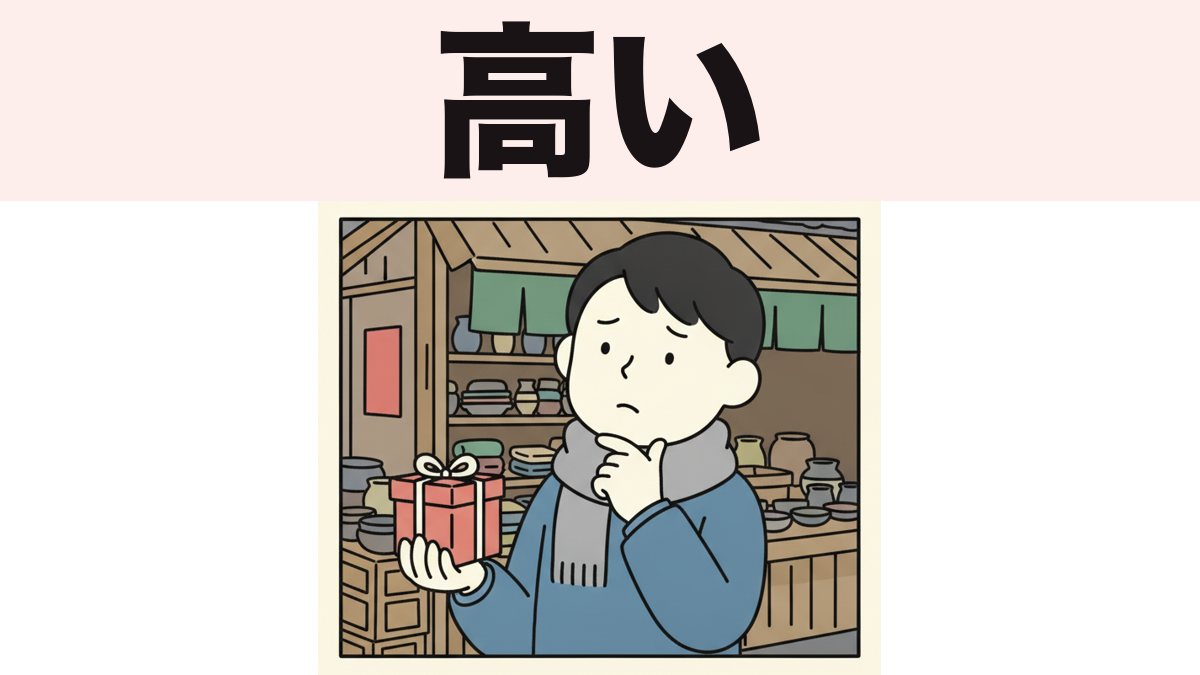
高い (たかい) is the word, and it means both "expensive" and "tall." Japanese does not separate them — 山が高い is a tall mountain, 値段が高い is a high price, and context does all the work. Its opposite 安い means "cheap," but unlike English it carries no insult about quality.
「高い(たかい)」は expensive です。そして tall でもあります。日本語は分けません。「山が高い」は tall、「値段が高い」は expensive です。どちらかは、前にあることばで分かります。反対は「安い」です。英語の cheap とちがって、悪い意味はありません。
Price is one of the first things a traveller needs to discuss and one of the easiest places to sound blunt by accident, because the polite way to say something costs too much is not a direct translation of anything in English.
The basics
高い: high, tall, and expensive
One い-adjective, three English words. Japanese treats "high price," "high mountain" and "tall building" as the same idea: something extends upward further than usual.
この店は高いです。 — This shop is expensive. (polite, neutral observation) あの山は高いです。 — That mountain is tall. (polite — same adjective, different subject)
There is no ambiguity in practice, because the subject tells you which meaning applies. Prices, shops and products are expensive; mountains, buildings and people are tall.
For people specifically, the phrase is 背が高い (せがたかい) — literally "one's back is high." Saying あの人は高いです about a person would be understood as a comment on their price, which is not what you want.
安い: cheap, with no sting
安い is the opposite, and this is where English speakers over-think. In English "cheap" can insult quality; in Japanese 安い is simply a statement about price and is usually positive.
このラーメン、安くておいしいです。 — This ramen is cheap and good. (polite — a compliment, not a complaint)
If you actually want to say something looks cheaply made, that word is 安っぽい (やすっぽい) — "cheap-ish," with the negative connotation built into the っぽい. Those two words are not interchangeable and mixing them up is how you accidentally insult a shop.
The nouns: 値段, 価格, 料金, 代
| Japanese | Reading | Used for |
|---|---|---|
| 値段 | ねだん | Price of a thing — the everyday word |
| 価格 | かかく | Price, formal/written — labels, listings |
| 料金 | りょうきん | Fee for a service — trains, hotels, utilities |
| 代 | だい | Charge for something specific — 電気代, タクシー代 |
| 会計 | かいけい | The bill, the act of paying |
| おつり | おつり | Change (money back) |
値段はいくらですか。 — How much is it? (polite — though いくらですか alone is more common) タクシー代が高かったです。 — The taxi fare was expensive. (polite, past — note 高かった, not 高いでした)
That past form is a common stumble; if 高いでした looks fine to you, the adjective past tense is worth five minutes.
Beyond the basics
How to say something is too expensive, politely
The direct route is 高すぎます ("too expensive"), but in a shop this lands harder than English "that's a bit much."
ちょっと高いですね。 — It's a little expensive, isn't it. (polite — the standard soft complaint) 高すぎます。 — It's too expensive. (polite grammar, blunt delivery)
ちょっと is doing enormous work here. Combined with the ね seeking agreement, ちょっと高いですね signals reluctance without accusing anyone. This is the sentence to use if you want to leave a shop gracefully.
〜すぎる attaches to the adjective stem and means "too much of it" — see 〜すぎる for the い you have to drop.
お得 and 損: value, not price
Japanese has a dedicated pair for whether something is worth it, separate from whether it is cheap.
- お得 (おとく) — good value, a good deal
- 損 (そん) — a loss, a bad deal
- 得 (とく) — a gain, coming out ahead
こっちのほうがお得ですよ。 — This one's better value, you know. (polite — standard shop staff line) 買わないと損ですよ。 — You'd be losing out if you didn't buy it. (polite-casual, sales talk)
お得 appears on signs everywhere — お得セット, お得なプラン — and it is not the same claim as 安い. Something can be 高い and お得 at once: expensive, but worth it.
The discount vocabulary on every shop window
| Japanese | Reading | Meaning |
|---|---|---|
| セール | せーる | Sale |
| 割引 | わりびき | Discount |
| 〜%オフ | 〜ぱーせんとおふ | ~% off |
| 半額 | はんがく | Half price |
| 値引き | ねびき | Price reduction |
| 無料 | むりょう | Free |
| タダ | ただ | Free (casual) |
| 税込 | ぜいこみ | Tax included |
| 税抜 | ぜいぬき | Before tax |
税込 and 税抜 are the two worth learning before a shopping trip. A price tag showing 税抜 will be higher at the register, and the difference is not small once you are buying several things. For the rest of the shopping phrases, see ten phrases that make shopping in Akihabara easier.
Never call a gift 安い
If someone gives you something, do not comment on its price in either direction. 安いですね about a present is a genuine social error, and 高かったでしょう ("that must have been expensive") is also awkward because it puts the giver on the spot about money.
ありがとうございます。うれしいです。 — Thank you. I'm delighted. (polite — react to the gesture, not the cost)
The safe move is to talk about the thing, not the money: これ、ずっと欲しかったんです ("I've wanted this for ages") does far more work than any comment on value.
高い in the metaphorical sense
高い also covers abstract "high" the way English does: 高い評価 (high evaluation), レベルが高い (the level is high), 可能性が高い (the probability is high).
可能性が高いです。 — The likelihood is high. (polite, neutral)
This is one of the places where Japanese and English happen to line up, which makes it easy — but note that 安い does not extend the same way. There is no 安い評価; the opposite of 高い評価 is 低い評価, using 低い (ひくい, low). 安い is only about money.
Common mistakes
- Saying 高いでした. い-adjectives conjugate themselves: 高かったです.
- Using 高い for a person's height without 背が. あの人は高いです comments on their price. あの人は背が高いです is the sentence you want.
- Assuming 安い is an insult. It is not. 安くておいしい is a compliment. 安っぽい is the insulting one.
- Using 低い for prices. The opposite of 高い for money is 安い, not 低い. 値段が低い is understandable but wrong-sounding.
- Saying 高すぎます in a shop. Grammatical, but blunt. ちょっと高いですね does the same job without the edge.
- Commenting on the price of a gift. Both "that's cheap" and "that must have been expensive" are uncomfortable. React to the gift itself.
- Ignoring 税抜 on a price tag. The number on the tag is not the number at the register.
高い, 安い and their relatives
| Japanese | Reading | Meaning |
|---|---|---|
| 高い | たかい | Expensive; tall, high |
| 安い | やすい | Cheap (neutral or positive) |
| 安っぽい | やすっぽい | Cheap-looking (negative) |
| 低い | ひくい | Low (height, level — not price) |
| 高価 | こうか | Expensive (formal, written) |
| 安価 | あんか | Inexpensive (formal, written) |
| お得 | おとく | Good value |
| 損 | そん | A loss, a bad deal |
| もったいない | もったいない | Wasteful, too good to waste |
Practice
Questions 2 and 3 are the pair: the same adjective, two completely different meanings, decided only by the subject.
1. Say "this shop is expensive," politely.
Show answer
この店は高いです。 — 高い covers price with no special word needed.
2. Say "that mountain is tall."
Show answer
あの山は高いです。 — Identical adjective. The subject decides which English word applies.
3. Say "that person is tall."
Show answer
あの人は背が高いです。 — People need 背が. Without it you are commenting on their price.
4. Say "the taxi fare was expensive," politely.
Show answer
タクシー代が高かったです。 — 高かったです, never 高いでした. い-adjectives carry their own past tense.
5. In a shop, signal that something costs more than you want to pay — politely.
Show answer
ちょっと高いですね。 — ちょっと softens it and ね invites agreement. 高すぎます is correct but blunt.
6. Compliment cheap, tasty ramen.
Show answer
このラーメン、安くておいしいです。 — 安い is not an insult in Japanese. This is praise.
7. Say that something looks cheaply made.
Show answer
安っぽいです。 — 〜っぽい adds the negative "sort of" sense that 安い does not carry.
8. Someone gives you a present. What do you say?
Show answer
ありがとうございます。うれしいです。 — React to the gesture. Any comment on price, high or low, is awkward.
9. What is the difference between 税込 and 税抜 on a price tag?
Show answer
税込税込税金が入っている / 税抜税抜入っていない — A 税抜 price will be higher at the register.
10. Fix this: この本は値段が低いです。
Show answer
この本は安いです。 — 低い is for height and level, not for money. Prices are 高い or 安い.
FAQ
Why does 高い mean both "expensive" and "tall"? Because Japanese conceives both as the same shape: a quantity extending further up than expected. English happens to split them into two words; plenty of languages do not.
Is 高価 worth learning? For reading, yes. 高価な品 appears on signs about valuable items and in insurance or shipping language. In speech, 高い covers everything.
How do I ask the price politely? いくらですか is the standard and is perfectly polite. おいくらですか adds a level of politeness that fits a formal shop, and これ、いくらですか with a gesture is the most common real-world version.
Can I haggle in Japan? Almost never in ordinary shops — prices are fixed and asking will be uncomfortable for both sides. Exceptions exist at flea markets, some electronics stores and secondhand dealers, where まけてもらえますか ("could you come down a bit?") is an accepted question.
What does もったいない mean exactly? It means something is too good to waste — throwing out edible food, discarding a usable item, or letting an opportunity go by. It is about waste rather than price, and it is one of the most culturally loaded words in everyday Japanese.
Is タダ rude? No, just casual. タダ means free and is fine with friends. On a sign or in a shop, the word is 無料.
Vocabulary from this article
Tap the block to select all of it, then copy. In Anki: File → Import, note type Basic, separator Tab — the first column becomes the front, the second the back.
高い	たかい — expensive; tall, high
安い	やすい — cheap
安っぽい	やすっぽい — cheap-looking
低い	ひくい — low
値段	ねだん — price
価格	かかく — price (formal)
料金	りょうきん — fee, charge
会計	かいけい — the bill
おつり	おつり — change (money)
お得	おとく — good value
損	そん — a loss, a bad deal
割引	わりびき — discount
半額	はんがく — half price
値引き	ねびき — price reduction
無料	むりょう — free of charge
税込	ぜいこみ — tax included
税抜	ぜいぬき — before tax
もったいない	もったいない — wasteful, too good to waste
I'm Yuuki, a Japanese teacher based in Tokyo. I've taught on italki as a Top 1% teacher and watched over 1,500 anime. The one that costs students something real is 安い about a present — it is a direct translation of a perfectly friendly English remark, and it does not land the same way at all.
Sources: the author's own lessons and standard reference grammars.
旅行で最初に必要になることばです。そして、うっかりきつい言い方になりやすいところでもあります。「高すぎる」を、そのまま言うと強すぎるからです。
基本
「高い」: 高い・背が高い・値段が高い
い形容詞1つで、英語の3つの意味をカバーします。日本語では、どれも「ふつうより上にのびている」という同じ考え方です。
この店は高いです。 — This shop is expensive. (polite, neutral observation) あの山は高いです。 — That mountain is tall. (polite — same adjective, different subject)
まちがえることはありません。何が主語かで分かるからです。店や物なら値段、山や建物なら高さです。
人の場合は「背が高い(せがたかい)」と言います。「あの人は高いです」と言うと、「あの人は値段が高い」に聞こえます。
「安い」に悪い意味はありません
英語の cheap は「品質が悪い」という意味になることがあります。日本語の「安い」は、値段のことだけです。ほめ言葉にもなります。
このラーメン、安くておいしいです。 — This ramen is cheap and good. (polite — a compliment, not a complaint)
「作りが悪い」と言いたい時は「安っぽい(やすっぽい)」です。この2つは別のことばです。まちがえると、お店に失礼になります。
値段のことば
| 日本語 | 読み方 | 使うところ |
|---|---|---|
| 値段 | ねだん | 物の値段・ふだんのことば |
| 価格 | かかく | かたいことば・ラベルや広告 |
| 料金 | りょうきん | サービスのお金・電車やホテル |
| 代 | だい | 〜のお金・電気代、タクシー代 |
| 会計 | かいけい | 払うこと・おかんじょう |
| おつり | おつり | change |
値段はいくらですか。 — How much is it? (polite — though いくらですか alone is more common) タクシー代が高かったです。 — The taxi fare was expensive. (polite, past — note 高かった, not 高いでした)
「高いでした」は間違いです。い形容詞は自分で形が変わります。
もう少し先へ
「高すぎる」はきつく聞こえます
まちがいではありませんが、お店では強すぎます。
ちょっと高いですね。 — It's a little expensive, isn't it. (polite — the standard soft complaint) 高すぎます。 — It's too expensive. (polite grammar, blunt delivery)
「ちょっと」がとても大事です。「ね」で相手に同意を求めます。この形なら、買わずに店を出ても気まずくなりません。
「お得」と「損」
値段が安いかどうかと、得かどうかは別です。日本語は分けて言います。
- お得(おとく) — いい買い物
- 損(そん) — 損すること
- 得(とく) — 得すること
こっちのほうがお得ですよ。 — This one's better value, you know. (polite — standard shop staff line) 買わないと損ですよ。 — You'd be losing out if you didn't buy it. (polite-casual, sales talk)
「お得」は看板によく出ます。「安い」とは別です。高くても「お得」なことがあります。
店の窓のことば
| 日本語 | 読み方 | 意味 |
|---|---|---|
| セール | せーる | sale |
| 割引 | わりびき | discount |
| 〜%オフ | 〜ぱーせんとおふ | ~% off |
| 半額 | はんがく | half price |
| 値引き | ねびき | price reduction |
| 無料 | むりょう | free |
| タダ | ただ | free(ふつうの言い方) |
| 税込 | ぜいこみ | tax included |
| 税抜 | ぜいぬき | before tax |
「税込」と「税抜」は、買い物の前に覚えてください。「税抜」の札は、レジでもっと高くなります。
プレゼントの値段を言わない
もらった物の値段は、高いとも安いとも言いません。「安いですね」は本当に失礼です。「高かったでしょう」も、相手を困らせます。
ありがとうございます。うれしいです。 — Thank you. I'm delighted. (polite — react to the gesture, not the cost)
物そのものの話をするのが安全です。「これ、ずっと欲しかったんです」が、いちばんよく効きます。
気持ちや数の「高い」
「高い評価」「レベルが高い」「可能性が高い」も言います。
可能性が高いです。 — The likelihood is high. (polite, neutral)
でも「安い」はこう使えません。「高い評価」の反対は「低い評価」です。「安い」はお金だけです。
よくある間違い
- 「高いでした」と言う。 「高かったです」です。
- 人に「背が」をつけない。 「あの人は高いです」は値段の話になります。
- 「安い」を悪い意味だと思う。 「安くておいしい」はほめ言葉です。
- 値段に「低い」を使う。 お金は「高い」と「安い」です。
- お店で「高すぎます」と言う。 「ちょっと高いですね」にします。
- プレゼントの値段を言う。 高くても安くても気まずくなります。
- 「税抜」を見落とす。 札の数字とレジの数字がちがいます。
「高い」「安い」となかまのことば
| 日本語 | 読み方 | 意味 |
|---|---|---|
| 高い | たかい | expensive; tall |
| 安い | やすい | cheap(悪い意味なし) |
| 安っぽい | やすっぽい | cheap-looking(悪い意味) |
| 低い | ひくい | low(お金には使わない) |
| 高価 | こうか | expensive(かたい) |
| 安価 | あんか | inexpensive(かたい) |
| お得 | おとく | good value |
| 損 | そん | a loss |
| もったいない | もったいない | too good to waste |
練習
2番と3番が組です。同じことばで、意味がちがいます。
1. 「この店は高いです」と言ってください。
答えを見る
この店は高いです。 — 値段には「高い」を使います。
2. 「あの山は高いです」と言ってください。
答えを見る
あの山は高いです。 — 同じことばです。主語で意味が決まります。
3. 「あの人は背が高いです」と言ってください。
答えを見る
あの人は背が高いです。 — 「背が」がないと、値段の話になります。
4. 「タクシー代が高かったです」と言ってください。
答えを見る
タクシー代が高かったです。 — 「高いでした」とは言いません。
5. お店で、ていねいに「少し高い」と伝えてください。
答えを見る
ちょっと高いですね。 — 「ちょっと」と「ね」でやわらかくなります。
6. 「安くておいしい」とほめてください。
答えを見る
このラーメン、安くておいしいです。 — 「安い」は悪い意味ではありません。
7. 「作りが安そうに見える」と言ってください。
答えを見る
安っぽいです。 — 「〜っぽい」で悪い意味になります。
8. プレゼントをもらいました。何と言いますか。
答えを見る
ありがとうございます。うれしいです。 — 値段の話はしません。
9. 「税込」と「税抜」のちがいは何ですか。
答えを見る
税込税込税金が入っている / 税抜税抜入っていない — 「税抜」はレジで高くなります。
10. 直してください: この本は値段が低いです。
答えを見る
この本は安いです。 — お金に「低い」は使いません。
よくある質問
どうして「高い」が2つの意味を持つのですか。 どちらも「ふつうより上にのびている」という同じ形だからです。英語が2つに分けているだけです。
「高価」は覚えたほうがいいですか。 読めればいいです。看板や配送の説明に出ます。話す時は「高い」で十分です。
値段はどう聞きますか。 「いくらですか」でていねいです。「おいくらですか」はもっとていねいです。「これ、いくらですか」がいちばんよく使います。
日本で値切れますか。 ふつうのお店ではできません。のみの市、電気屋、中古屋などでは「まけてもらえますか」と聞けます。
「もったいない」は何ですか。 「まだ使えるのに捨てるのは残念だ」という意味です。値段ではなく、むだにすることの話です。
「タダ」は失礼ですか。 いいえ、ふつうの話し方です。看板やお店では「無料」を使います。
この記事に出た単語
このブロックを長く押して全部選び、コピーしてください。Ankiでは ファイル → 読み込み、ノートタイプは 基本、区切りは タブ にします。左が表、右が裏になります。
高い	たかい — expensive; tall, high
安い	やすい — cheap
安っぽい	やすっぽい — cheap-looking
低い	ひくい — low
値段	ねだん — price
価格	かかく — price (formal)
料金	りょうきん — fee, charge
会計	かいけい — the bill
おつり	おつり — change (money)
お得	おとく — good value
損	そん — a loss, a bad deal
割引	わりびき — discount
半額	はんがく — half price
値引き	ねびき — price reduction
無料	むりょう — free of charge
税込	ぜいこみ — tax included
税抜	ぜいぬき — before tax
もったいない	もったいない — wasteful, too good to waste
日本語教師のユウキです。東京にいます。 italkiで Top 1% の教師をしています。アニメは1,500本以上見ました。本当に困るのは、プレゼントに「安いですね」と言ってしまう時です。英語ではふつうのひとことなのに、日本語では全然ちがう意味になります。
More drills like the ones above, plus a timed JLPT-style mock test: Practice · N5上のような練習問題と、時間つきのJLPT形式のもぎ試験: 練習ページ · N5
Want to try this in a real conversation?
本当の会話で、ためしてみませんか?
30-minute trial lesson, $13. Times shown in your own timezone.
30分の体験レッスン、$13。時間はあなたのタイムゾーンで表示されます。
Book a trial lesson · $13