How to disagree in Japanese without sounding blunt日本語で、きつくならない反対の言い方
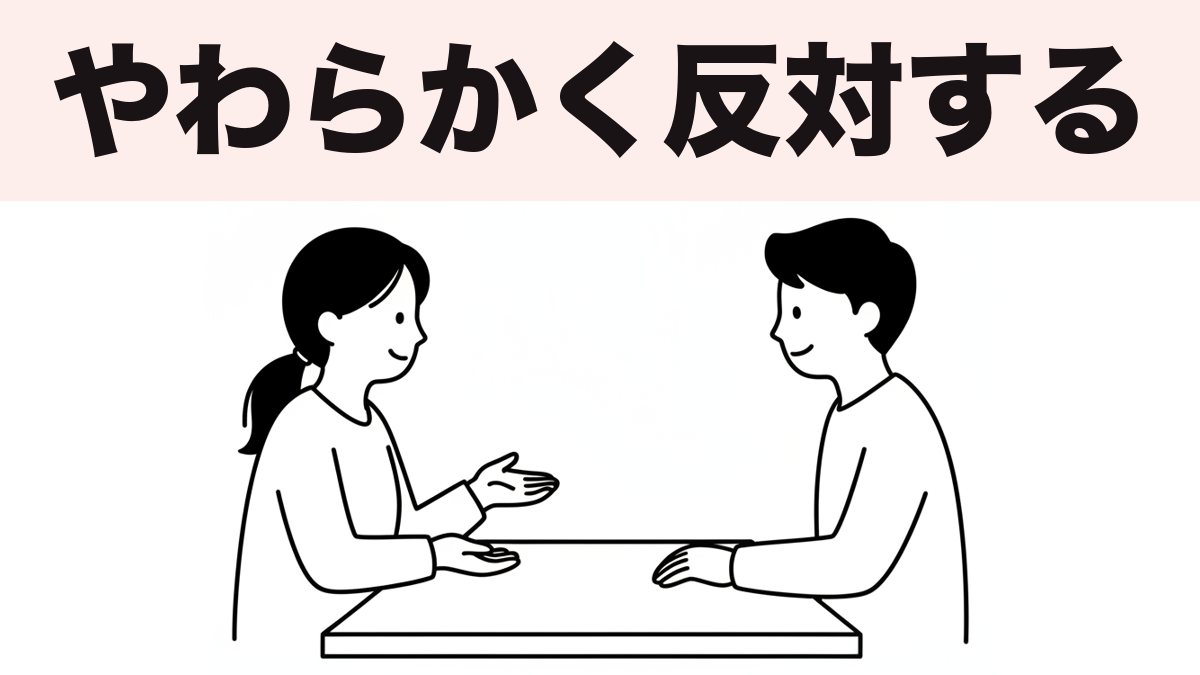
違います is a correction, not a disagreement — using it on somebody's opinion tells them they got a fact wrong, which is almost never what you meant.
「違います」は「まちがいを直すことば」で、「意見に反対することば」ではありません。人の意見に「違います」と言うと、「事実をまちがえていますよ」と伝わります。それはたいてい、言いたかったことではありません。
This is the single most common way an otherwise fluent learner lands badly in Japanese. English lets you open with "I disagree" and stay perfectly pleasant, because the disagreement is about the idea. Japanese does not have a comfortable equivalent, so it builds disagreement out of three moves instead: acknowledge, soften, then state your view.
The basics
The three-move shape
Almost every polite disagreement in Japanese follows the same sequence.
- Acknowledge. たしかに〜ですね/おっしゃる通りです
- Pivot. ですが/ただ/一方で
- State your view, hedged. 〜のではないでしょうか/〜と思います
たしかにそうですね。ですが、コストの面では難しいのではないでしょうか。 — That's certainly true. But in terms of cost, might it not be difficult? (polite; the standard business shape) おっしゃる通りです。ただ、時間が足りない気がします。 — You're quite right. It's just that I feel there isn't enough time. (polite)
Skipping step one is what makes a disagreement land hard. The acknowledgement is not flattery; it is the signal that you are still on the same side of the table.
The everyday version
In casual conversation the same shape compresses into a couple of words.
そうだね。でも、ちょっと違う気がする。 — Yeah. But it feels a bit different to me. (casual) わかるけど、私はそう思わないかな。 — I get it, but I don't really think so. (casual; かな softens it to thinking aloud)
The かな at the end is doing real work. It turns a statement into something closer to a musing, which lets the other person keep their position without losing face.
違います is for facts
これは三時からですか。— いいえ、違います。四時からです。 — Does this start at three? — No, it doesn't. It starts at four. (polite; a factual correction, and perfectly friendly) ×それは違います。 (said about somebody's opinion — reads as "you are wrong")
If you must push back on content rather than a fact, 違うと思います ("I think it's different") is the softened version, and even that is fairly direct.
Beyond the basics
The phrases worth memorising
| Phrase | Strength | Use it when |
|---|---|---|
| たしかに〜ですが | Soft | Standard polite disagreement |
| おっしゃる通りですが | Soft, formal | Disagreeing with a superior or a client |
| 〜とは少し違って | Soft | Marking your view as different, not wrong |
| それはどうでしょうか | Medium, indirect | Expressing doubt without arguing |
| 〜のではないでしょうか | Soft | Proposing your own view as a question |
| 個人的な意見ですが | Soft cushion | Flagging that this is only your take |
| 〜と思わないかな | Casual | Between friends |
| 違うと思います | Direct | You need to be clear |
| それは違います | Blunt | Facts only — avoid on opinions |
私は山田さんの考えとは少し違って、もう少し時間をかけた方がいいと思います。 — My view differs a little from Yamada-san's; I think we should take more time. (polite; meeting register) それはどうでしょうか。 — I wonder about that. (polite; a complete sentence, and a clear signal of doubt)
それはどうでしょうか deserves special attention. Literally it asks "how about that?" and it functions as a polite "I doubt it." It is indirect enough to be safe and clear enough to register.
Giving your reason
Japanese disagreement is expected to come with a reason attached, and the reason usually follows the position rather than leading it.
なぜなら、予算が決まっていないからです。 — The reason being that the budget hasn't been decided. (polite, formal; なぜなら always closes with からです) 時間が足りないので、難しいと思います。 — Since there isn't enough time, I think it would be difficult. (polite; the everyday version)
なぜなら〜からです is a matched pair — opening with なぜなら and then forgetting the からです is a common learner slip. For the difference between the reason particles themselves, see から and ので.
Buying time instead of disagreeing
Sometimes the best move is not to disagree yet. These keep the conversation open:
もう少し詳しく聞かせてください。 — Could you tell me a bit more about that? (polite; asks them to expand, and often resolves the disagreement by itself) なるほど、そういう考え方もありますね。 — I see, that's one way of looking at it. (polite; acknowledges without agreeing) ちょっと考えさせてください。 — Let me think about that for a moment. (polite)
そういう考え方もありますね is worth having ready. It concedes nothing and offends nobody, and it buys you the time to work out what you actually think.
異議あり and other things not to say at work
異議あり ("objection!") belongs in a courtroom and in the game that made it famous. Saying it in a meeting is a joke, and it will be received as one.
Similarly, そんなことないです is a denial of a statement about yourself, not a disagreement — it is what you say when someone praises you (すごいですね — いえ、そんなことないです). Using it to reject someone's argument is a register mismatch.
How direct can you actually be?
More than learners expect, once you know the people. Among close colleagues and friends, それは違うと思う is normal and produces no drama. The caution applies to three situations: talking to someone above you, talking to a client, and talking to a group where you do not yet know the dynamics.
A useful rule: match the directness you receive. If the other person is hedging every sentence, hedge back. This is the same register-reading judgement described in keigo and casual speech.
Common mistakes
- Using 違います on an opinion. It corrects facts. On an idea it reads as "you are wrong."
- Disagreeing without acknowledging first. The たしかに step is not optional politeness; it is what marks the exchange as collaborative.
- Opening with なぜなら and not closing with からです. They are a pair.
- Using そんなことないです to reject an argument. It is a response to praise about yourself.
- Saying 異議あり in a meeting. It is a courtroom phrase and will be heard as a joke.
- Hedging so much that nobody notices you disagreed. 〜かもしれませんが〜のような気もしますが〜 stacked three deep reads as agreement. One hedge is enough.
Practice
Answers are hidden — say yours first, then open. Questions 1 and 2 are a pair: the same "no," once about a fact and once about an opinion.
1. Someone asks これは三時からですか。 It starts at four. Correct them.
Show answer
いいえ、違います。四時からです。 — A factual correction. 違います is exactly right here and sounds perfectly friendly.
2. A colleague says the plan is a good one. You think otherwise. What do you not say?
Show answer
Not それは違います。 — On an opinion it reads as "you are wrong." Use たしかにそうですね。ですが… instead.
3. Build the three-move disagreement about cost, politely.
Show answer
たしかにそうですね。ですが、コストの面では難しいのではないでしょうか。 — Acknowledge, pivot, hedged view. This is the standard business shape.
4. Disagree with a friend, casually and gently.
Show answer
わかるけど、私はそう思わないかな。 — かな turns the statement into thinking aloud, which lets them keep their position.
5. Express doubt in one short sentence, politely.
Show answer
それはどうでしょうか。 — Literally "how about that?", used as a polite "I doubt it." Indirect enough to be safe, clear enough to register.
6. Complete this: なぜなら、予算が決まっていない( )。
Show answer
からです。 — なぜなら and からです are a matched pair. Opening with なぜなら and ending without からです is a common slip.
7. You are not ready to disagree yet. Ask for more.
Show answer
もう少し詳しく聞かせてください。 — It asks them to expand, and often the disagreement resolves itself once they do.
8. Acknowledge someone's view without agreeing with it.
Show answer
なるほど、そういう考え方もありますね。 — It concedes nothing and offends nobody, and it buys you time.
9. Why is 異議あり wrong in a meeting?
Show answer
It is a courtroom phrase. — Familiar from a certain game, and it will be received as a joke rather than an objection.
10. Mark your view as different from Yamada-san's, politely.
Show answer
山田さんの考えとは少し違って… — It frames your position as different rather than as a correction, which is the whole point.
FAQ
Is it true that Japanese people never disagree directly? No. Among peers and close colleagues, それは違うと思う is ordinary. The indirect machinery is for talking upward, talking to clients, and talking in groups whose dynamics you do not know.
What if I genuinely need to say no to a superior? Use the full three-move shape and add a cushion: おっしゃる通りですが、私の理解では… The content can be firm as long as the packaging is careful.
Is でも rude? Not rude, but blunt in writing and slightly abrupt as an opener. ですが and ただ are the polite pivots, and でも is fine in conversation.
How do I disagree in a written report? Drop the conversational softeners and use the written hedges instead: 〜のではないだろうか, 〜という見方もある. The register difference is covered in 書き言葉 and 話し言葉.
What does そうですね mean if they then disagree? It means "I hear you," not "I agree." A そうですね followed by a pause is often the opening of a refusal.
Is 個人的な意見ですが useful? Very. It flags what follows as one person's take rather than a challenge, which makes it easy to use before a strong statement.
Vocabulary from this article
Tap the block to select all of it, then copy. In Anki: File → Import, note type Basic, separator Tab — the first column becomes the front, the second the back.
たしかに	たしかに — certainly, admittedly
おっしゃる通り	おっしゃるとおり — just as you say
ただ	ただ — however, it's just that
一方で	いっぽうで — on the other hand
どうでしょうか	どうでしょうか — I wonder about that
なぜなら	なぜなら — the reason being
考え方	かんがえかた — way of thinking
意見	いけん — opinion
個人的	こじんてき — personal
予算	よさん — budget
面	めん — aspect, side
詳しい	くわしい — detailed
足りない	たりない — insufficient
異議	いぎ — objection
理解	りかい — understanding
見方	みかた — viewpoint
I'm Yuuki, a Japanese teacher based in Tokyo. I've taught on italki as a Top 1% teacher and watched over 1,500 anime. I run debate practice with advanced students, and the first thing everyone needs is not vocabulary — it is the acknowledgement that goes in front of the disagreement.
Sources: the author's own lessons and standard reference grammars.
これは、日本語が上手な人でもいちばんよくつまずく所です。英語は "I disagree" で始めても、おだやかなままでいられます。反対しているのは「考え」だからです。日本語にはそれと同じことばがありません。かわりに、3つの動きで反対を作ります。みとめる → 向きを変える → やわらかく言う、です。
基本
3つの動きの形
ていねいな反対は、ほとんどこの順番です。
- みとめる。 たしかに〜ですね/おっしゃる通りです
- 向きを変える。 ですが/ただ/一方で
- やわらかく言う。 〜のではないでしょうか/〜と思います
たしかにそうですね。ですが、コストの面では難しいのではないでしょうか。 — That's certainly true. But in terms of cost, might it not be difficult? (仕事の定番) おっしゃる通りです。ただ、時間が足りない気がします。 — You're quite right. It's just that I feel there isn't enough time.
1つめをとばすと、きつく着地します。「たしかに」はお世辞ではありません。「まだ同じ側にいますよ」という合図です。
ふだんの言い方
友だちとの会話では、同じ形が短くなります。
そうだね。でも、ちょっと違う気がする。 — Yeah. But it feels a bit different to me. (カジュアル) わかるけど、私はそう思わないかな。 — I get it, but I don't really think so. (「かな」でやわらかく)
最後の「かな」が大事な仕事をしています。言い切りではなく、ひとりごとに近くなります。だから相手は、自分の考えをそのまま持っていられます。
「違います」は事実に使う
これは三時からですか。— いいえ、違います。四時からです。 — Does this start at three? — No, it doesn't. It starts at four. (事実の訂正。これは失礼ではない) ×それは違います。 (人の意見に言うと「あなたはまちがっている」になる)
どうしても中身に反対するなら、「違うと思います」がやわらかい形です。それでもかなりまっすぐです。
もう少し先へ
覚える価値のある言い方
| 言い方 | 強さ | いつ使うか |
|---|---|---|
| たしかに〜ですが | やわらかい | ふつうのていねいな反対 |
| おっしゃる通りですが | やわらかい・かたい | 目上の人・取引先に |
| 〜とは少し違って | やわらかい | 「まちがい」でなく「ちがい」と言う |
| それはどうでしょうか | 中くらい・遠まわし | 争わずに疑いを示す |
| 〜のではないでしょうか | やわらかい | 自分の考えを質問の形で出す |
| 個人的な意見ですが | クッション | 「これは私の考えです」と先に言う |
| 〜と思わないかな | カジュアル | 友だちに |
| 違うと思います | まっすぐ | はっきり言う必要がある時 |
| それは違います | きつい | 事実だけ。意見には使わない |
私は山田さんの考えとは少し違って、もう少し時間をかけた方がいいと思います。 — My view differs a little from Yamada-san's; I think we should take more time. (会議) それはどうでしょうか。 — I wonder about that. (1文で完成。はっきり疑いが伝わる)
「それはどうでしょうか」は特に便利です。「どうでしょうか」と聞いているだけなのに、ていねいな「そうは思いません」として働きます。遠まわしで安全、でも伝わります。
理由を言う
日本語の反対には、理由がついているのがふつうです。しかも理由は、意見の後ろに来ます。
なぜなら、予算が決まっていないからです。 — The reason being that the budget hasn't been decided. (かたい。「なぜなら」は必ず「からです」で閉じる) 時間が足りないので、難しいと思います。 — Since there isn't enough time, I think it would be difficult. (ふだんの形)
「なぜなら〜からです」は2つで1組です。「なぜなら」で始めて「からです」を忘れるのは、よくあるまちがいです。理由の助詞そのものは から と ので にあります。
反対する前に、時間をかせぐ
すぐ反対しない方がいい時もあります。次の言い方は、話を開いたままにします。
もう少し詳しく聞かせてください。 — Could you tell me a bit more about that? (相手が説明すると、反対そのものが消えることも多い) なるほど、そういう考え方もありますね。 — I see, that's one way of looking at it. (みとめずに、みとめる形) ちょっと考えさせてください。 — Let me think about that for a moment.
「そういう考え方もありますね」は持っておくと便利です。何もゆずらず、だれも怒らせず、考える時間が手に入ります。
「異議あり」は仕事では言わない
「異議あり」は法廷のことばで、有名なゲームのことばです。会議で言うと、じょうだんとして受け取られます。
同じように「そんなことないです」は、自分についての話を打ち消すことばです(「すごいですね」—「いえ、そんなことないです」)。相手の主張に使うと、場面がずれます。
本当はどのくらいまっすぐに言える?
思っているよりまっすぐに言えます。親しい同僚や友だちの間では「それは違うと思う」はふつうで、問題は起きません。気をつけるのは3つの場面だけです。目上の人、取引先、そしてまだ関係が分からないグループです。
便利なルール: 相手と同じ強さに合わせる。 相手が毎文やわらげているなら、こちらもやわらげます。これは 敬語とタメ口の切りかえ と同じ判断です。
よくあるまちがい
- 意見に「違います」を使う。 事実を直すことばです。考えに使うと「あなたはまちがっている」になります。
- みとめずに反対する。 「たしかに」はおまけのていねいさではなく、「一緒に考えています」という合図です。
- 「なぜなら」で始めて「からです」で閉じない。 2つで1組です。
- 「そんなことないです」で主張を否定する。 自分へのほめことばへの返事です。
- 会議で「異議あり」と言う。 法廷のことばで、じょうだんになります。
- やわらげすぎて伝わらない。 「〜かもしれませんが〜という気もしますが〜」と3重にすると、さんせいに聞こえます。1つで十分です。
練習
答えはかくしてあります。先に言ってから開けてください。1と2は同じ「いいえ」の、事実と意見です。
1. 「これは三時からですか」と聞かれました。四時からです。直してください。
答えを見る
いいえ、違います。四時からです。 — 事実の訂正です。ここでは「違います」が正しく、失礼になりません。
2. 同僚が「この案はいい」と言いました。あなたはそう思いません。何を言ってはいけませんか。
答えを見る
「それは違います」。 — 意見に言うと「あなたはまちがっている」になります。「たしかにそうですね。ですが…」にします。
3. コストについて、ていねいに3つの動きで反対してください。
答えを見る
たしかにそうですね。ですが、コストの面では難しいのではないでしょうか。 — みとめる→向きを変える→やわらかく言う。仕事の定番の形です。
4. 友だちに、カジュアルにやさしく反対してください。
答えを見る
わかるけど、私はそう思わないかな。 — 「かな」でひとりごとに近くなり、相手は自分の考えを持っていられます。
5. ていねいに、短く疑いを出してください。
答えを見る
それはどうでしょうか。 — 「どうでしょうか」と聞く形で、ていねいな「そうは思いません」になります。
6. 続けてください: なぜなら、予算が決まっていない( )。
答えを見る
からです。 — 「なぜなら」と「からです」は2つで1組です。
7. まだ反対を決められません。もっと聞いてください。
答えを見る
もう少し詳しく聞かせてください。 — 説明してもらうと、反対そのものが消えることも多いです。
8. さんせいせずに、相手の考えをみとめてください。
答えを見る
なるほど、そういう考え方もありますね。 — 何もゆずらず、だれも怒らせず、考える時間が手に入ります。
9. 会議で「異議あり」がだめなのはなぜですか。
答えを見る
法廷のことばだからです。 — 有名なゲームでも知られていて、じょうだんとして受け取られます。
10. 山田さんとちがう考えだと、ていねいに言ってください。
答えを見る
山田さんの考えとは少し違って… — 「まちがい」ではなく「ちがい」として出します。それがこの言い方の目的です。
よくある質問
日本人はまっすぐ反対しないって本当ですか。 いいえ。同じくらいの立場の同僚や友だちの間では「それは違うと思う」はふつうです。遠まわしの道具が要るのは、目上の人、取引先、まだ分からないグループの3つです。
どうしても上司に「いいえ」と言う時は? 3つの動きを全部使って、クッションも足します。「おっしゃる通りですが、私の理解では…」。中身は強くてもいいです。包み方だけ気をつけます。
「でも」は失礼ですか。 失礼ではありませんが、書く時はぶっきらぼうで、話し出しとしても少し急です。ていねいな向きかえは「ですが」「ただ」です。会話の「でも」は問題ありません。
レポートで反対する時は? 会話のやわらげことばを外して、書き言葉のやわらげを使います。「〜のではないだろうか」「〜という見方もある」。ちがいは 書き言葉と話し言葉 にあります。
「そうですね」の後に反対されるのはなぜですか。 「そうですね」は「聞いています」であって「さんせいです」ではありません。「そうですね」+少しの間は、断りの始まりであることが多いです。
「個人的な意見ですが」は使えますか。 とても使えます。「これは一人の考えです」と先に知らせるので、強いことを言う前に置きやすいです。
この記事に出た単語
このブロックをタップして全部えらんでから、コピーしてください。Ankiでは File → Import、ノートタイプは Basic、区切りは Tab。左が表、右が裏になります。
たしかに	たしかに — certainly, admittedly
おっしゃる通り	おっしゃるとおり — just as you say
ただ	ただ — however, it's just that
一方で	いっぽうで — on the other hand
どうでしょうか	どうでしょうか — I wonder about that
なぜなら	なぜなら — the reason being
考え方	かんがえかた — way of thinking
意見	いけん — opinion
個人的	こじんてき — personal
予算	よさん — budget
面	めん — aspect, side
詳しい	くわしい — detailed
足りない	たりない — insufficient
異議	いぎ — objection
理解	りかい — understanding
見方	みかた — viewpoint
ユウキです。東京で日本語を教えています。 italki の Top 1% 講師で、アニメは1,500本以上見ました。上級の生徒とディベートの練習をしますが、最初に必要になるのは単語ではありません。反対の前に置く「みとめる一言」です。
More drills like the ones above, plus a timed JLPT-style mock test: Practice上のような練習問題と、時間つきのJLPT形式のもぎ試験: 練習ページ
Want to try this in a real conversation?
本当の会話で、ためしてみませんか?
30-minute trial lesson, $13. Times shown in your own timezone.
30分の体験レッスン、$13。時間はあなたのタイムゾーンで表示されます。
Book a trial lesson · $13