どうやって: how to ask "how" in Japanese — and the three words that all mean "howどうやって: 「how」は日本語で3つに分かれます
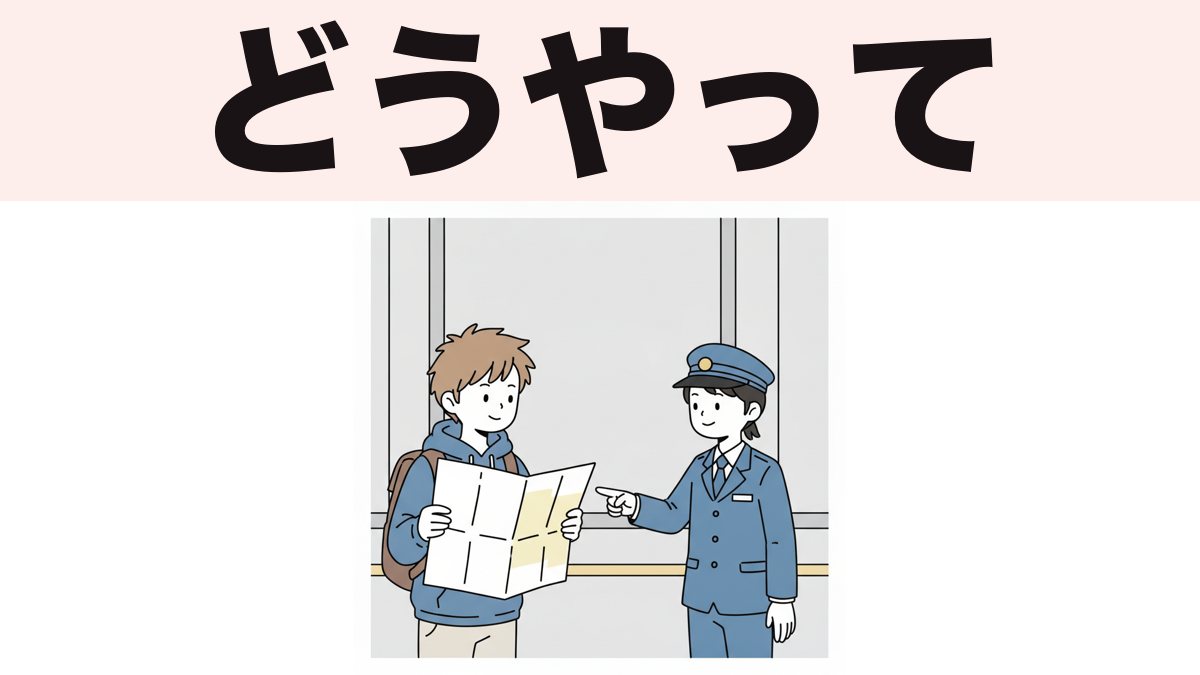
どうやって asks about method: どうやって行きますか is "how do you get there?" どう asks about state or impression: どうですか is "how is it?" And どうすればいいですか asks for advice: "what should I do?" English uses "how" for all three; Japanese does not.
「どうやって」は方法を聞きます。「どうやって行きますか」は「どの道で行きますか」です。「どう」は様子を聞きます。「どうですか」は「いかがですか」です。「どうすればいいですか」はアドバイスを求めます。英語は全部「how」ですが、日本語はちがいます。
"How" is one of the question words learners reach for most and get wrong most, because English collapses three separate ideas into a single word. Splitting them apart is a small piece of work with a large payoff.
The basics
どうやって: by what method
どうやって is どう ("how") plus やって (the te-form of やる, "to do"). Literally "doing how." It asks about the means or the procedure.
どうやって行きますか。 — How do you get there? (polite — asking about route or transport) これ、どうやって使うんですか。 — How do you use this? (polite — asking for a procedure)
This is the one you want whenever the answer would be a method: a train line, a set of steps, a technique.
どう: how is it
どう on its own asks about state, impression or condition.
日本はどうですか。 — How is Japan? (polite — asking for an impression) 味はどうですか。 — How does it taste? (polite)
どう cannot ask about method. どう行きますか is odd — it sounds like you are asking what going is like rather than which route to take. The method version needs やって.
どうすればいいですか: what should I do
This asks for advice or instruction, and it is the most useful of the three in a real emergency.
どうすればいいですか。 — What should I do? (polite — asking for guidance) 切符を無くしました。どうすればいいですか。 — I've lost my ticket. What should I do? (polite)
すれば is the ば-conditional of する, so this literally means "if I do how, is it good?" That conditional shape is covered in と, ば, たら and なら.
Beyond the basics
どのように: the formal どうやって
どのように means the same as どうやって and belongs in writing, presentations and formal speech.
どのように進めればよろしいでしょうか。 — How should we proceed? (very formal, business)
You will meet this in business email and in written instructions. In conversation it sounds stiff, so どうやって is almost always the better choice out loud.
どうして is not in this family
どうして looks like it belongs here and does not — it means "why."
どうして来なかったんですか。 — Why didn't you come? (polite, and somewhat direct)
どうして, なぜ and なんで all mean "why," with なぜ the most formal and なんで the most casual. None of them asks about method. Confusing どうして with どうやって produces a question about motive when you wanted one about procedure.
〜方 (かた): the noun version of "how to"
Attach 方 to a verb stem and you get "the way of doing it" as a noun.
使い方が分かりません。 — I don't know how to use it. (polite) 読み方を教えてください。 — Please teach me how to read it. (polite)
This is often more natural than a どうやって question, because it lets you state a problem rather than ask a question: 使い方が分かりません is softer and less demanding than どうやって使いますか.
It is also the structure behind a lot of everyday vocabulary — 作り方 (recipe), 行き方 (directions), 考え方 (way of thinking), 話し方 (manner of speaking).
どんな: what kind of
Another word that gets translated as "how" in some English sentences, but actually means "what kind of."
どんな音楽が好きですか。 — What kind of music do you like? (polite)
どんな always attaches to a noun. どんなですか on its own is not a sentence — for that you want どうですか.
The shrinkage in casual speech
どうやって行くの? — How do you get there? (casual) どうすればいい? — What should I do? (casual) どうしよう。 — Oh no, what do I do. (casual — said to yourself, not a real question)
どうしよう is worth having. It is the sound of someone realizing they have a problem, said out loud to nobody, and it appears constantly in anime and in ordinary life.
Common mistakes
- Using どう for method. どう行きますか asks what going is like. The method version is どうやって行きますか.
- Confusing どうして with どうやって. One asks why, the other asks how. They differ by one syllable and by everything else.
- Using どのように in conversation. Correct but stiff. Say どうやって.
- Saying どんなですか. どんな needs a noun after it. Standing alone, the word is どう.
- Asking どうやって〜ますか when 〜方 would be softer. 使い方が分かりません often lands better than a direct question, especially with a stranger.
- Forgetting that どうすればいいですか works when you cannot name the problem. It is the universal "help" sentence and requires no vocabulary at all.
Three kinds of "how"
| You want to ask | Word | Example |
|---|---|---|
| By what method | どうやって | どうやって行きますか |
| How is it, what's it like | どう | 日本はどうですか |
| What should I do | どうすればいいですか | どうすればいいですか |
| How (formal, written) | どのように | どのように進めますか |
| Why | どうして / なぜ / なんで | どうして来なかったんですか |
| What kind of | どんな + noun | どんな音楽が好きですか |
| The way of doing it (noun) | verb stem + 方 | 使い方 / 読み方 / 行き方 |
Practice
Questions 1 and 2 are the pair: the same verb, and only one of them asks about the route.
1. Ask politely how someone gets there — by what route or transport.
Show answer
どうやって行きますか。 — Method needs やって. どう alone would ask what going is like.
2. Ask politely how Japan is — what someone's impression is.
Show answer
日本はどうですか。 — どう for state and impression, with no やって.
3. You have lost your ticket. Ask for guidance, politely.
Show answer
切符を無くしました。どうすればいいですか。 — The universal help sentence. It requires no vocabulary about the problem itself.
4. Say "I don't know how to use it," politely.
Show answer
使い方が分かりません。 — Verb stem + 方. Softer than a direct question, and often more natural.
5. Ask what kind of music someone likes.
Show answer
どんな音楽が好きですか。 — どんな always attaches to a noun.
6. Ask why someone didn't come, politely.
Show answer
どうして来なかったんですか。 — どうして is "why," not "how." なぜ is more formal, なんで more casual.
7. Ask casually how to get there.
Show answer
どうやって行くの? — Plain form plus の, which softens it into curiosity.
8. Say "oh no, what do I do" to yourself.
Show answer
どうしよう。 — Not a real question. It is the sound of realizing you have a problem.
9. Fix this: どう行きますか。(meaning "which route do I take?")
Show answer
どうやって行きますか。 — Method requires やって. Without it the question is about what the journey is like.
10. Fix this: どんなですか。
Show answer
どうですか。 — どんな cannot stand alone; it needs a noun. On its own the word is どう.
FAQ
Is どうやって or どのように more polite? どのように is more formal, not more polite. どうやって is perfectly polite in speech; どのように simply belongs to written and business register.
How do I ask "how much"? いくら for money, どれくらい for amount or duration. Neither uses どう, despite the English word "how" appearing in both.
What is the difference between どうして, なぜ and なんで? All three mean "why." なぜ is the most formal and common in writing; どうして is neutral; なんで is casual and can sound blunt. All three can land as accusatory, so a softening んですか ending helps.
Is どうしよう rude? No — it is not directed at anyone. It is a thought said out loud. Saying it in front of someone often prompts them to offer help, which is part of why it gets said.
Can I use 〜方 with any verb? Almost. Attach it to the ます-stem: 作り方, 行き方, 食べ方. A few verbs resist it for meaning reasons, but the pattern is very general.
What is 行き方 read as? いきかた. Note that the 行き in a destination sign (東京行き) is read ゆき instead — same kanji, different fixed reading in a different context.
Vocabulary from this article
Tap the block to select all of it, then copy. In Anki: File → Import, note type Basic, separator Tab — the first column becomes the front, the second the back.
どうやって	どうやって — how, by what method
どう	どう — how, what's it like
どのように	どのように — how (formal)
どうして	どうして — why
なぜ	なぜ — why (formal)
なんで	なんで — why (casual)
どんな	どんな — what kind of
使い方	つかいかた — how to use
読み方	よみかた — how to read
作り方	つくりかた — how to make, recipe
行き方	いきかた — how to get there
考え方	かんがえかた — way of thinking
話し方	はなしかた — manner of speaking
切符	きっぷ — ticket
無くす	なくす — to lose
味	あじ — taste
音楽	おんがく — music
進める	すすめる — to proceed with
I'm Yuuki, a Japanese teacher based in Tokyo. I've taught on italki as a Top 1% teacher and watched over 1,500 anime. どうすればいいですか is the sentence I tell every beginner to memorize before a trip — it is the one question that works when you do not have the vocabulary to describe the problem.
Sources: the author's own lessons and standard reference grammars.
「how」は、初級の人がいちばんよく使って、いちばんよくまちがえることばです。英語が3つの考え方を1語にまとめているからです。分けて覚えると、すぐ楽になります。
基本
「どうやって」: どんな方法で
「どう」+「やって」(やるのて形)です。「どうやるか」という意味です。
どうやって行きますか。 — How do you get there? (polite — asking about route or transport) これ、どうやって使うんですか。 — How do you use this? (polite — asking for a procedure)
答えが「電車で」「まずこれを押して…」のような方法になる時は、これです。
「どう」: どんな様子か
日本はどうですか。 — How is Japan? (polite — asking for an impression) 味はどうですか。 — How does it taste? (polite)
「どう」は方法を聞けません。「どう行きますか」は変です。「行くのはどんな感じですか」に聞こえます。
「どうすればいいですか」: どうしたらいいか
困った時にいちばん役に立つ形です。
どうすればいいですか。 — What should I do? (polite — asking for guidance) 切符を無くしました。どうすればいいですか。 — I've lost my ticket. What should I do? (polite)
「すれば」は「する」のば形です。「どうすればいいか」という形です。
もう少し先へ
「どのように」
「どうやって」のかたい形です。文章・発表・仕事の場で使います。
どのように進めればよろしいでしょうか。 — How should we proceed? (very formal, business)
話す時は「どうやって」のほうが自然です。
「どうして」はなかまではありません
形は似ていますが、「why」です。
どうして来なかったんですか。 — Why didn't you come? (polite, and somewhat direct)
「どうして」「なぜ」「なんで」は全部「why」です。「なぜ」がいちばんかたく、「なんで」がいちばんくだけています。
「〜方(かた)」
動詞のます形に「方」をつけると、「やり方」という名詞になります。
使い方が分かりません。 — I don't know how to use it. (polite) 読み方を教えてください。 — Please teach me how to read it. (polite)
質問するより、こちらのほうが自然なことが多いです。「使い方が分かりません」は、「どうやって使いますか」よりやわらかいです。
ふだんのことばにもたくさんあります。「作り方」「行き方」「考え方」「話し方」です。
「どんな」
英語では「how」になることもありますが、意味は「what kind of」です。
どんな音楽が好きですか。 — What kind of music do you like? (polite)
「どんな」は必ず名詞につきます。「どんなですか」は文になりません。
話す時の形
どうやって行くの? — How do you get there? (casual) どうすればいい? — What should I do? (casual) どうしよう。 — Oh no, what do I do. (casual — said to yourself, not a real question)
「どうしよう」は覚えてください。困った時に、ひとりごととして言います。アニメでもよく出ます。
よくある間違い
- 方法に「どう」を使う。 「どうやって行きますか」です。
- 「どうして」と「どうやって」をまぜる。 「why」と「how」です。
- 話す時に「どのように」を使う。 かたすぎます。
- 「どんなですか」と言う。 「どうですか」です。
- いつも質問の形にする。 「使い方が分かりません」のほうがやわらかいです。
- 「どうすればいいですか」を忘れる。 ことばが分からなくても使えます。
3つの「how」
| 聞きたいこと | ことば | 例 |
|---|---|---|
| 方法 | どうやって | どうやって行きますか |
| 様子 | どう | 日本はどうですか |
| どうしたらいいか | どうすればいいですか | どうすればいいですか |
| 方法(かたい) | どのように | どのように進めますか |
| 理由 | どうして / なぜ / なんで | どうして来なかったんですか |
| 種類 | どんな+名詞 | どんな音楽が好きですか |
| やり方(名詞) | ます形+方 | 使い方 / 読み方 / 行き方 |
練習
1番と2番が組です。同じ動詞で、片方だけが「道」を聞いています。
1. 「どうやって行きますか」と、ていねいに聞いてください。
答えを見る
どうやって行きますか。 — 方法には「やって」がいります。
2. 「日本はどうですか」と、ていねいに聞いてください。
答えを見る
日本はどうですか。 — 様子を聞く時は「どう」だけです。
3. 切符を無くしました。ていねいに助けを求めてください。
答えを見る
切符を無くしました。どうすればいいですか。 — 困った時にいちばん使える文です。
4. 「使い方が分かりません」と言ってください。
答えを見る
使い方が分かりません。 — ます形+方です。質問よりやわらかいです。
5. 「どんな音楽が好きですか」と聞いてください。
答えを見る
どんな音楽が好きですか。 — 「どんな」は必ず名詞につきます。
6. 「どうして来なかったんですか」と聞いてください。
答えを見る
どうして来なかったんですか。 — 「どうして」は「why」です。
7. 友だちに「どうやって行くの?」と聞いてください。
答えを見る
どうやって行くの? — 「の」でやわらかくなります。
8. 困った時のひとりごとを言ってください。
答えを見る
どうしよう。 — 質問ではありません。ひとりごとです。
9. 直してください: どう行きますか。(道を聞きたい)
答えを見る
どうやって行きますか。 — 方法には「やって」が必要です。
10. 直してください: どんなですか。
答えを見る
どうですか。 — 「どんな」は1つでは使えません。
よくある質問
「どうやって」と「どのように」は、どちらがていねいですか。 ていねいさではなく、かたさのちがいです。話す時は「どうやって」でじゅうぶんていねいです。
「how much」は何と言いますか。 お金は「いくら」、量や長さは「どれくらい」です。どちらも「どう」は使いません。
「どうして」「なぜ」「なんで」はちがいますか。 意味は同じです。「なぜ」がかたく、「なんで」がくだけています。強く聞こえやすいので、「〜んですか」をつけるとやわらかくなります。
「どうしよう」は失礼ですか。 いいえ。だれにも向けていません。そばの人が「どうしました?」と聞いてくれることもあります。
「〜方」はどの動詞にもつけられますか。 ほとんどつけられます。ます形につけます。「作り方」「行き方」「食べ方」です。
「行き方」は何と読みますか。 「いきかた」です。「東京行き」の「行き」は「ゆき」です。同じ漢字でも、場面で読み方が変わります。
この記事に出た単語
このブロックを長く押して全部選び、コピーしてください。Ankiでは ファイル → 読み込み、ノートタイプは 基本、区切りは タブ にします。左が表、右が裏になります。
どうやって	どうやって — how, by what method
どう	どう — how, what's it like
どのように	どのように — how (formal)
どうして	どうして — why
なぜ	なぜ — why (formal)
なんで	なんで — why (casual)
どんな	どんな — what kind of
使い方	つかいかた — how to use
読み方	よみかた — how to read
作り方	つくりかた — how to make, recipe
行き方	いきかた — how to get there
考え方	かんがえかた — way of thinking
話し方	はなしかた — manner of speaking
切符	きっぷ — ticket
無くす	なくす — to lose
味	あじ — taste
音楽	おんがく — music
進める	すすめる — to proceed with
日本語教師のユウキです。東京にいます。 italkiで Top 1% の教師をしています。アニメは1,500本以上見ました。旅行の前に必ず覚えてもらうのが「どうすればいいですか」です。問題を説明することばがなくても、この1文だけで助けてもらえます。
More drills like the ones above, plus a timed JLPT-style mock test: Practice · N4上のような練習問題と、時間つきのJLPT形式のもぎ試験: 練習ページ · N4
Want to try this in a real conversation?
本当の会話で、ためしてみませんか?
30-minute trial lesson, $13. Times shown in your own timezone.
30分の体験レッスン、$13。時間はあなたのタイムゾーンで表示されます。
Book a trial lesson · $13