How to say "at least" in Japanese: 少なくとも, せめて, 最低でも「at least」の言い方: 少なくとも・せめて・最低でも
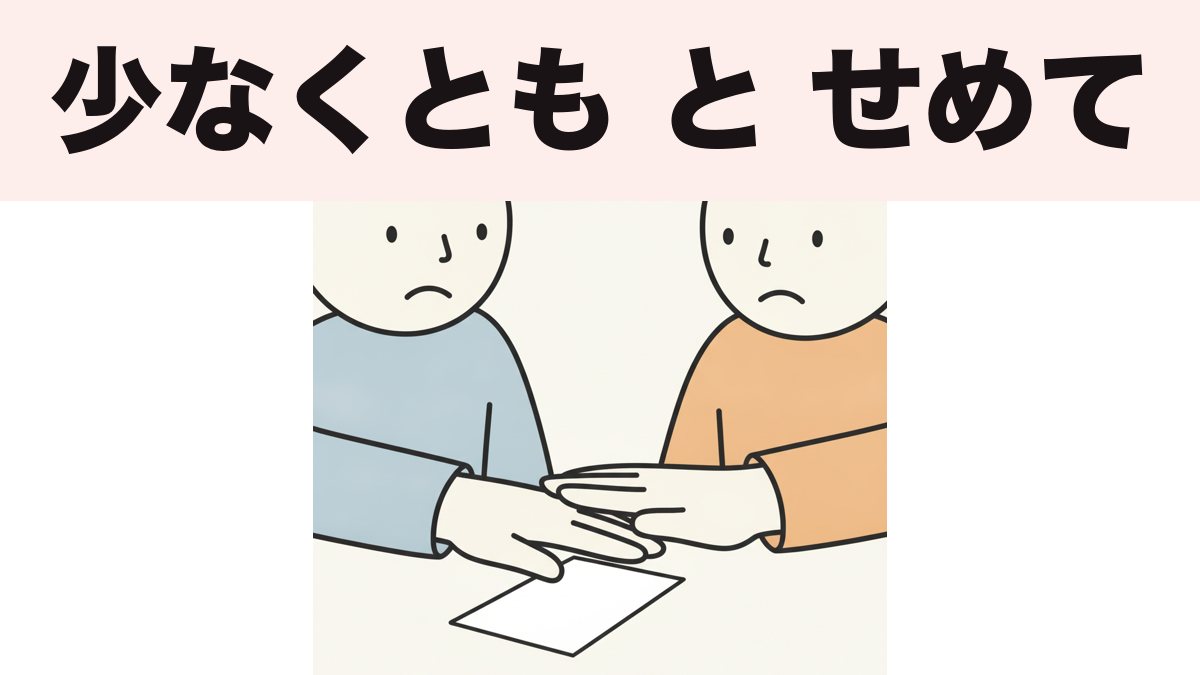
少なくとも (すくなくとも) states a minimum: "at least three people came." せめて (せめて) asks for one: "at least let me pay for the coffee." 最低でも (さいていでも) sets a hard floor: "it'll take two hours at minimum." English uses "at least" for all three, and the difference in Japanese is whether you are reporting, wishing, or setting a limit.
「少なくとも(すくなくとも)」は、事実として下の数を言います。「せめて(せめて)」は、「これだけでもいいから」とお願いします。「最低でも(さいていでも)」は、いちばん少ない場合を言います。英語はどれも「at least」です。日本語では、報告なのか、願いなのか、下限なのかで分かれます。
This is a small set that separates intermediate Japanese from translated Japanese, because it forces you to notice what your sentence is actually doing rather than which English word you started from.
The basics
少なくとも: stating a minimum
少なくとも三人来ました。 — At least three people came. (polite — a factual floor) 少なくとも一年はかかります。 — It will take at least a year. (polite)
少なくとも is neutral and factual. It says "the number is this or more," and it carries no emotion. It goes at the start of the sentence or in front of the quantity.
It is also the word for "at the very least" in arguments: 少なくとも私はそう思います ("at least, that's what I think") — conceding ground while holding a position.
せめて: wishing for a minimum
せめてコーヒーぐらい払わせてください。 — At least let me pay for the coffee. (polite — a request) せめて連絡してほしかった。 — I wish you'd at least got in touch. (casual-polite — a complaint)
せめて is emotional. It means "if not the whole thing, then at least this much," and it always implies that the full version is out of reach. It pairs naturally with requests, wishes and mild complaints, and it very often appears with ぐらい or だけ.
Saying 少なくとも in either of those sentences would be wrong — not ungrammatical, but tonally blank, like reading a wish out of a spreadsheet.
最低でも: the hard floor
最低でも二時間かかります。 — It'll take two hours at minimum. (polite — the floor, expect more) 最低でも三万円は必要です。 — You'll need at least thirty thousand yen. (polite)
最低でも sets a bottom limit with a warning attached: this is the best case, and reality may be worse. It is the word you want for estimates, budgets and deadlines.
Note that 最低 on its own means "the worst" as a judgement — あの人は最低 is a genuine insult. The でも is doing real work here.
Beyond the basics
The one-line test
Ask yourself what the sentence is doing:
- Reporting a number? 少なくとも
- Asking for a reduced version of something? せめて
- Warning about a minimum that may grow? 最低でも
少なくとも十人は来ると思います。 — I think at least ten people will come. (an estimate) せめて十人は来てほしいです。 — I'd like at least ten people to come. (a wish) 最低でも十人必要です。 — We need ten at minimum. (a requirement)
Three sentences, the same number, three different jobs. That is the whole grammar point.
せめて〜だけでも
The most common shape for せめて adds だけでも ("just this much, at least").
せめて名前だけでも教えてください。 — At least tell me your name. (polite — a reduced request)
だけでも is worth learning as a unit: "even just X." It is the polite way to salvage something from a refusal, and it appears constantly in requests.
一応: the "at least" that is not about quantity
一応 (いちおう) means "more or less, for what it's worth, just in case," and English speakers often reach for "at least" when translating it.
一応、聞いてみます。 — I'll ask, at least. (polite — for what it's worth) 一応、傘を持っていきます。 — I'll take an umbrella just in case. (polite)
一応 hedges an action rather than setting a floor on a number. It is enormously common in spoken Japanese and is worth having, but it is not a member of this set — it just occupies the same corner of English.
以上 as a written minimum
In writing and on forms, the minimum is usually expressed with 以上.
十八歳以上の方が対象です。 — This is for people aged eighteen and over. (formal, written)
以上 is inclusive, so 十八歳以上 includes eighteen-year-olds. For the whole 以〜 family and the inclusivity rule, see 〜以外.
The negative version: 少なくとも〜ない
少なくとも私は知りません。 — At least I don't know. (polite — conceding, holding a position)
少なくとも works fine with negatives and is the standard way to limit a claim to yourself. せめて cannot do this — a wish and a disclaimer are different moves.
Common mistakes
- Using 少なくとも for a request. 少なくともコーヒーを払わせてください is grammatical and emotionally flat. Requests take せめて.
- Using せめて for a fact. せめて三人来ました is not a sentence — there is no wish in a completed count.
- Forgetting the でも in 最低でも. 最低 alone means "the worst" and is an insult about a person.
- Treating 一応 as a member of this set. It hedges an action, not a quantity.
- Using 少なくとも in writing where 以上 fits. For forms and requirements, 十八歳以上 is the natural register.
- Reading 少なくとも as すくなくても. It is すくなくとも, with と.
Which "at least" do I want?
| What you are doing | Word | Example |
|---|---|---|
| Stating a factual minimum | 少なくとも | 少なくとも三人来ました |
| Asking for a reduced version | せめて | せめてコーヒーは払わせてください |
| Salvaging something from a no | せめて〜だけでも | せめて名前だけでも |
| Warning about a floor | 最低でも | 最低でも二時間かかります |
| Limiting a claim to yourself | 少なくとも私は | 少なくとも私は知りません |
| Hedging an action | 一応 | 一応、聞いてみます |
| A requirement, in writing | 〜以上 | 十八歳以上 |
Practice
Questions 1, 2 and 3 are a set: the same number doing three different jobs.
1. Say "I think at least ten people will come" — an estimate.
Show answer
少なくとも十人は来ると思います。 — Factual and neutral. No wish, no warning.
2. Say "I'd like at least ten people to come" — a wish.
Show answer
せめて十人は来てほしいです。 — せめて carries the sense that the full number is out of reach.
3. Say "we need ten at minimum" — a requirement.
Show answer
最低でも十人必要です。 — A floor, with the warning that it may take more.
4. Say "at least let me pay for the coffee," politely.
Show answer
せめてコーヒーぐらい払わせてください。 — A reduced request. 少なくとも here would sound like an accountant.
5. Salvage something from a refusal: "at least tell me your name."
Show answer
せめて名前だけでも教えてください。 — せめて〜だけでも is the standard shape for "even just this much."
6. Say "it'll take two hours at minimum," politely.
Show answer
最低でも二時間かかります。 — For estimates and budgets, 最低でも is the word.
7. Concede a point while holding your position: "at least I don't know."
Show answer
少なくとも私は知りません。 — 少なくとも limits the claim to yourself. せめて cannot do this.
8. Say "I'll take an umbrella just in case," politely.
Show answer
一応、傘を持っていきます。 — 一応 hedges the action. It is not a minimum at all.
9. Write a requirement: "this is for people aged eighteen and over."
Show answer
十八歳以上の方が対象です。 — In writing, 以上 is the natural register, and it includes eighteen-year-olds.
10. Fix this: せめて三人来ました。
Show answer
少なくとも三人来ました。 — A completed count contains no wish, so せめて has nothing to do.
FAQ
Is せめて always emotional? Effectively yes. It carries a sense of settling for less than you wanted, which is why it fits requests, wishes and complaints and does not fit neutral reports.
Can 少なくとも go anywhere in the sentence? It usually goes at the start or immediately before the quantity. Both are natural; the start is safer.
What is the difference between 最低でも and 少なくとも in an estimate? 少なくとも is neutral about what happens above the floor. 最低でも carries a warning that the real figure is probably higher. For a budget, 最低でも is more honest.
Is 最低 rude on its own? As a judgement about a person, yes — あの人は最低 is a real insult meaning "that person is the worst." 最低でも and 最低限 are different and completely neutral.
What is 最低限? "The bare minimum" as a noun: 最低限の準備 ("minimal preparation"). It is more formal than 最低でも and appears in writing.
Is 一応 ever translated as "at least"? Often, and that is what causes the confusion. 一応 means "for what it's worth" or "provisionally," and it hedges what you did rather than setting a lower bound.
Vocabulary from this article
Tap the block to select all of it, then copy. In Anki: File → Import, note type Basic, separator Tab — the first column becomes the front, the second the back.
少なくとも	すくなくとも — at least (factual)
せめて	せめて — at least (wish, request)
最低でも	さいていでも — at minimum
最低限	さいていげん — the bare minimum
一応	いちおう — for what it's worth, just in case
以上	いじょう — or more
だけでも	だけでも — even just
必要	ひつよう — necessary
対象	たいしょう — target, applicable
準備	じゅんび — preparation
連絡	れんらく — contact
払う	はらう — to pay
傘	かさ — umbrella
名前	なまえ — name
時間	じかん — time, hours
一年	いちねん — one year
知る	しる — to know
思う	おもう — to think
I'm Yuuki, a Japanese teacher based in Tokyo. I've taught on italki as a Top 1% teacher and watched over 1,500 anime. This set is a good test of whether someone is composing in Japanese or translating into it — せめて in a factual sentence is the clearest sign that an English phrase came first.
Sources: the author's own lessons and standard reference grammars.
小さな組ですが、「英語から訳した日本語」と「日本語で考えた日本語」が分かれるところです。自分の文が何をしているのかを考えることになるからです。
基本
「少なくとも」: 事実の下の数
少なくとも三人来ました。 — At least three people came. (polite — a factual floor) 少なくとも一年はかかります。 — It will take at least a year. (polite)
気持ちは入りません。「その数か、それより多い」と言うだけです。文の初めか、数の前に置きます。
話の中で「少なくとも私はそう思います」と言うと、「全部は言えないけれど、自分はこうだ」という意味になります。
「せめて」: これだけでもいいから
せめてコーヒーぐらい払わせてください。 — At least let me pay for the coffee. (polite — a request) せめて連絡してほしかった。 — I wish you'd at least got in touch. (casual-polite — a complaint)
気持ちが入ります。「全部はむりでも、これだけは」という意味です。お願い・願い・軽い文句といっしょに使います。「ぐらい」「だけ」とよく一緒に出ます。
ここで「少なくとも」を使うと、まちがいではありませんが、気持ちがなくなります。
「最低でも」: いちばん少ない場合
最低でも二時間かかります。 — It'll take two hours at minimum. (polite) 最低でも三万円は必要です。 — You'll need at least thirty thousand yen. (polite)
「これがいちばん少ない場合で、もっとかかるかもしれない」という意味です。見積もり・予算・しめきりに使います。
「最低」だけだと「いちばん悪い」です。「あの人は最低」は本当の悪口です。「でも」が大事です。
もう少し先へ
見分け方
自分の文が何をしているかを考えます。
- 数を報告している → 少なくとも
- 少しでいいからお願いしている → せめて
- 下限を知らせている → 最低でも
少なくとも十人は来ると思います。 — I think at least ten people will come. (an estimate) せめて十人は来てほしいです。 — I'd like at least ten people to come. (a wish) 最低でも十人必要です。 — We need ten at minimum. (a requirement)
同じ「十人」でも、3つとも仕事がちがいます。
「せめて〜だけでも」
「せめて」でいちばん多い形です。
せめて名前だけでも教えてください。 — At least tell me your name. (polite)
「だけでも」は「それだけでもいいから」です。断られそうな時に、少しだけもらう言い方です。
「一応」は数の話ではありません
「一応(いちおう)」は「とりあえず」「念のため」です。英語にすると「at least」になることがあります。
一応、聞いてみます。 — I'll ask, at least. (polite — for what it's worth) 一応、傘を持っていきます。 — I'll take an umbrella just in case. (polite)
することをやわらかくする言い方で、数の下限ではありません。でも、とてもよく使います。
書く時は「以上」
十八歳以上の方が対象です。 — This is for people aged eighteen and over. (formal, written)
「以上」は境目を入れます。「十八歳以上」に18歳は入ります。
否定と一緒に
少なくとも私は知りません。 — At least I don't know. (polite)
「せめて」は否定と一緒に使えません。願いと、言い方をせまくすることは、別だからです。
よくある間違い
- お願いに「少なくとも」を使う。 気持ちがなくなります。「せめて」です。
- 事実に「せめて」を使う。 「せめて三人来ました」は文になりません。
- 「最低でも」の「でも」を落とす。 「最低」だけだと悪口です。
- 「一応」をこの組に入れる。 数の話ではありません。
- 書く時に「少なくとも」を使う。 決まりごとは「十八歳以上」です。
- 「すくなくても」と読む。 「すくなくとも」です。
どれを使うか
| していること | ことば | 例 |
|---|---|---|
| 数を報告する | 少なくとも | 少なくとも三人来ました |
| 少しだけお願いする | せめて | せめてコーヒーは払わせてください |
| 断られそうな時 | せめて〜だけでも | せめて名前だけでも |
| 下限を知らせる | 最低でも | 最低でも二時間かかります |
| 自分だけの話にする | 少なくとも私は | 少なくとも私は知りません |
| することをやわらげる | 一応 | 一応、聞いてみます |
| 書く時の決まり | 〜以上 | 十八歳以上 |
練習
1番・2番・3番が組です。同じ「十人」で、仕事が3つちがいます。
1. 「十人ぐらいは来ると思います」と、事実として言ってください。
答えを見る
少なくとも十人は来ると思います。 — 気持ちは入りません。
2. 「十人は来てほしい」と、願いとして言ってください。
答えを見る
せめて十人は来てほしいです。 — 「全部はむりでも」という気持ちが入ります。
3. 「十人いないとできません」と言ってください。
答えを見る
最低でも十人必要です。 — 下限を知らせる形です。
4. 「コーヒーだけでも払わせてください」と言ってください。
答えを見る
せめてコーヒーぐらい払わせてください。 — お願いなので「せめて」です。
5. 断られそうな時に「名前だけでも」とお願いしてください。
答えを見る
せめて名前だけでも教えてください。 — 「せめて〜だけでも」が決まった形です。
6. 「二時間はかかります」と、下限として言ってください。
答えを見る
最低でも二時間かかります。 — 見積もりや予算に使います。
7. 「自分は知らない」と、言い方をせまくして言ってください。
答えを見る
少なくとも私は知りません。 — 「せめて」は使えません。
8. 「念のため傘を持っていきます」と言ってください。
答えを見る
一応、傘を持っていきます。 — 数の話ではありません。
9. 「18歳以上が対象です」と書いてください。
答えを見る
十八歳以上の方が対象です。 — 18歳も入ります。
10. 直してください: せめて三人来ました。
答えを見る
少なくとも三人来ました。 — もう終わったことなので、願いは入りません。
よくある質問
「せめて」はいつも気持ちが入りますか。 ほとんどそうです。「本当はもっとほしいけれど」という気持ちがあります。
「少なくとも」はどこに置きますか。 文の初めか、数の前です。どちらも自然です。
「最低でも」と「少なくとも」は、見積もりでどうちがいますか。 「少なくとも」はそれだけです。「最低でも」は「もっとかかるかも」という注意が入ります。
「最低」は失礼ですか。 人について言う時は失礼です。「あの人は最低」は悪口です。「最低でも」「最低限」はちがいます。
「最低限」は何ですか。 「いちばん少ない分」です。「最低限の準備」のように名詞につきます。書く時に使います。
「一応」も「at least」と訳されますか。 訳されます。だからまざります。でも「とりあえず」という意味で、数の下限ではありません。
この記事に出た単語
このブロックを長く押して全部選び、コピーしてください。Ankiでは ファイル → 読み込み、ノートタイプは 基本、区切りは タブ にします。左が表、右が裏になります。
少なくとも	すくなくとも — at least (factual)
せめて	せめて — at least (wish, request)
最低でも	さいていでも — at minimum
最低限	さいていげん — the bare minimum
一応	いちおう — for what it's worth, just in case
以上	いじょう — or more
だけでも	だけでも — even just
必要	ひつよう — necessary
対象	たいしょう — target, applicable
準備	じゅんび — preparation
連絡	れんらく — contact
払う	はらう — to pay
傘	かさ — umbrella
名前	なまえ — name
時間	じかん — time, hours
一年	いちねん — one year
知る	しる — to know
思う	おもう — to think
日本語教師のユウキです。東京にいます。 italkiで Top 1% の教師をしています。アニメは1,500本以上見ました。この組は、日本語で考えているか、英語から訳しているかがよく分かるところです。事実の文に「せめて」が出てきたら、英語が先にあった合図です。
More drills like the ones above, plus a timed JLPT-style mock test: Practice · N3上のような練習問題と、時間つきのJLPT形式のもぎ試験: 練習ページ · N3
Want to try this in a real conversation?
本当の会話で、ためしてみませんか?
30-minute trial lesson, $13. Times shown in your own timezone.
30分の体験レッスン、$13。時間はあなたのタイムゾーンで表示されます。
Book a trial lesson · $13