Yare Yare and 7 More Anime Phrases: What They Really Meanやれやれ しかたがない うるさい アニメの8フレーズの使いどころ
You already know these. The question is whether you can use them.
これらのことばは、もう知っているはずです。問題は、使えるかどうかです。
Each one below is real Japanese. What subtitles cannot show you is the temperature — who says it, to whom, and what it costs. Here is that part.
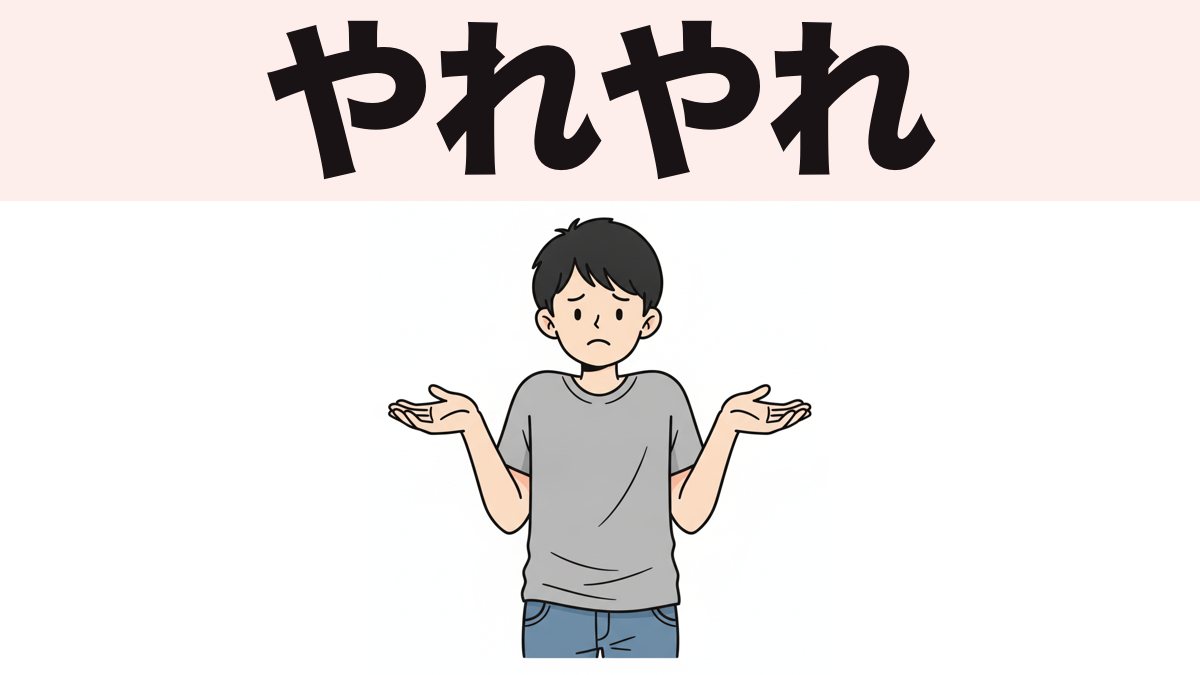
1. やれやれ
Good grief. / Here we go again.
A sigh with a shape. It expresses weary resignation at someone else's nonsense, and it is genuinely used — mostly by men, mostly middle-aged, mostly to themselves.
Safe to use, with one caveat: said at someone rather than under your breath, it is condescending. Which is exactly why a certain sunglasses-wearing character says it out loud.
2. しかたがない / しょうがない
It can't be helped.
The most culturally loaded phrase on this list, and the most useful. It closes the door on a problem nobody can fix — a cancelled train, weather, a decision made above you.
Very safe, and extremely natural. しょうがない is the spoken version and the one you will hear ten times more often.
3. うるさい
Noisy. / Shut up.
Literally an adjective meaning noisy. Shouted at a person, it is "shut up." Said about a café, it is a neutral description.
Safe about things. Careful about people — friends only, and only in the register where you would say "oh shut up" in English and mean it fondly.
4. べつに
Not particularly. / Whatever.
Deployed alone, it is a refusal to engage — the verbal shrug of every aloof character ever written.
Real and common, but be aware of what it does. Answering a sincere question with べつに is mildly cold. As part of a full sentence (べつに 好きじゃない — I don't especially like it) it is completely neutral.
5. まさか
No way. / You can't be serious.
Genuine disbelief. Works alone as an exclamation, and as a sentence opener meaning "surely not."
Completely safe. One of the most usable dramatic words in Japanese.
6. だいじょうぶ
It's fine. / Are you okay? / No thanks.
Anime teaches you the "are you okay" meaning. Daily life uses it far more often as a polite refusal — offered a bag at a shop, 大丈夫です means "no thank you."
Safe, and the most useful word here. If you learn one, learn this.
7. ちがう
That's wrong. / No, not like that.
Bluntly negates what was just said. Fine between friends; abrupt with anyone else.
Soften it in most situations. ちょっと ちがいます, or just ちがいます, does the same job without the edge. Bare ちがう aimed at a stranger is a small slap.
8. がんばって
Do your best. / Good luck. / You've got this.
No clean English equivalent, which is why translators cycle through five. Said before an effort — an exam, a match, a hard conversation.
Safe and warm. One caution: to someone already exhausted and struggling, がんばって can land as "try harder." In that moment, 無理しないで (don't push yourself) is the kinder line, and knowing the difference marks you as someone who has actually listened.
The pattern
Look at which ones are safe. The safe ones are all about situations. The risky ones are all aimed at people.
That is a reliable rule well beyond these eight. Japanese gives you enormous room to comment on circumstances and much less room to comment directly on the person in front of you — and anime characters break that second rule constantly, because drama needs someone to break it.
In a lesson
Bring the lines you have collected. I will tell you the temperature of each one — who you could say it to, and what it does to the room.
It takes about ten minutes and it is the fastest way to turn passive anime vocabulary into Japanese you can actually use.
ここにあることばは、どれも本物の日本語です。でも、字幕が見せてくれないものがあります。それは「温度」です。だれが、だれに向かって言うのか、そして、それを言うとどんな代償があるのか。ここでは、その部分を説明します。
1. やれやれ
Good grief. / Here we go again.
形になったため息です。相手のばかげたことに対する、うんざりした気持ちを表します。実際によく使われることばで、たいてい男性が、たいてい中年くらいの人が、たいてい自分に向かって言います。
使っても安全 ですが、1つだけ注意があります。相手に向かって言うと、上から目線に聞こえます。だからこそ、あるサングラスをかけたキャラクターは、これを相手に向かって声に出して言うのです。
2. しかたがない/しょうがない
It can't be helped.
このリストの中で、いちばん文化的な重みがあることばで、そしていちばん使えることばでもあります。だれにも直せない問題に、区切りをつけることばです。電車が止まった、天気が悪い、自分より上の人が決めたこと、そういう場面です。
とても安全で、とても自然です。 しょうがないは話しことばでよく使われるほうで、しかたがないより10倍くらい耳にします。
3. うるさい
Noisy. / Shut up.
もともとは「音が大きい」という意味の形容詞です。人に向かってさけべば「うるさい!!黙れ」になります。カフェについて言えば、ただの説明になります。
もの・場所に対しては安全です。人に対しては注意してください。 使うのは友だちだけにして、しかも、英語で「もう、うるさいなあ」と、あたたかい気持ちで言うのと同じ場面だけにしましょう。
4. べつに
Not particularly. / Whatever.
これだけで言われると、話に乗らない、という意味になります。どこかクールなキャラクターがよく使う、肩をすくめるようなことばです。
本物で、よく使われることばですが、どういう効果があるかは知っておいてください。まじめな質問に「べつに」とだけ答えると、少し冷たく聞こえます。文の一部として使うなら(べつに 好きじゃない ― I don't especially like it)、完全に中立です。
5. まさか
No way. / You can't be serious.
本当におどろいたときのことばです。1語だけの感嘆詞としても、「まさか」で文を始めて「まさかそんなはずは」という意味でも使えます。
まったく安全です。 日本語の中でも、ドラマチックなことばとして、いちばん使いやすいものの1つです。
6. だいじょうぶ
It's fine. / Are you okay? / No thanks.
アニメでは「大丈夫?」「あなた、平気?」という意味でよく出てきます。でも、日常生活では、ていねいな断り方 として使われることのほうがずっと多いです。お店で袋はいりますかと聞かれたとき、「大丈夫です」は「いりません」という意味になります。
安全で、ここに出てくることばの中でいちばん役に立ちます。 1つだけ覚えるなら、これにしてください。
7. ちがう
That's wrong. / No, not like that.
さっき言われたことを、はっきり否定します。友だちの間なら問題ありませんが、それ以外の人には、きつく聞こえます。
ほとんどの場面では、やわらげてください。 ちょっと ちがいます、または、ちがいます だけでも、きつさを出さずに同じ役目を果たします。知らない人に、そのまま ちがう と言うのは、ちょっとした平手打ちのようなものです。
8. がんばって
Do your best. / Good luck. / You've got this.
英語にきれいに当てはまることばがなく、だから翻訳者はいろいろな訳し方を試すことになります。試験、試合、大変な会話など、何かをがんばる前に言います。
安全で、あたたかいことばです。 1つだけ注意点があります。すでに疲れきってがんばっている人に言うと、「もっとがんばれ」と聞こえてしまうことがあります。そういうときは、無理しないで、のほうがやさしく聞こえます。その違いが分かる人は、本当に相手の話を聞いている人です。
まとめ
安全なことばと、そうでないことばを見比べてみてください。安全なことばは、状況について言うものが多いです。危ういことばは、人に向かって言うものが多いです。
これは、この8つ以外にも当てはまる、信頼できるルールです。日本語は、状況についてコメントする自由をたくさんくれますが、目の前の人に直接コメントする自由はあまりくれません。アニメのキャラクターは、このルールをしょっちゅう破ります。ドラマには、それを破る人が必要だからです。
レッスンでは
集めてきたセリフを持ってきてください。それぞれの「温度」を教えます。だれに言えることばか、そして、それを言うと場の空気がどう変わるか。
10分くらいで分かります。アニメで受け身のまま覚えたことばを、実際に使える日本語に変える、いちばん早い方法です。
More drills like the ones above, plus a timed JLPT-style mock test: Practice · N4上のような練習問題と、時間つきのJLPT形式のもぎ試験: 練習ページ · N4
Want to try this in a real conversation?
本当の会話で、ためしてみませんか?
30-minute trial lesson, $13. Times shown in your own timezone.
30分の体験レッスン、$13。時間はあなたのタイムゾーンで表示されます。
Book a trial lesson · $13