What language apps cannot teach you about Japanese語学アプリが教えてくれない日本語の部分
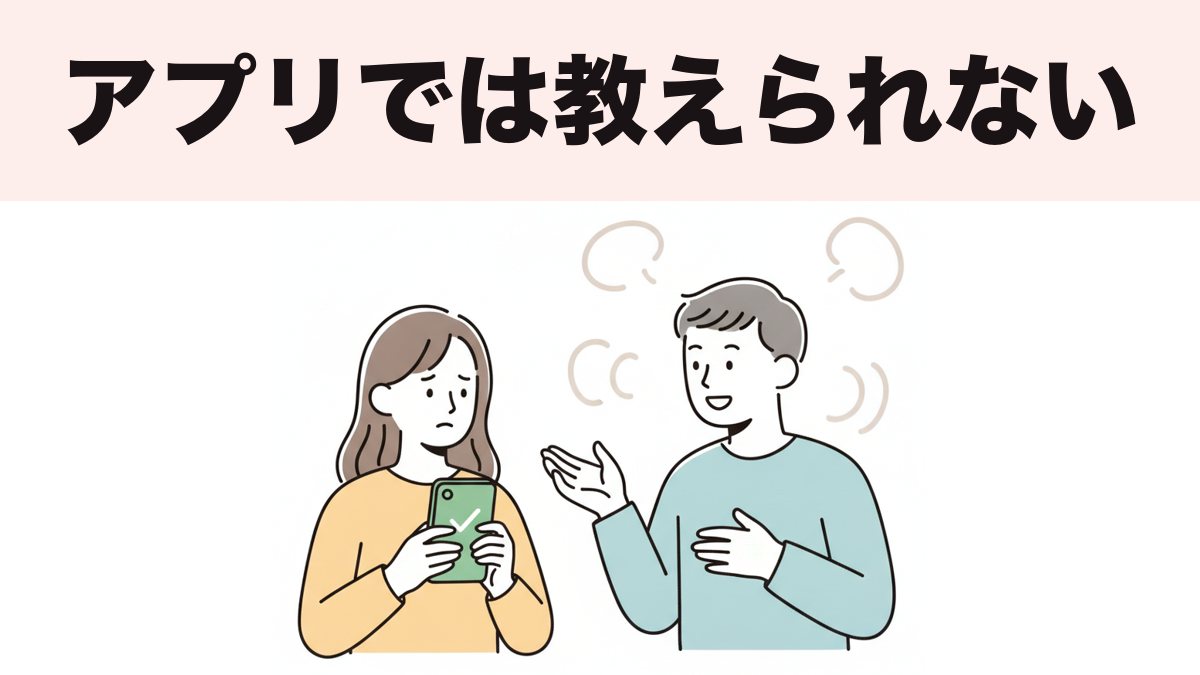
Apps are extremely good at one thing: making sure you show up.
アプリが本当に得意なことは1つだけです。毎日続けさせること。
That is not a small thing. A learner with a two-year streak has beaten the problem that stops most people, which is stopping. I have had students arrive with a thousand days of practice behind them, and they arrive knowing a lot.
They also usually arrive unable to hold a conversation, and it is worth being precise about why, because it is not their fault and it is fixable in weeks.
What apps do well
- Vocabulary exposure, spaced properly
- Kana and early kanji recognition
- Grammar patterns, drilled
- Daily consistency
None of that is fake progress. It is a real foundation, and building it alone is genuinely hard.
The four gaps
1. Production under time pressure. Apps almost always give you the pieces — a word bank, a multiple choice, a sentence to complete. Conversation gives you a blank and two seconds. These are different skills, and only one of them is the one you wanted. Recognising 忙しい in a list and producing 今日は ちょっと 忙しいです while someone waits are not the same act.
2. Register. Apps teach one politeness level, usually です/ます, and rarely tell you when it is wrong. So you end up polite with your friends and unable to hear that you sound distant. The switch itself is easy; knowing which room you are in is the skill, and it needs feedback from a person.
3. Repair. Real conversations break constantly. A native speaker breaks them too — they just fix them in three seconds and keep going. Apps never break, so they never teach you to fix. This is why a learner who "knows more" can freeze while a weaker learner with good repair skills keeps talking for twenty minutes.
4. Being listened to. An app cannot misunderstand you. That sounds like a feature and is the core problem: nothing tightens your pronunciation like being asked once, kindly, to say it again.
The fix is small
You do not need to abandon the app. The app is doing the input work well. What is missing is output, and the dose is smaller than people expect.
Thirty minutes of speaking, twice a week, is enough to convert a large passive vocabulary into an active one. Most of my students notice it in three or four sessions — not because they learned anything new, but because things they already knew came unstuck.
That is the honest description of what a teacher is for at this stage. Not new vocabulary. Access to the vocabulary you already paid for.
How to tell if this is you
Try this now: set a timer for sixty seconds and talk out loud about what you did yesterday. In Japanese. No pausing to look anything up.
If you can, your app is serving you well — keep going.
If you froze at the second sentence while knowing perfectly well how to say it, that is the gap. It is not a knowledge problem, and it does not take another year to solve.
In a lesson
If you have a streak, bring it. I would much rather work with someone who has a thousand words and cannot use them than someone starting from zero — you are much closer to conversation than you think.
The first lesson is thirty minutes. That is enough to show you what your Japanese can already do.
これは小さなことではありません。2年間続けられた学習者は、多くの人がつまずく問題、つまり「やめてしまうこと」に勝っています。1,000日分の練習記録を持って来てくれた生徒もいて、その人たちはたくさんのことを知っています。
でも、そういう人でも、会話ができないまま来ることが多いです。その理由をはっきりさせる価値があります。その人のせいではありませんし、数週間で直せることだからです。
アプリが得意なこと
- 語彙を、正しい間隔で見せてくれること
- ひらがな・カタカナと、初級の漢字を覚えること
- 文法のパターンを、くり返し練習すること
- 毎日続けさせてくれること
これは偽物の進歩ではありません。本物の土台で、それをひとりで積み上げるのは、本当に大変なことです。
4つのすきま
1. 時間のプレッシャーの中で、自分で文を作ること。 アプリは、ほとんどいつも「材料」をくれます。単語のリスト、選択肢、続きを完成させる文。でも、実際の会話がくれるのは、白紙と2秒だけです。これはちがう力で、しかも、あなたが本当にほしかったのはこちらの力です。リストの中の「忙しい」を見て分かることと、目の前で待っている人に「今日は ちょっと 忙しいです」と自分で言うことは、同じ動作ではありません。
2. ていねいさの使い分け。 アプリは、たいてい です・ます という1つの段階だけを教えて、それが間違っていても、ほとんど教えてくれません。だから、友だちにもずっとていねいなままで、自分が距離を感じさせていることに気づけません。切りかえること自体はかんたんです。むずかしいのは、今どの場にいるかを知ることで、それには人からのフィードバックが必要です。
3. 会話を立て直すこと。 本物の会話は、しょっちゅう止まります。ネイティブの会話も止まります。ちがうのは、3秒で直して、そのまま続けることです。アプリは止まらないので、直し方を教えてくれません。だから、「知識は多い」学習者が固まってしまう一方で、直し方が上手な、知識の少ない学習者のほうが、20分間ずっと話し続けられたりします。
4. 聞いてもらうこと。 アプリは、あなたのことばを聞き間違えることができません。それは機能のように見えて、実は大きな問題です。もう一度言ってと、やさしく一度聞かれることほど、発音を良くするものはないからです。
直し方は小さい
アプリをやめる必要はありません。アプリは「インプット」の部分をちゃんとやってくれています。足りないのは「アウトプット」で、しかも必要な量は、思っているより少ないです。
週に2回、30分話すこと。 これだけで、たくさん持っている受け身の語彙を、使える語彙に変えられます。わたしの生徒の多くは、3、4回のレッスンで変化に気づきます。新しいことを覚えたからではなく、すでに知っていたことが、動くようになったからです。
この段階で先生ができることを、正直に言うとこれです。新しい語彙を教えることではありません。すでに手に入れている語彙に、たどりつけるようにすることです。
自分がそうかどうかの確かめ方
今、試してみてください。60秒タイマーをセットして、昨日したことについて声に出して話してください。日本語で。何も調べずに。
できたなら、アプリはよく機能しています。そのまま続けてください。
もし、言い方を知っているのに、2文目で固まってしまったなら、それがすきまです。知識の問題ではありませんし、直すのにもう1年かかるものでもありません。
レッスンでは
続けてきた記録があるなら、それを持ってきてください。ゼロから始める人より、1,000語知っていて使えない人のほうが、わたしはむしろいっしょにやりたいです。あなたは、思っているよりずっと会話に近いところにいます。
最初のレッスンは30分です。それだけで、あなたの日本語がすでにできることを見せるのに十分です。
More drills like the ones above, plus a timed JLPT-style mock test: Practice上のような練習問題と、時間つきのJLPT形式のもぎ試験: 練習ページ
Want to try this in a real conversation?
本当の会話で、ためしてみませんか?
30-minute trial lesson, $13. Times shown in your own timezone.
30分の体験レッスン、$13。時間はあなたのタイムゾーンで表示されます。
Book a trial lesson · $13