Anime pilgrimage (seichi junrei): how to actually plan it聖地巡礼 好きな作品の本当の場所へ行く
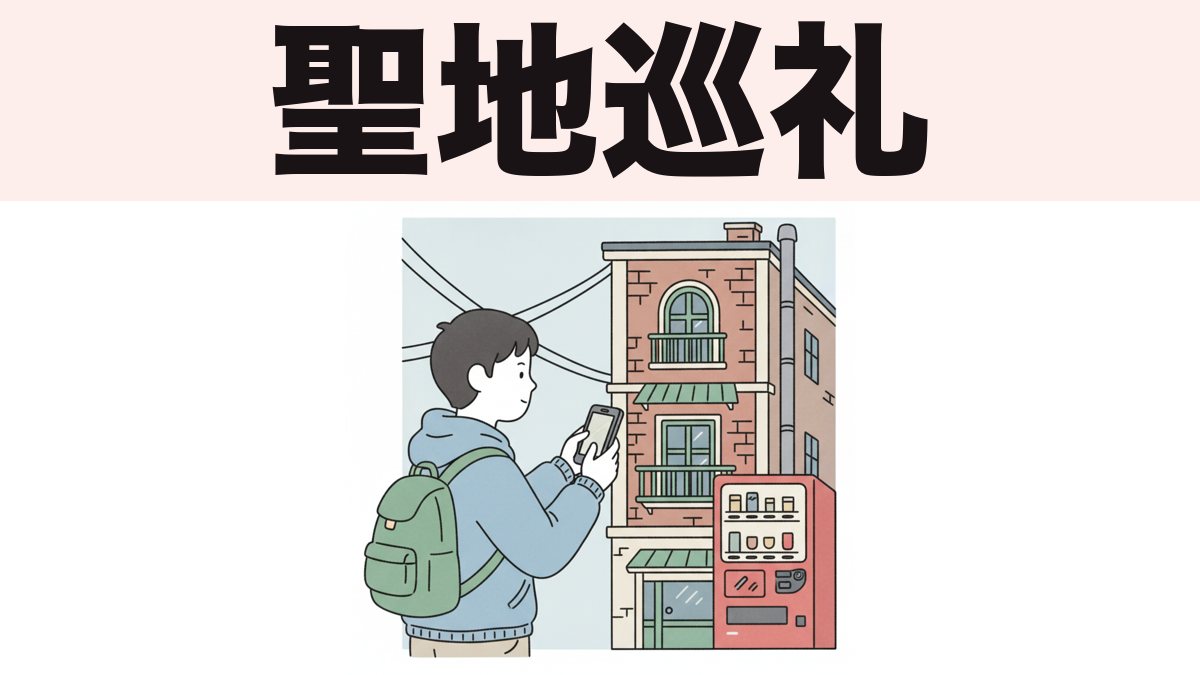
Seichi junrei (聖地巡礼) means visiting the real-world places an anime or manga was set in or drawn from. The word originally meant a religious pilgrimage. For fans it means standing on the corner your favourite scene was framed from, which costs nothing and is often the thing people remember longest about their trip.
聖地巡礼(せいちじゅんれい)は、アニメや漫画の舞台になった、本当の場所へ行くことです。もとは宗教のことばでした。ファンにとっては、好きな場面が描かれた角に立つことです。お金はかかりません。そして、旅行でいちばん長く覚えているのは、たいていこの時間です。
This was episode 48 of my NihonGO podcast, recorded in August 2021. I have rewritten it here because it is still the advice I give guests before they arrive: shopping is fun, but shopping is not the part you will still be talking about in five years.
What does seichi junrei actually mean?
Answer — Literally "holy land pilgrimage". It described believers travelling to a place of religious significance — Jerusalem is the standard example. Fans borrowed the word for travelling to the places behind the works they love, and in Japan today the fan meaning is the one you will hear more often.
The borrowing is not ironic. The behaviour is genuinely similar: you travel a long way to stand somewhere that means nothing to anyone else and everything to you, and something about being physically there is different from seeing a photo of it.
| Word | Reading | What it means |
|---|---|---|
| 聖地 | seichi | holy land; for fans, a location from a work |
| 巡礼 | junrei | pilgrimage |
| 聖地巡礼 | seichi junrei | visiting the real places behind an anime or manga |
| ロケ地 | rokechi | filming location (used for live action) |
Why do so many anime have real locations?
Because a huge share of anime backgrounds are drawn from photographs. Studios send background artists to a real town, they shoot reference, and the finished frame is a real street with the wires and the vending machines still in place. That is why fans can identify the exact spot down to which side of a staircase the character was standing on.
It also means the location is usually a completely ordinary place. Most seichi are not landmarks. They are level crossings, bus stops, shrine steps, convenience store car parks. Nobody there knows why you are taking that photo, and that is part of the fun.
Where can you do this in Akihabara?
Answer — The clearest example is the Akihabara Radio Kaikan building outside the station's Electric Town exit, which appears in Steins;Gate. Stand in front of it, frame the shot the way the anime does, and you get the same composition the show used.
Akihabara is not primarily a pilgrimage town — it is a shopping town, and its anime significance is the district itself rather than any one series. But there are frames scattered around it, and the town has been drawn into a long list of works simply because it is where the culture lives. If you are visiting Akihabara for the first time, my Akihabara anime tour is built around whichever series you name when you book, which includes the frames if your show has them here.
For everything beyond Akihabara, the resource I pointed people to in the original episode and still point people to is mipon.org, a pilgrimage database organised by series and by prefecture. Look your show up before you plan your route, not after.
How do you plan a pilgrimage trip without wrecking your itinerary?
The mistake is treating every location as a destination. Most seichi are a five-minute stop in a place you were not otherwise going, and three of them in one day will eat the day.
What works:
- Look up your series first, then see where the locations actually are. Some are in central Tokyo; some are four hours away in Gifu.
- Take the ones that are on a route you already wanted. A location on the way to Kyoto is free. A location that requires its own overnight trip is a decision.
- Screenshot the frame before you go. You will not find the angle from memory, and phone reception in a rural station car park is not a thing you want to rely on.
- Expect it to have changed. Shops close, buildings get repainted, trees grow. Fans usually document this; the databases often note it.
- Budget one hour, not three. Then spend the rest of the day on the town itself, which is the part that surprises people.
The etiquette part, which matters
Almost every seichi is somebody's neighbourhood, workplace, school or shrine. A few locations have been effectively closed to fans because visitors treated them as a set.
The short version: do not go inside private property, do not photograph residents or students, keep your voice down in residential streets, and do not block a road or a doorway for a photo. If a place has a sign asking fans not to enter, that sign exists because someone already ignored it.
If you are in Japan for the first time, the general version of this is worth ten minutes: my tour site has a Japanese etiquette guide and a specific page on photography etiquette in Japan, which is the one that gets fans into trouble.
Frequently asked questions
Do I need to speak Japanese to do this? No. Most of it is walking and looking. It helps for asking a shopkeeper whether you have the right building, and 「ここは〇〇のロケ地ですか」 (koko wa ... no rokechi desu ka — "is this the location from ...?") does the job.
Is there an entry fee? Almost never — these are public streets. Shrines sometimes take a small offering, and museums attached to a series charge normally.
Do locals mind? Mostly no, and some towns actively welcome it — there are places with fan stamp rallies and collaboration merchandise. The ones that mind are the ones where visitors behaved badly. Read the room, and read any signage.
What if my series is not in any database? Look for fan blog posts in Japanese with your series name plus 聖地 or ロケ地. Fan documentation in Japanese is far more complete than the English-language equivalent.
Look up your show before you book your flights
A pilgrimage stop costs almost nothing if it is on a route you were already taking, and almost a whole day if you find out about it after you have booked your hotel.
I am Yuuki, an online Japanese teacher and an Akihabara anime tour guide in Tokyo. I have watched over 1,500 anime series, which is how I usually know whether your show has frames in Akihabara before you finish telling me what it is.
Sources: this article is a rewrite and expansion of episode 48 of my NihonGO podcast (recorded 2021-08-30). Mipon (mipon.org) is the pilgrimage database referenced in the original episode. The Radio Kaikan example and the etiquette guidance are from my own guiding in Akihabara, not measured data.
これは、僕の Podcast「NihonGO」の第48回です。2021年8月に録音しました。今でもゲストに話していることなので、書き直します。買いものも楽しいです。でも、5年後に話しているのは、買いものではありません。
聖地巡礼とは何か
答え — ことばの意味は「聖地へ行く旅」です。もとは、宗教で大切な意味を持つ場所へ、信者が行くことでした。ユダヤ教やイスラム教の信者がエルサレムへ行くのが有名です。ファンはそのことばをかりて、好きな作品の場所へ行くことを言うようになりました。今の日本では、ファンの意味のほうをよく聞きます。
かりてきただけ、というわけでもありません。していることは、にています。ほかの人には何の意味もない場所へ、遠くから行って、そこに立つ。写真で見るのとは、たしかにちがいます。
| ことば | 読み方 | 意味 |
|---|---|---|
| 聖地 | せいち | 聖なる場所。ファンには、作品の場所 |
| 巡礼 | じゅんれい | 聖地をめぐる旅 |
| 聖地巡礼 | せいちじゅんれい | アニメ・漫画の本当の場所へ行くこと |
| ロケ地 | ろけち | さつえいの場所(実写で使います) |
どうして本当の場所があるのか
アニメの背景の多くが、写真から描かれているからです。背景の絵を描く人が本当の町に行って、写真をとります。そして、できた絵は、電線も自動販売機もそのままの、本当の道です。だからファンは、階段のどちら側に立っていたかまで、言いあてられます。
そして、その場所はたいてい、まったくふつうの場所です。多くの聖地は、有名な場所ではありません。ふみきり、バス停、神社の階段、コンビニの駐車場です。そこにいる人は、なぜあなたが写真をとっているのか知りません。それも、おもしろいところです。
秋葉原ではどこでできるのか
答え — いちばんわかりやすいのは、駅の電気街口の前にある「ラジオ会館」です。アニメ『シュタインズ・ゲート』に出てきます。前に立って、アニメと同じ形で写真をとると、同じ雰囲気になります。
秋葉原は、聖地巡礼の町ではありません。買いものの町です。アニメで大事なのは、1つの作品ではなく、町そのものです。それでも、いくつか場面はあります。文化がある場所なので、たくさんの作品に描かれています。はじめて秋葉原に来るなら、僕の秋葉原アニメツアー は、予約のときに言ってくれた作品に合わせて作ります。その作品の場面が秋葉原にあれば、そこも入ります。
秋葉原の外は、もとの回で紹介したサイトが、今でもいちばんです。mipon.org は、作品ごと・都道府県ごとにまとまった聖地のデータベースです。旅の道順を決める前に、自分の作品を調べてください。決めたあとではなく、前に。
旅の予定をこわさないやり方
失敗は、ぜんぶの場所を「目的地」にすることです。多くの聖地は、行くつもりのなかった場所での 5分です。1日に 3つ入れると、その日が消えます。
うまくいく形です。
- 先に自分の作品を調べる。 それから、場所がどこにあるか見ます。東京の中にあるものもあれば、岐阜まで 4時間のものもあります。
- もう行くつもりだった道の上のものを取る。 京都へ行く道の上なら、追加のお金はゼロです。それだけのために泊まるなら、それは決断です。
- 行く前に、その場面の画像を保存する。 角度は、記憶では見つかりません。田舎の駅の駐車場で、電波をあてにしないでください。
- 変わっていると思っておく。 店は閉まり、建物は色が変わり、木は育ちます。ファンが記録してくれていることが多いです。
- 3時間ではなく 1時間で見る。 残りは町そのものに使ってください。そこがおどろくところです。
マナーの話 ここが大事です
ほとんどの聖地は、だれかの家の近所、職場、学校、神社です。ファンがセットのようにあつかったせいで、実際に行けなくなった場所もあります。
短く言います。人の家や敷地に入らない。住んでいる人や学生を写さない。住宅の道で大きな声を出さない。写真のために道や入口をふさがない。「ファンの方は入らないでください」と書いてある場所は、だれかがもう無視したから、その紙があります。
はじめて日本に来るなら、ふつうのマナーも 10分だけ見ておく価値があります。ツアーのサイトに 日本のマナーガイド と 日本での写真のマナー があります。ファンが問題になるのは、後ろのほうです。
よくある質問
日本語が話せないとできませんか。 できます。ほとんどは、歩いて見るだけです。建物が合っているか店の人に聞くときは、「ここは〇〇のロケ地ですか」で足ります。
お金はかかりますか。 ほとんどかかりません。ふつうの道です。神社では少しのおさい銭、作品の美術館はふつうの入館料です。
地元の人はいやがりませんか。 たいていは、いやがりません。歓迎している町もあります。スタンプラリーやコラボ商品がある場所もあります。いやがるのは、来た人の行いが悪かった場所です。まわりを見て、書いてあるものを読んでください。
自分の作品がデータベースに無いときは。 作品名と「聖地」か「ロケ地」で、日本語のブログを探してください。日本語のファンの記録は、英語よりずっとくわしいです。
飛行機を取る前に、作品を調べる
もう行く道の上にある聖地は、ほとんど手間になりません。ホテルを取ったあとで知った聖地は、1日分になります。
僕はユウキです。東京でオンラインの日本語教師と、秋葉原のアニメツアーガイドをしています。アニメは 1,500作品以上見ました。だから、作品名を聞き終わる前に、秋葉原に場面があるかどうか、だいたいわかります。
More drills like the ones above, plus a timed JLPT-style mock test: Practice上のような練習問題と、時間つきのJLPT形式のもぎ試験: 練習ページ
Want to try this in a real conversation?
本当の会話で、ためしてみませんか?
30-minute trial lesson, $13. Times shown in your own timezone.
30分の体験レッスン、$13。時間はあなたのタイムゾーンで表示されます。
Book a trial lesson · $13